N. Korea suspends tours over tensions with Seoul
KAESONG, North Korea - For months, tours of this historic city - famed for its Buddhist temples, royal tombs and ancient relics - have given South Koreans a glimpse of life in the hidden communist North.
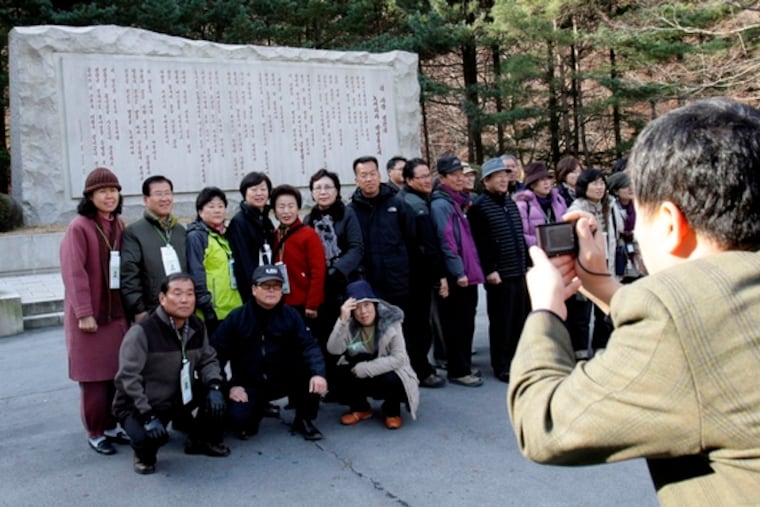
KAESONG, North Korea - For months, tours of this historic city - famed for its Buddhist temples, royal tombs and ancient relics - have given South Koreans a glimpse of life in the hidden communist North.
But North Korean officials announced yesterday that these visits were being suspended starting Monday because of tensions with Seoul.
Not that the North was very welcoming anyway:
On a weekend visit, cell phones, laptops and cameras with telephoto lenses were locked away even before the tour bus left South Korea.
Travelers were warned not to speak to ordinary North Koreans, not to criticize the government or to ask about the health of "Dear Leader" Kim Jong Il.
The moment the bus passed from South to North on Saturday, South Korean tourists broke out in applause. At immigration, North Korea's de facto theme song for reconciliation - "Nice to Meet You" - played over and over on a loudspeaker as travelers endured yet another security check.
As the bus ambled into Kaesong with two North Korean guides aboard, soldiers stood guard at intervals along the route.
For many on board, it was their first trip to reclusive North Korea, which Kim runs with absolute authority.
For many, it was their first meeting with North Koreans. The guide, a Kaesong native, was witty and warm. At one point he serenaded them with Koreans' most famous folk song, "Arirang," and teased them with jokes - something perhaps unthinkable a decade ago.
He also displayed a keen interest in President-elect Barack Obama, inquiring about the Democrat's stance on U.S.-North Korea relations. "I see no reason why the two countries should be so far apart if the U.S. policy changes," he said.
Though restrictive, the tours have been immensely popular among South Koreans since they began a year ago, with more than 110,000 tourists piling onto buses for the daylong visit to a city just 40 miles from Seoul but inaccessible for nearly 60 years.
North Korea's announcement yesterday that the tours will be suspended has heightened fears that 10 years of progress in improving ties between the wartime rivals may be in danger of unraveling.
Another joint project, tours to Diamond Mountain on North Korea's east coast, has been suspended since July following the shooting death of a South Korean tourist.
The communist country, in detailing plans to restrict cross-border traffic next week amid deteriorating ties with Seoul's conservative government, said it would also suspend inter-Korean rail lines.
Downtown Kaesong - visible from the bus window - was abuzz Saturday with people of all ages on bicycles and on foot, many with packages tucked into baskets, and scarves around their necks to ward off an early chill.
Children scampered along a tree-lined canal, some swinging their mothers' hands, others linked arm-in-arm with friends as they waved at sightseers.
Pharmacies, salons, motels and shops were housed in concrete buildings with faded, peeling paint. Cables hung limply on telephone poles but there were no phones in sight, and unlike Seoul, where even some 5-year-olds have their own cell phones, there was never the sound of a phone ringing.
"If even the Kaesong tour stops now, it would be unfortunate," said Oh Tae-jin, 49, a South Korean on the tour with his family. "It would seem like the North-South relationship - which has been moving forward for 10 years - is moving backward."