Philadelphia is once again the poorest big city in the United States
New data from the U.S. Census Bureau's American Community Survey indicates Philly has reclaimed the top spot from Houston after the two cities swapped spots in 2024.
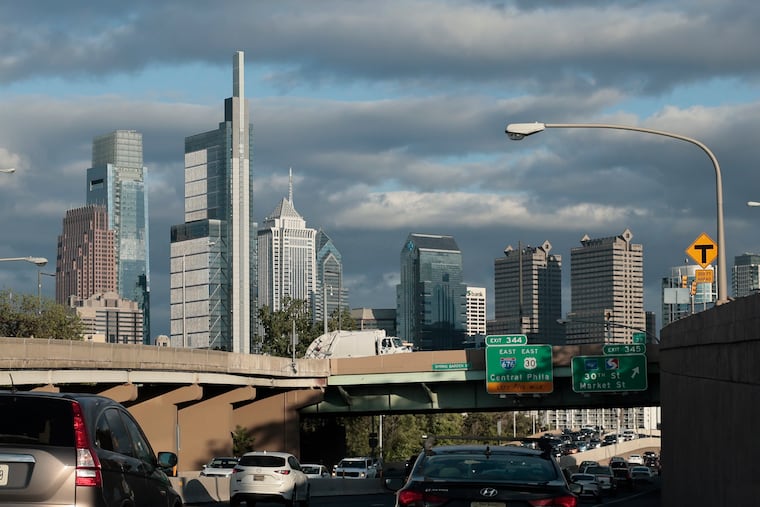
Unfortunately, Philadelphia is back on top.
Philly has reclaimed its unwanted title of the poorest big city in the United States, according to data released Thursday by the U.S. Census Bureau. In 2025, 20.4% of Philadelphians lived in poverty, the percentage rising a year after the city’s poverty rate fell below 20% for the first time since at least 1979. The figure also marked Philadelphia’s first increase in the poverty rate since 2011.
The Census Bureau’s American Community Survey, which measures a trove of population data, found the closest large cities to be New York and Houston, each with a 17.7% poverty rate.
The Census Bureau measures the poverty rate by determining whether an individual’s or a household’s income is below a certain threshold that makes it difficult to afford basic needs. That threshold depends upon the number of people in a household — in 2025, the poverty line for a family of four was an income of roughly $32,750.
“A rate of 20.4 percent is too high and unacceptable to me as mayor. Affordability is a very real issue, and basic staples like food, fuel and clothing cost too much for too many Philadelphians … we will not rest until every Philadelphia resident can realize the economic opportunities they need to improve their lives for themselves and their families,” Mayor Cherelle L. Parker said in an emailed statement.
The median income in Philadelphia last year was $67,400, according to the census figures.
In 2024, Houston’s poverty rate edged ahead of Philly’s to lead the nation at 21.2%, compared with 19.7% in Philadelphia. However, Houston’s lead over Philadelphia was within the survey’s margin of error.
This time, though, Philadelphia’s edge was outside the margin of error. But the year-to-year differences could be explained by sampling issues, according to poverty data experts.
Immigrant communities may also be more reluctant than ever to answer census surveys given heightened Immigration and Customs Enforcement activity and deportations, making results less representative, the experts said.
Analysts said the city’s largely stagnant poverty trend was more concerning than specific year-to-year numbers. After steadily dropping for years from its height of 28.4% in 2011, Philadelphia’s poverty rate has held near 20% since 2023.
“Each tenth of a decimal point one way or another isn’t the thing that matters. The thing that matters is, what is the trend you’re seeing over time. … This is basically flat for the last three years,” said Katie Martin, project director for Philadelphia research and policy at the Pew Charitable Trusts.
The affordability puzzle
While Philadelphia’s poverty rate puts it atop the nation’s largest cities, among other comparable Northeast and Mid-Atlantic cities, Philly fits somewhere in the middle.
Even with significant declines in the poverty rate for Detroit and Cleveland last year, their poverty rates remained above Philly’s, at 30.4% and 24.1%, respectively. Philadelphia was close to Pittsburgh’s 19% and Baltimore’s 20.9% rates, and can aim for Washington’s 15.9% and Boston’s 16.4% figures.
But reported poverty rates are only one data point reflecting the financial burdens for residents, according to Emily Dowdall, president of policy solutions at Reinvestment Fund, a financial nonprofit based in Philadelphia.
Dowdall said she was more concerned with past and future federal cuts to programs like food stamps, Medicaid, and housing assistance that are “literally a lifeline for low-income families.” Those programs have been cut at the same time that prices for essentials like groceries and gas have increased during President Donald Trump’s administration.
The city and state have been left to fill some of those funding gaps. Beginning in October, the states have taken on a greater share of Supplemental Nutrition Assistance Program funding, while more than 200,000 Pennsylvanians have lost their eligibility since the summer. Parker’s $800 million H.O.M.E. initiative has been slow to dole out its funding but is meant to increase the city’s housing stock. Parker recently announced new details for the city’s One Philly Mortgage program, slated to launch by the end of the year, which is meant to make housing more accessible for first-time homebuyers who have poor credit.
While poverty itself is certainly worth the attention of policymakers and elected officials, addressing other pieces of Philadelphia’s larger affordability problem is just as vital, Dowdall said.
“Moving people out of poverty is an important policy goal. But there is no upward mobility in a scenario where people can’t meet their basic needs for food and shelter, which we’re going to be facing with these other cuts,” she said.