What U.S.-Vietnam reconciliation can teach us about Afghanistan
Normalization of relations between the United States and Vietnam produced benefits for both countries.
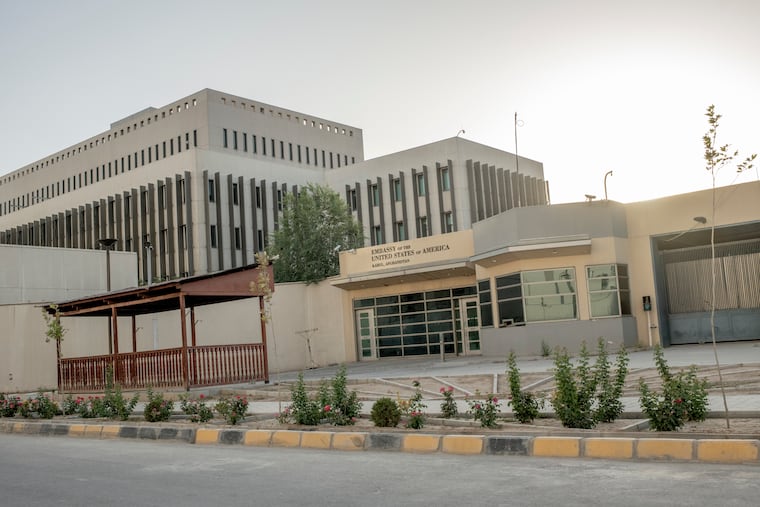
After the Taliban captured Kabul on Aug. 15, 2021, numerous news articles compared Washington’s withdrawal from Afghanistan to similar events in Vietnam on April 30, 1975. Some articles highlighted differences in the conflicts, such as media coverage and troop motivations, while others underlined similarities, including the evacuation of nearly identical numbers of Afghans and Vietnamese in the days leading up to collapse of Kabul and Saigon.
It’s been five years since America’s withdrawal from Kabul — and the experience of the United States leaving Vietnam still resonates as Afghanistan has become one of the poorest countries in the world.
In Vietnam, Hanoi’s counterproductive domestic and foreign policy stifled the economy, undermined diplomacy, and caused a mass exodus of millions of Vietnamese from the country. And yet, 20 years later, Vietnam normalized relations with the United States and embraced a global market system that has since made it one of the world’s fastest-growing economies.
Two main factors explain U.S.-Vietnam reconciliation. The first stemmed from Hanoi’s moderation in foreign policy, which downplayed Cold War rhetoric and acknowledged the need to integrate into the international system. The second stemmed from Washington’s diplomatic strategy toward Vietnam, which maintained consistent conditions for normalizing relations.
When the United States left in 1975, Vietnamese Communist Party leader General Secretary Le Duan implemented socialist policies, including agricultural collectivization and forced relocation to New Economic Zones. Hanoi also imprisoned hundreds of thousands of South Vietnamese who had cooperated with Americans during the war in order to “re-educate” them in Marxist thought.
Relations deteriorated with China and Cambodia, two countries that cooperated with Vietnam to resist America’s presence in Indochina. Hanoi invaded Cambodia in December 1978, following Pol Pot’s repeated incursions into Vietnam. China responded by sending 200,000 soldiers into northern Vietnam, leading to a three-week border war. The nation became one of the poorest countries in the world, kept afloat only by subsidies from the Soviet Union. The U.S. embargo did not help.
The Carter administration attempted to normalize relations with Vietnam without preconditions prior to Hanoi’s occupation of Cambodia. Vietnam refused to do so, demanding the United States pay $3.25 billion in war reparations. After the December 1978 invasion, Jimmy Carter conditioned normalization on Vietnam’s signing of a peace agreement on Cambodia. Ronald Reagan upheld his predecessor’s stipulation, adding that Vietnam must make significant progress on locating and repatriating approximately 2,500 American prisoners of war (POW) and missing in Action (MIA). Hanoi’s leadership cooperated, hoping to secure economic and political concessions from Washington.
During the Reagan years, numerous other humanitarian issues compelled Washington and Hanoi to sustain a diplomatic dialogue, including the resettlement of refugees, Amerasians, and former Vietnamese political prisoners. Diplomacy on these issues helped foster a favorable atmosphere prior to reconciliation.
Such negotiations begot economic opportunities as long as Vietnam remained in Cambodia.
It wasn’t until 1986, after General Secretary Le Duan’s death, that the Communist Party changed course and pursued a market economy. In 1989, Vietnam withdrew from Cambodia and began pursuing new economic policies. Sustained U.S. pressure during negotiations and consistent conditions for establishing economic and diplomatic ties contributed to Vietnam’s moderation.
Lastly, U.S. businesses wanted Washington to lift the economic embargo to give American companies access to Vietnam’s resources. Hanoi’s leadership eventually moderated its domestic and foreign policy, advancing negotiations and proving to U.S. policymakers that Vietnam could manage bilateral and multilateral relations.
In April 1991, President George H.W. Bush provided the Vietnamese with a road map to normalization outlining economic and political concessions in exchange for progress on the POW/MIA issue. The road map gave both sides a diplomatic plan to follow. President Bill Clinton continued Bush’s plan, and in 1994, he lifted the economic embargo. The following year, the United States and Vietnam normalized diplomatic relations.
Certainly, the postwar conditions that fostered U.S.-Vietnamese dialogue are different for Afghanistan. There are no American POW/MIAs listed in Afghanistan. While Washington welcomed nearly 200,000 Afghan refugees since the fall of Kabul, refugee admissions are currently suspended for most nationalities, including Afghans.
Kabul has not invaded any of its neighbors, but the United States remains committed to its partnership with Pakistan. Washington does not currently have Kabul under an embargo, but fewer countries are interested in investing in Afghanistan than at a similar time for Vietnam. Nor does it help that Hibatullah Akhundzada, leader of Afghanistan, is wanted by the International Criminal Court for imposing severe restrictions on women and girls in the country.
But diplomatic exchange could be fruitful, politically and economically. The Taliban are increasingly desperate to modernize its economy and end its international isolation. Rather than cutting off diplomacy entirely, the example of U.S.-Vietnam reconciliation suggests that a new phase of U.S.-Afghan relations could benefit both the people of Afghanistan and U.S. interests.
Zachary Tayler is a doctoral candidate in history at Ohio University, specializing in U.S.-Vietnam postwar relations.
Made by History takes readers beyond the headlines with articles written and edited by professional historians. Opinions expressed do not necessarily reflect the views of The Inquirer.