Letters to the Editor | Sept. 25, 2026
Inquirer readers on the Trump administration’s shifting justifications for its building projects in Washington and Temple University addresses a student’s difficulties on move-in day.

Privilege protected
The administration’s latest justification for its proposed ballroom and triumphal arch deserves closer scrutiny. If the rationale is “national security,” it stands as an inadvertent admission that the nation’s true defenses have faltered. National security begins at the border, not at a ceremonial structure in the capital’s interior. To invoke security as the rationale for a monument hundreds of miles from the perimeter is to concede that the first line of defense has failed — and that symbolism is being substituted for substance.
Moreover, such structures would serve only to shield the privileged few who occupy them, not the citizens whose safety defines the nation’s strength. If the conflict with Iran had not been initiated by this administration, our defense system would not now be forced to rebuild its arsenal. The funds devoted to that effort — and to the ongoing cost of war — could have been used to strengthen our borders and protect all Americans. History reminds us that nations secure themselves through policy and principle, not pageantry.
Fiscal responsibility and constitutional stewardship demand that national security be measured by protection of the people, not preservation of privilege.
Steve Abramovitz, Cherry Hill
Temple responds
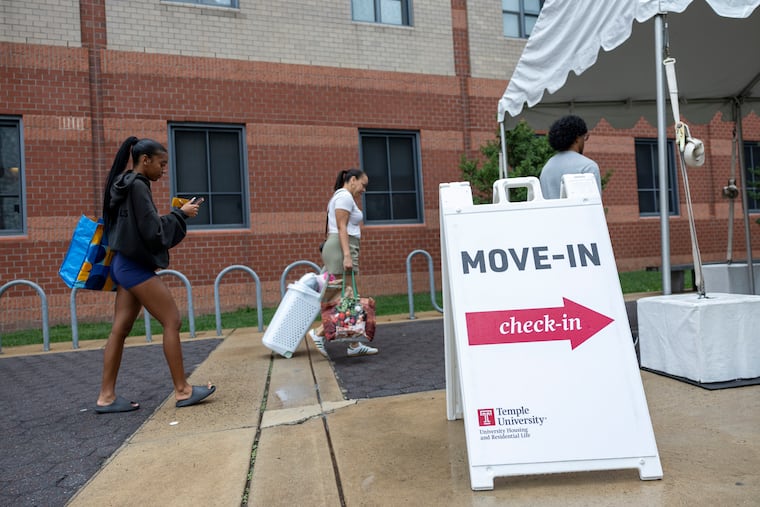
A recent op-ed detailed a Temple University faculty member’s account of their child’s experience while moving onto Temple’s campus this fall.
There is additional context that helps provide a fuller understanding of the student’s experience. Student privacy considerations, however, limit what the university can appropriately share about an individual student’s circumstances.
However, the op-ed does provide an opportunity to clarify how our housing processes work. Disability-related housing accommodations and gender-inclusive housing are separate processes. Gender-inclusive housing is a voluntary option that students elect through the housing process, and Temple does not automatically make that choice for a student based on information shared confidentially with another university office. Students also receive their housing assignments and roommate information before move-in and can contact the university’s housing office with questions, concerns, or requests for changes. This happens on a regular basis at Temple. When a concern is raised, our staff work directly and diligently with the student to understand what they need and determine what options are available.
Establishing student success as the keystone priority of our strategic plan, Forward with Purpose, was an intentional decision. Collectively, as an institution, we have been working hard to reimagine how we support our students on their educational journey. That includes ensuring our processes are clear and accessible while respecting students’ ability to make their own decisions about the services and housing options they choose.
Moving forward, we will continue to review what we can learn from this situation, including whether there are opportunities to make our processes easier for students and families to understand. Protecting student privacy limits what we can say about an individual situation, but it does not limit our commitment to ensuring students have the information, support, and agency they need to make decisions that are right for them.
Jodi Bailey Accavallo, vice president for student affairs, Temple University
Join the conversation: Send letters to letters@inquirer.com. Limit length to 150 words and include home address and day and evening phone number. Letters run in The Inquirer six days a week on the editorial pages and online.