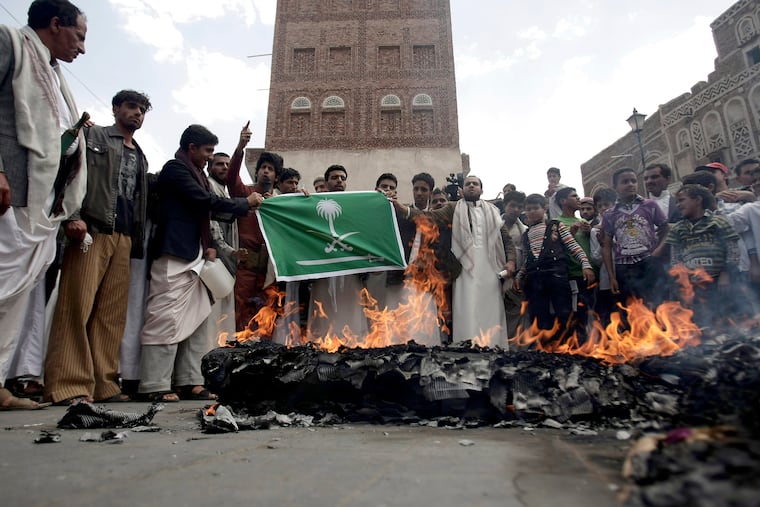
U.S. airstrikes targeting Houthis killed scores of civilians in Yemen
Most of the casualties — 208 deaths and 341 wounded — occurred during President Donald Trump’s second term as his administration pursued the Iran-backed group.
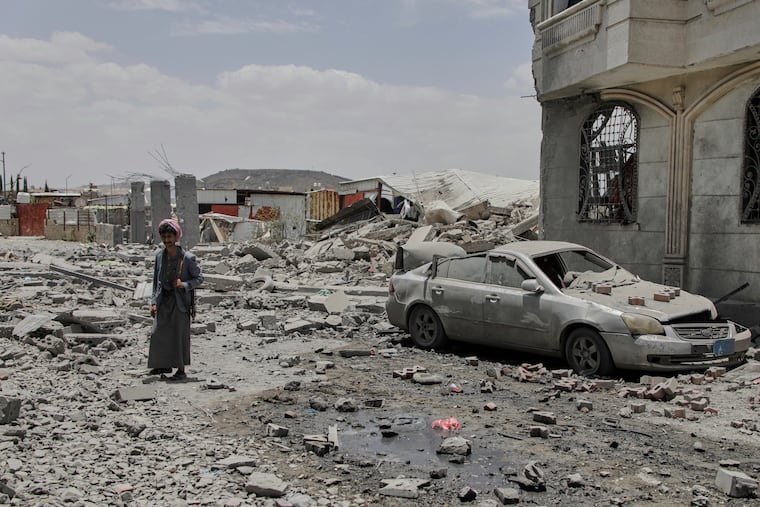
WASHINGTON — U.S. airstrikes against Yemen’s Houthi militants from late 2023 to mid-2025 killed 213 civilians, according to a report released Thursday by the Costs of War Project at Brown University.
Most of the casualties — 208 deaths and 341 wounded — occurred during President Donald Trump’s second term as his administration pursued the Iran-backed group.
The Pentagon has not publicly acknowledged civilian deaths in the 2024 attacks but has reported that it killed 153 civilians and wounded 243 in Yemen in 2025.
In October 2023, President Joe Biden ordered retaliatory airstrikes in Yemen after Houthi fighters attacked a Navy destroyer in the Red Sea, and again in January 2024 after Houthi missiles and drones targeted civilian vessels in the region.
The latter series of strikes continued until just weeks before Biden left office.
Trump ordered strikes on Houthi fighters in March 2025 in response to attacks on commercial shipping vessels in the Red Sea launched from Yemen.
Beyond the loss of life, the report said hundreds of Yemenis lost farms, shops, factories, and small businesses in the attacks, leading to increased homelessness and worsening poverty among people who were already desperately poor.
“There’s a myth that an airstrike is going to strike a military target and kill a militant and it’s over,” said Stephanie Savell, an anthropologist and director of the Costs of War Project. “But what this report highlights are the reverberating, indirect, human costs of war. The report looks precisely at civilian infrastructure that’s targeted, not military infrastructure or outposts.”
Two U.S. attacks were particularly devastating, according to the researchers.
On April 17, 2025, the researchers said, U.S. forces killed 80 civilians in an attack on a port facility in the Houthi-controlled province of Hodeida.
Less than two weeks later, a U.S. attack on three warehouses used to detain African migrants killed 68 civilians.
Most of the workers killed at the port were the main breadwinners for their families, who have since slid deeper into poverty and hunger, according to Savell.
The Pentagon did not immediately respond to a request for comment.
The Costs of War Project is a collective of scholars who research the consequences of U.S. wars launched after the terrorist attacks in the United States on Sept. 11, 2001. The project published the report with Mwatana for Human Rights, which did research inside Yemen and coproduced the report.
Investigators collected evidence by conducting interviews, analyzing weapon remnants and collecting documents including death certificates.
While the Pentagon has carried out many airstrikes in Yemen targeting al-Qaida fighters since the Sept. 11 attacks, the most recent U.S. strikes in the country have targeted the Houthis, who are part of the so-called Axis of Resistance led by Iran, along with the armed groups Hamas in the Gaza Strip and Hezbollah in Lebanon.
According to the report, the Pentagon launched 930 airstrikes in Yemen from Dec. 18, 2023, to January 2025.
Then in March 2025, Defense Secretary Pete Hegseth launched Operation Rough Rider against the Houthis. By the end of April, the cost of Hegseth’s campaign was more than $1 billion.
Trump, frustrated with the lack of progress, halted the operation on May 5.
Brian Finucane, a former State Department attorney who advised on the law of war, said, “There are more significant civilian casualty incidents over the Rough Rider campaign than all the previous attacks during the Biden administration.”
He added that the Trump administration “launched two to three times the number of strikes Biden did.”
“Trump was also willing to bomb targets in more densely populated areas than Biden was,” he said. “Additionally, the migrant detention facility that was bombed in April 2025 had routinely been visited by officials from the Red Cross and should have been understood by Central Command as off-limits for attack.”
A Defense Department report on military operations for 2025 acknowledged the civilian death toll from the attacks on the port and the migrant detention facility, along with a strike in Sanaa, the capital, on April 6 that killed five civilians and wounded 25.
Condolence payments to survivors and the families of those who were killed, the report noted, were “determined to not be appropriate” in all three cases.
Just days after Hegseth took office in January 2025, the Army announced that it planned to close an office dedicated to reducing and mitigating civilian harm during combat operations. The office was reduced in March of that year from roughly 200 people to 11. At the time, Hegseth’s office declined to answer questions about the reductions.