Racial justice advocate and chair of Police Oversight Commission charged with witness intimidation, bribery
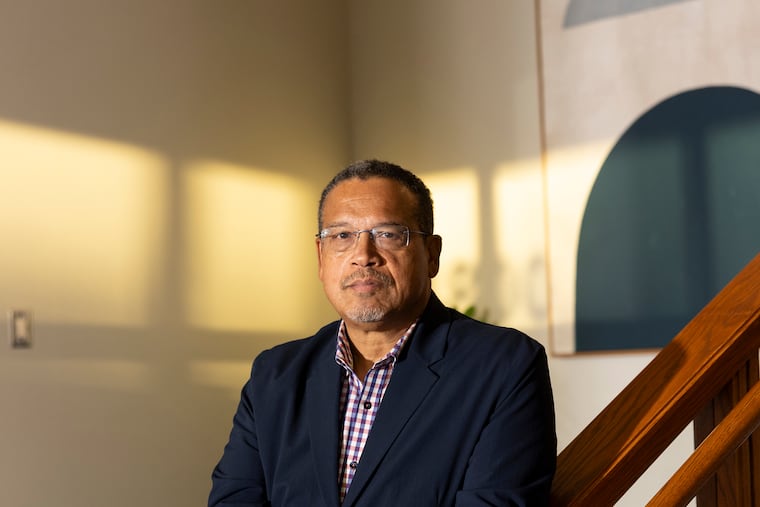
Hassan Bennett, chair of the Citizens Police Oversight Commission, was charged with bribery and witness intimidation Tuesday.

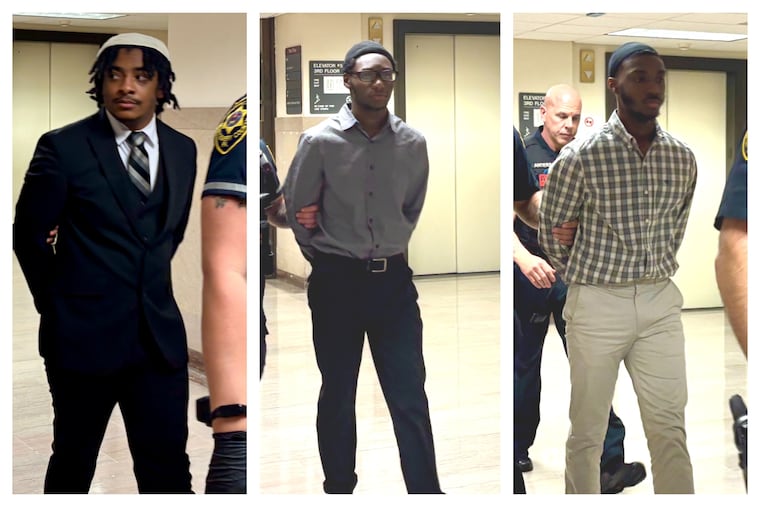
The chair of Philadelphia’s Citizens Police Oversight Commission was arrested Tuesday after prosecutors accused him of obtaining and selling confidential information about a witness in an attempted murder case.
Hassan Bennett then gave the information to a man who had threatened to hunt down and kill the witness, prosecutors said.
Bennett, 43, faces charges of witness intimidation, bribery, conspiracy, and related crimes. The arrest marked a dramatic turn for Bennett, who became a prominent criminal justice advocate after spending nearly 13 years in prison for a murder he said he did not commit. His conviction was overturned in 2017, and he was acquitted at a retrial in 2019.
In addition to his role with the oversight commission, Bennett works as a bail navigator for the Defender Association of Philadelphia. Prosecutors declined Tuesday to say whether Bennett used his position with the commission or the defenders to obtain the information he shared, including unredacted copies of police reports that contained the witness’ full name.
They also declined to provide details of the underlying attempted murder case, citing the need to protect the witness.
Bennett sold photos of those reports for $500, prosecutors said, to Thomas Scott, the man accused of trying to silence a key witness in the case. Scott, 45, is charged with witness intimidation and criminal use of a communication facility and is being held on $2 million bail.
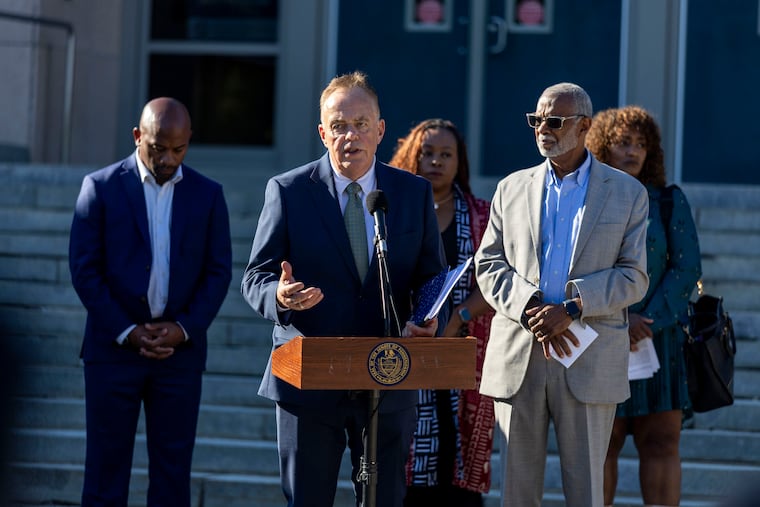
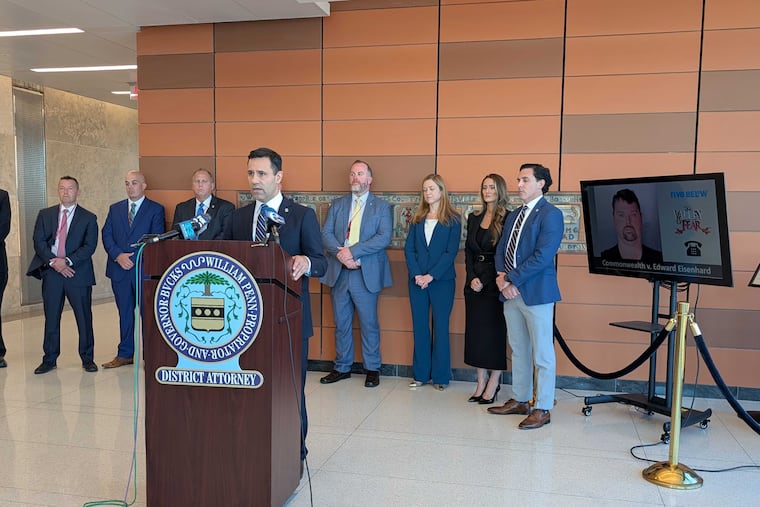
Prosecutors announced Bennett’s arrest at a news conference Tuesday afternoon, where they credited a monthslong investigation by the Gun Violence Task Force with foiling Scott’s efforts and linking Bennett to the leaked information.
The investigation began after prison officials contacted the district attorney’s office about a series of suspicious calls between an incarcerated man and Scott, said William Fritze, chief of the task force.
Digital records uncovered threats made against the witness on social media accounts linked to Scott, said Assistant District Attorney Joseph Lanuti. The social media posts, Lanuti said, were an attempt to “prevent witness from coming to court.”
In one, he said, Scott threatened to “blow down the witness in broad day.”
And among the many recorded calls provided by prison officials, investigators found one that captured Bennett’s voice as he read information from the report and shared the witness’ name, said Lanuti. Scott, he said, also possessed photos of the documents.
Investigators found that Bennett and Scott were connected on social media, Fritze said. But prosecutors said they were still working to determine how Bennett and Scott had come to know one another and the extent of their relationship.
Fritze said the investigation of Bennett is ongoing. “We will continue to do our due diligence and look into any other incidents Bennett may have been involved in,” he said.
Bennett’s bail has been set at $1 million, Lanuti said.
Bennett had served as chair of the oversight commission since 2024 and held various leadership roles since its formation four years ago. He had worked for the Defender Association for about six years, following his acquittal and release from prison on murder charges.
George Jackson, a spokesperson for the Defender Association, did not immediately comment on the charges. Keisha Hudson, chief defender, did not return a phone call Tuesday afternoon.
Tonya McClary, the oversight commission’s executive director, said in a statement that the group would not comment on the allegations against Bennett this early in the case.
“Our responsibility to the people of Philadelphia remains unchanged,” she said. “We will continue our work to strengthen police accountability, promote transparency, and build public trust.”
The commission was formed by City Council — and later approved by Philadelphia voters — in 2020 amid nationwide protests over police brutality and racism after the killing of George Floyd in Minneapolis. It was meant to serve as an independent civilian oversight agency that, with subpoena powers, could take complaints from the public against officers and run investigations into police misconduct alongside the Police Department’s Internal Affairs Division.
But the commission, which has been allocated millions in taxpayer funds, has drawn scrutiny for accomplishing little since its inception in 2022. Staff turnover and political infighting has also plagued the group, former staffers have said, as has pushback from the police department and police union that the group said has made it difficult to conduct independent investigations.
Bennett, of West Philadelphia, has been a face within the city’s racial and social justice movements since his release from prison in 2019 — a case that drew national attention and acclaim because Bennett represented himself in a successful retrial.
He served nearly 13 years in prison for the 2006 murder of Devon English — a crime he maintained he did not commit and a case that went to trial four times.
Bennett’s first trial ended in a mistrial. But prosecutors re-tried him in 2008, and he was convicted and sentenced to life in prison without the possibility of parole.
The conviction was later overturned due to mistakes by his lawyer, and in 2017, he was granted a new trial, which began in 2018.
After studying the law during his time behind bars, Bennett represented himself in the third trial and wore his blue prison uniform in court. The jury deadlocked, and jurors later acknowledged that all but one wanted to acquit him.
The district attorney’s office under Larry Krasner moved to try him a fourth time. Bennett again represented himself. The jury acquitted him of the charges and he walked free.
Krasner said Tuesday that he believed Bennett had committed that murder but that the case was tainted by the problematic behavior of former Philadelphia homicide detective James Pitts, who was later convicted of fabricating evidence and lying on the stand in a separate case and sentenced to 2 ½ years in prison.
In February 2020, Bennett was hired by the Defender Association as a client advocate to link pretrial defendants with social services, like drug and alcohol counseling. He was most recently working as a bail navigator. It was not immediately clear Tuesday if Bennett remained employed with the association.
Staff writer Jesse Bunch contributed to this article.