FanDuel tells Congress it has sent about 30 personalized videos of athletes and entertainers to customers
The sportsbook said customer loyalty rewards and programs are not meant to encourage additional gambling.
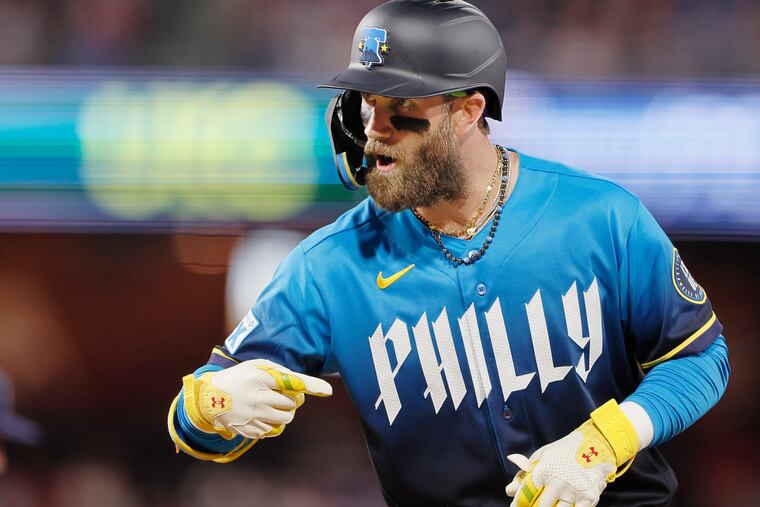
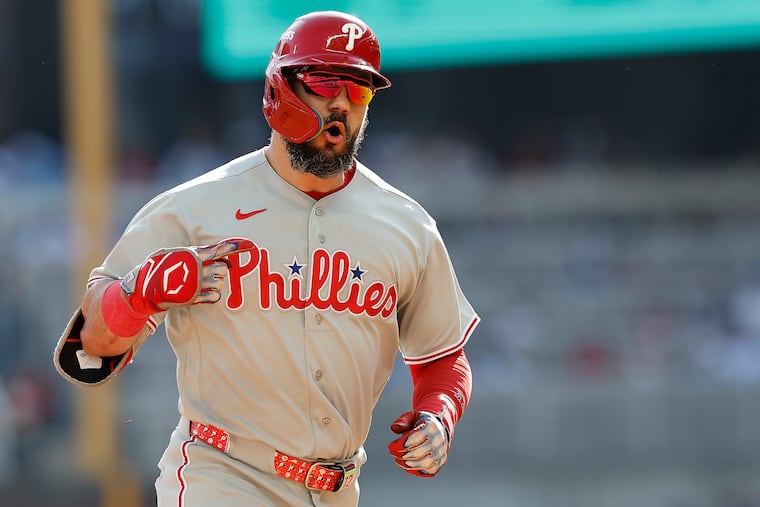
In response to congressional concerns about a video of Phillies star Bryce Harper that a FanDuel VIP account manager sent to a bettor who had an addiction, a FanDuel executive recently disclosed in a letter to lawmakers that the company has sent approximately 30 similar personalized videos of athletes and entertainers to its customers during the last two years.
“On occasion, FanDuel has arranged a personalized video message, almost always through publicly available services, as a token of appreciation for a customer’s loyalty in choosing FanDuel over its competitors,” Cory Fox, a senior vice president for public policy and sustainability, wrote on Sept. 24.
The videos, Fox said, are not used to “induce customers to continue gambling.”
FanDuel did not name the 30 athletes and entertainers in its letter. The company declined on Wednesday to provide their identities to The Inquirer.
It was the second letter that FanDuel has sent about its business practices to U.S. Sen. Richard Blumenthal (D., Conn.) and U.S. Reps. Paul D. Tonko (D., N.Y.) and Valerie P. Foushee (D., N.C.) since mid-August. The lawmakers had demanded that the company end its VIP program after The Inquirer wrote in July that FanDuel had sent in 2024 a short video greeting from Harper to a bettor from the Philadelphia suburbs who had a gambling addiction.
Blumenthal, Tonko, and Foushee also called on Major League Baseball and the Major League Baseball Players Association to prohibit players from doing promotional work for gambling entities. Such activity is permitted in the league’s current collective bargaining agreement, as long as players do not encourage betting on baseball.
In response, the players union said it would support banning players from participating in personalized marketing campaigns for VIP programs as part of its next contract.
The legislators pressed FanDuel for additional information about its VIP practices earlier this month, accusing the company of initially providing them with “misleading and incomplete” responses.
Fox said that FanDuel’s VIP program “serves only a small fraction of total FanDuel customers” and is meant to encourage customer loyalty. He noted that the company’s competitors — including federally regulated prediction markets — have similar loyalty programs.
The lawmakers previously alleged that VIP account managers foster “false friendships” with gamblers to entice them to continue betting, and asked whether FanDuel ensures they are not extending predatory offers to problem gamblers.
Fox denied those claims in his response.

The Inquirer is investigating how the rise of the multi-billion dollar sports gambling and prediction market industries are affecting public health and professional sports. Read more of our coverage:
· Bryce Harper addresses controversy over his video to FanDuel VIP bettor
· Congress demands FanDuel, MLB and players union make policy changes, citing Harper controversy
· MLBPA supports banning players from promoting sportsbook VIP programs
· As the betting industry grows, kids as young as 11 are getting hooked
· He wrote the book on sports gambling's rise. Here's what he thinks you should know.
He said VIP managers are trained to recognize and report signs of problem gambling — such as a bettor expressing concern about paying bills or making references to harming themselves — and must seek approval before offering customers certain levels of rewards.
The company separately reviews customers’ wagering, deposit, and withdrawal patterns and the amount of time spent on FanDuel’s platform for potential red flags.
“FanDuel’s VIP program is not designed to encourage destructive gambling,” Fox wrote.
A VIP manager obtained a video of Harper, a two-time National League Most Valuable Player, through the video service Cameo, and sent it in November 2024 to Terry Thompson, a Montgomery County resident who lost nearly $2 million on sports bets that he placed with FanDuel and DraftKings beginning in 2020.
Earlier this year, having gambled away the last of his money, Thompson indicated to his therapist that he was planning to die by suicide. He entered a psychiatric facility to be treated for gambling addiction.
When Harper recorded the greeting, he was not aware that Thompson had an addiction, or that FanDuel intended to use the video for business purposes, Harper wrote on Instagram in July.
Fox said if customers indicate that they want to cut back on gambling or shutter their account, the company provides assistance, and does not offer perks to encourage them to reconsider.
“Where the right outcome is closing the account entirely,” Fox wrote, “FanDuel’s VIP Account Managers take that action.”
The Inquirer will continue to report on issues related to the growth of gambling addiction — among teens and adults — across Pennsylvania. If you, or someone you know, would like to speak with a reporter, please contact David Gambacorta or William Bender at dgambacorta@inquirer.com and wbender@inquirer.com
The Inquirer’s journalism is supported, in part, by the Lenfest Institute for Journalism and readers like you. News and editorial content are created independently of The Inquirer’s donors. Gifts to support The Inquirer’s high-impact journalism can be made at inquirer.com/donate. A list of Lenfest Institute donors can be found at lenfestinstitute.org/supporters.