Exasperation and resignation in Greece over allegations against Kimberly Guilfoyle
Revelations last week that a Republican donor said she asked him to pay her American Express bill in exchange for access to senior Trump administration officials were the latest to emerge.
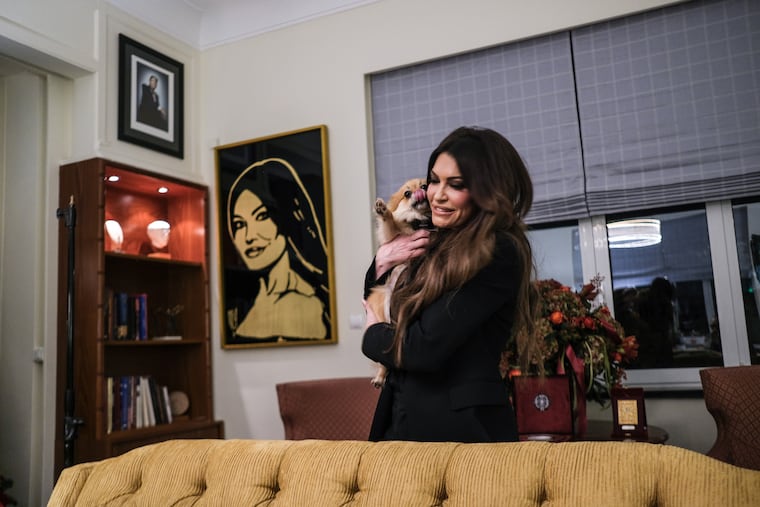
ATHENS, Greece — As the U.S. ambassador to Greece, Kimberly Guilfoyle has cultivated a highly visible profile, attending late-night parties and appearing on the cover of Vogue Greece. Lately, however, she has drawn a different kind of attention from Greeks.
Revelations last week that a Republican donor said Guilfoyle asked him to pay her American Express bill in exchange for access to senior Trump administration officials were the latest allegations of hardball tactics or outright misconduct to emerge against her.
Greeks interviewed in Athens in recent days expressed exasperation and cynicism about the steady drip of reports about Guilfoyle’s dealings, and some said they saw them as signs of what smaller countries are forced to endure from larger, wealthier nations.
“Greece is not a major power,” said Petros Malliaros, 35, a freelance lighting technician. “We have to get along with the U.S. and whatever representatives it chooses to send us.”
The accusations against Guilfoyle are “hardly a shock,” said Anna Markaki, a 38-year-old school teacher. Of President Donald Trump, she added, “He probably thinks she’s done a good job.”
Pavlos Iliopoulos, a 47-year-old pizza store owner, shrugged it off. “Greece is a small country and pretty much has to play along with the U.S.,” he said. “One corrupt diplomat staying or going isn’t going to make much of a difference.”
Anta Rapaki, 52, a former healthcare worker, criticized the administration’s decision to send Guilfoyle to Greece in the first place. “They’re underestimating my country as a faithful ally — instead of honoring that friendship, they sent her here as a favor,” she said.
She added, “Because we’re a small country, we have to have friends, and we need the U.S. But we’ll dance the dance up to the point that serves us; we won’t knuckle under.”
Guilfoyle, who was once engaged to Trump’s oldest son, Donald Trump Jr., was one of the first ambassadors to be nominated in the president’s second term. She has said that her experience with Greece before being nominated as Trump’s envoy last November came from college history classes and a honeymoon trip. She has served in Athens with a mixture of MAGA glitz and what her supporters have described as relentlessness in securing business deals involving American interests.
She has come under fire in recent weeks in reports in the Wall Street Journal, which reported last month on potential conflicts of interest in Guilfoyle’s involvement in energy deals in Greece.
This past week, the Journal revealed her communications with a Republican donor, Eric Deters, who said Guilfoyle had asked him to wire $100,000 to pay off her credit card just before her confirmation hearing, which he did not pay. The New York Times confirmed their discussions.
A lawyer for Guilfoyle declined to comment. The U.S. Embassy in Athens directed requests for comment to the State Department in Washington, which did not respond.
In a visit to Athens, Secretary of State Marco Rubio refused to answer questions Thursday about the ambassador’s conduct. Before his trip, he had described her as “an incredibly effective advocate for the president’s agenda in Greece,” adding that she had “successfully advanced U.S. energy interests in Greece and across southeastern Europe.”
Trump said he knew little about the allegations against Guilfoyle. “I don’t know too much,” he told journalists Friday. “But she was always very nice.”
For some Greeks, more troubling was a comment she was reported to have made at a dinner in Athens in March insinuating that the United States could replace the Greek government. “The fact that they would send someone like that here, with no tact or diplomacy skills, shows how low we rank in Trump’s priorities, how insignificant Greece is for them,” said Maria Stefanou, a 68-year-old retiree.
Guilfoyle’s lawyer has disputed the characterization of the dinner, and Foreign Minister George Gerapetritis said Friday that the Greek energy minister who was there denied it as well.
Asked about Guilfoyle’s purported comment, Pavlos Marinakis, a government spokesperson, said, “There was never any question of the Greek government being threatened, nor would anything of the sort ever be tolerated.” He added that the Greece-U.S. partnership was founded on “mutual respect.”
In parliament Friday, Gerapetritis said it was not necessary to summon Guilfoyle to explain herself. “Summoning an ambassador and potentially creating a diplomatic incident would serve no purpose,” he said.
Their responses were part of a Greek government effort seeking to tamp down a national debate over Guilfoyle. Prime Minister Kyriakos Mitsotakis has aligned himself with the Trump administration, seeking cooperation on security and other issues.
“As long as Ms. Guilfoyle enjoys the support of the U.S. president and secretary of state, the Greek government has to respect the position of the U.S. government,” said Constantinos Filis, a prominent analyst and director of the Institute of Global Affairs at the American College of Greece. “It’s as simple as that.”
Leftist parties have called on the government to demand clarifications from Guilfoyle.
“Favors from Trump’s America come with a price tag,” Rena Dourou, a prominent lawmaker of the leftist Syriza party, said Friday. “The question is: How much will the Greek people ultimately have to pay?”
Guilfoyle is the latest of Trump administration ambassadors accused of engaging in decidedly undiplomatic behavior. Many serve in Europe, which long has been a destination for U.S. political appointees of both parties who have little to no experience in official diplomacy.
Bill White, the U.S. ambassador to Belgium, was asked by that country’s foreign minister to stop making derogatory statements about government officials. Charles Kushner, the chief envoy to France (and father of Jared Kushner, Trump’s son-in-law), ignored summonses by the French Foreign Ministry after criticizing Paris for doing too little to combat antisemitism.
This article originally appeared in the New York Times.