Kennedy Center doesn’t have to answer questions about Trump’s role, DOJ asserts
The dispute presents an unusual question: Does executive privilege follow a president into conversations he conducts while serving in another capacity?
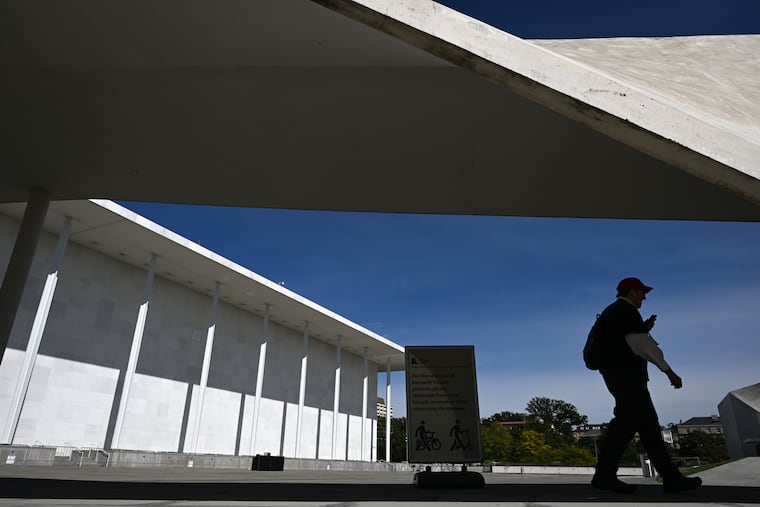
Justice Department lawyers have invoked executive privilege to prevent Kennedy Center officials from answering questions about President Donald Trump’s involvement in the institution’s operations, setting up an unusual legal fight over whether presidential secrecy protections extend to his role as chairperson of an arts organization.
The dispute emerged in a lawsuit brought by Rep. Joyce Beatty (D., Ohio), who is challenging decisions made by the Trump-controlled Kennedy Center board, including plans to close the performing arts complex for renovations.
The clash has lengthened the discovery phase of Beatty’s lawsuit by several weeks. On Friday, the case’s judge ordered the center to turn over more financial information. But he has allowed the center more time to respond to the question of executive privilege.
During depositions this week, government lawyers instructed a Kennedy Center official not to answer questions about communications involving Trump and his advisers, including discussions about the center’s finances, renovation plans, potential demolition, and closure, according to court filings.
In one exchange, Kyle Freeny, an attorney for Beatty, asked Kennedy Center executive director Matt Floca what Commerce Secretary Howard Lutnick had said when Lutnick first contacted Floca about helping the institution.
“Executive privilege on that. Don’t answer that,” Justice Department attorney William Jankowski instructed Floca, according to a deposition transcript filed in court.
Jankowski identified the protection as presidential communications privilege. When pressed, he acknowledged that the objection was “protective” rather than one made at Trump’s direction.
Executive privilege generally allows presidents to shield certain confidential communications connected to their official responsibilities, reflecting the principle that presidents and their advisers need space for candid deliberations. But the protection is not absolute.
The Kennedy Center dispute presents an unusual question: Does that protection follow a president into conversations he conducts while serving in another capacity?
Trump became chairperson of the Kennedy Center board in February 2025 after replacing trustees with political allies. Although the center was established by Congress and receives federal funding, it operates outside the executive branch.
Jonathan Shaub, a University of Kentucky law professor who previously worked in the Justice Department’s Office of Legal Counsel, called the privilege claim highly unusual.
“If the president is not acting in his capacity as president, it doesn’t apply,” Shaub said.
Trump’s role as Kennedy Center chairperson, he argued, is distinct from his constitutional responsibilities as president, and his involvement in the institution does not automatically extend presidential confidentiality protections to its operations.
“It’s sort of like gerrymandering a privilege claim,” he said.
Mark Rozell, a George Mason University professor who has studied executive privilege across administrations, was more emphatic.
“This doesn’t even meet the laugh test,” Rozell said of the claim as described to him. He said he knew of no historical precedent for a president successfully invoking the protection in a separate institutional role.
The Kennedy Center and the White House referred questions to the Justice Department, which declined to comment.
Beatty’s lawyers have also accused the administration of trying to have it both ways. In court filings defending the closure, the defendants cited conversations between Trump and Floca. But when Beatty sought information about those communications, Justice Department lawyers objected on executive privilege grounds.
Shaub said courts are generally reluctant to find that the executive branch has forfeited executive privilege, but a judge could be skeptical of allowing the government to rely on conversations as evidence while preventing the opposing side from examining them.
The objections also extended to questions about the Kennedy Center’s finances. During a deposition Wednesday, Freeny asked Floca whether he had raised concerns with Lutnick about conditions attached to certain donations received by the center.
Jankowski objected, saying the question could implicate the presidential communications privilege.
“Object to the extent that that could be construed as advising the president or his advisers on the president’s behalf,” Jankowski said. “On executive privilege grounds, I’ll instruct the witness not to answer.”
He added: “But if you can answer beyond that, feel free.”