Saudi Arabia has few options as Houthis aim at heart of its ambitions
The Houthis have hit at Crown Prince Mohammed’s ambitions to transform Saudi Arabia from an insular, oil-dependent nation into a global hub for business and tourism.
RIYADH, Saudi Arabia — After the deadliest attack in Saudi Arabia in more than a decade, Crown Prince Mohammed bin Salman faces growing pressure to find a way to stop the Iran-backed Houthi militia in Yemen from firing missiles and drones at his country.
Yet the prince, Saudi Arabia’s de facto ruler, has few options as he confronts an asymmetrical conflict with an adversary that has become stronger since he led a disastrous war against it a decade ago, analysts say.
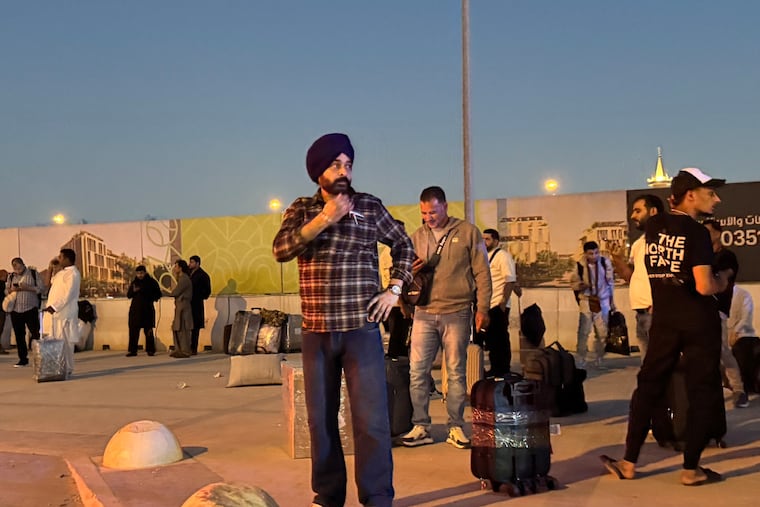
The Houthis have carried out three fatal attacks on an international airport in the Saudi capital, Riyadh, over the past week. Those included a strike on a passenger terminal Saturday that killed at least 12 people and injured more than 300, many of them critically, forcing officials to suspend operations at the airport. Saudi officials did not specify the nature of the attack, but a Gulf official and a U.S. official briefed on the strike said that the Houthis hit a terminal at the airport with a cruise missile.
The attacks have brought the kingdom’s faraway war in Yemen home, stripping Saudi Arabia’s civilians of the sense of security that they had largely maintained throughout years of a Saudi-led bombing campaign in neighboring Yemen.
The Houthis say their strikes are retaliatory. They have hit at the heart of Crown Prince Mohammed’s ambitions to transform Saudi Arabia from an insular, oil-dependent nation into a global hub for business and tourism.
There is no easy path forward for the crown prince. Reaching a political resolution with the Houthis has become more difficult as their demands have grown, and attempting to vanquish the group militarily is unlikely to succeed, analysts say. The militia has little to lose and has become increasingly battle-hardened after repeated confrontations with more powerful enemies.
Saudi Arabia is receiving significant military support from the United States to fight the Houthis, including targeting assistance and aerial refueling. President Donald Trump said he would “make a decision” about intervening more directly in the conflict after Saturday’s attack. Trump, however, carried out a bombing campaign against the Houthis last year and declared a swift victory after the United States burned through weapons and munitions at a rate of about $1 billion in the first month alone.
“The only realistic solution for the Saudis is an end to the Iranian-American war, in which the U.S. gets the Iranians to commit the Houthis to an end of hostilities as part of the overall deal,” said F. Gregory Gause, a Saudi specialist at the Middle East Institute, a Washington-based research group. “Unfortunately for the Saudis, it is not clear how much President Trump listens to them on this.”
The Saudi government will probably try to weaken the group before negotiating a deal to end the conflict, said Yasmine Farouk, the Gulf and Arabian Peninsula project director at the International Crisis Group, a research firm.
From Saudi Arabia’s perspective, it is too early to enter talks while the Houthis still “retain the capacity to launch” such attacks, Farouk said.
In recent days, a Houthi military spokesperson, Yahya Saree, has issued repeated warnings to airlines and travelers against using Saudi airports, declaring them a “theater of operations for our forces.”
The attacks on the airport came ahead of several large political and business events in Saudi Arabia, including Crown Prince Mohammed’s flagship annual investment summit, during which world leaders, billionaires, and executives typically descend upon Riyadh. It is unclear whether high-profile guests will feel safe enough to attend now.
“The problem for the Saudis is that they experience more damage from Houthi strikes on their infrastructure than the other way around,” Gause said. “A strike on Riyadh Airport could lead someone thinking about investing in the country to reconsider.”
In contrast, much of Sanaa, the Yemeni capital, which the Houthis control, has already been destroyed.
The attack Saturday was the deadliest in Saudi Arabia since a suicide bombing at a mosque in 2015, and the deadliest attack in any Gulf Arab country since the start of the U.S.-Israeli war with Iran in February.
The Houthis rose to power in 2014, when they took over Sanaa, routing Yemen’s internationally recognized government.
Soon after, Crown Prince Mohammed, in one of his first acts as Saudi Arabia’s 29-year-old minister of defense, pledged to restore the Yemeni government by declaring war against the Houthis, at the time a ragtag group of rebels.
The crown prince has since consolidated his power inside Saudi Arabia and beyond. Yet the Houthis have also become stronger and more self-sufficient, and they pose one of the most intractable challenges to his plans. The militia, which rules over its impoverished territory with an iron fist, appears to be calculating that it can inflict more pain on Saudi Arabia than the kingdom can inflict on it, analysts say.
The Saudi-led bombing campaign a decade ago precipitated one of the world’s worst humanitarian crises and contributed to the deaths of hundreds of thousands of people in Yemen from violence, hunger, and disease. Rights groups said the campaign disproportionately targeted civilians. In one of the most notorious strikes, which spurred international condemnation, a Saudi fighter jet bombed a school bus in 2018, killing 44 children and 10 adults.
Yet the Houthis survived, cementing their power over northern Yemen.
A truce in 2022 brought a fragile peace to the country, until the United States and Israel attacked Iran more than seven months ago, sparking a regional war.
Tensions between Saudi Arabia and the Houthis began to escalate in July, when an airstrike hit the international airport in Sanaa. The militia accused Saudi Arabia of launching the attack. The Saudi-backed Yemeni government claimed responsibility and said it had been acting to prevent an unauthorized Iranian plane from landing. Analysts, however, say it is unlikely that the Yemeni government, which depends heavily on Saudi Arabia for financial and military support, acted on its own.
After that attack, the Houthis, who have long bristled at restrictions on their airspace that are enforced by Saudi Arabia, announced that they intended to enforce a “blockade for blockade” policy. They declared an embargo on Saudi shipping in the Red Sea, which has become an important alternative route for Saudi oil exports after the Iran war disrupted shipments through the Strait of Hormuz.
Yemen’s civil war reignited, with fierce clashes between the Houthis and Saudi-backed forces allied with the Yemeni government. That culminated last week, when the Yemeni government announced a new offensive against the Houthis, promising to push them out of the territory they had seized over the past 12 years. Saudi Arabia announced a new bombing campaign to support the government.
Despite the escalating conflict, Saudi officials have sought to maintain a sense of normalcy. Authorities kept Riyadh airport open after two deadly attacks and closed it only after the mass casualty event Saturday.
“The Saudis have been claiming that they are the great kingdom and that ragtag militia cannot possibly threaten their security,” said Abdulghani Al-Iryani, a senior researcher at the Sana’a Center, a Yemeni research organization. “They’re still keeping the facade despite the fact that it’s been totally ripped to shreds.”
On Sunday, while foreign diplomats in Riyadh received warnings of a potential missile bound for the capital, advising them to shelter in place, a meeting of energy ministers in the city went forward as planned. The only announcement from organizers asked attendees to take their seats as they awaited the arrival of Prince Abdulaziz bin Salman, the Saudi energy minister.
“It is sad not to have all of our friends, but understandably they have their own precautionary measures which did not enable them to be with us,” Prince Abdulaziz told the crowd.
Bob McNally, president of Rapidan Energy Group, a Washington-based research group, said he arrived “safely and soundly” on Saturday. But about 30 minutes after he left Riyadh airport, it was struck.
Still, McNally said he was not surprised that the Saudi government was moving forward with the events.
“Saudi has a lot invested in this, literally and figuratively, and they’re determined to go ahead,” he said.
This article originally appeared in the New York Times.