Iran war will make winter more expensive for some Americans
The price of heating oil is up roughly 60% since Israel and the United States started attacking Iran on Feb. 28.
Jonathan Robidoux, a resident of Long Island, N.Y., calls his heating oil supplier every fall to have his tank filled for the coming winter. He spent $1,200 on the fuel last winter.
This year, he will likely pay a lot more.
The price of heating oil, a fuel that is similar to the diesel used in trucks, is up roughly 60% since Israel and the United States started attacking Iran on Feb. 28.
The war has sent oil and fuel prices soaring, leaving Robidoux and many others facing difficult financial decisions. About 3% of U.S. households use heating oil, and most of them live in the Northeast or Alaska.
Robidoux, who rents a home in New Hyde Park, N.Y., is trying to decide if he should buy heating oil now or wait until the weather gets colder, in the hope that prices will drop.
“I might just buy some now, but I don’t have that much liquidity, so it’s a tough decision,” said Robidoux, 41.
People who use natural gas or electricity to heat their homes are expected to face more modest increases in heating bills but many of them could also find it hard to make ends meet, energy experts said.
Many Americans are heading into a “much more expensive” winter, said Mark Wolfe, executive director of the National Energy Assistance Directors Association, which represents state officials that help dispense government aid to residents who meet certain income-based qualifications. The organization urged Congress in July to offer more financial assistance to families struggling with rising energy costs.
“Those numbers, if you’re middle class, that’s a significant hit to your budget,” he said.
Who will face higher costs and why?
As with gasoline and diesel, heating oil prices can vary a lot based on where you live. The national average, which was $4.10 a gallon the week before the war, jumped 35% to $5.54 just a month later, according to weekly data from the Energy Information Administration, which will begin releasing weekly price data for heating oil in the fall.
In New York, the average price of heating oil was $6.14 a gallon the week of Sept. 14, up from $3.70 a year earlier, according to the state’s Energy Research and Development Authority.
More than 80% of U.S. heating oil is used in the Northeast. In the winter of 2023 to 2024, 4.79 million households used oil as their primary heating fuel, according to the EIA.
Despite skyrocketing prices, investors are expecting them to fall. Futures contracts for heating oil delivered in December were trading at $4.61 a gallon on Thursday afternoon, compared with $5.10 a gallon for the October contract. Retail prices paid by residents are higher than those for futures contracts.
Of course, traders have been wrong before. Oil and fuel prices dropped sharply after President Donald Trump and Iranian officials announced a tentative agreement to pause the war in June. But prices began climbing again when hostilities resumed.
The uncertainty about what heating oil will cost in a few months is prompting many people to make anxious calls to oil suppliers like the Energy Co-op of Vermont.
“There’s definitely been people trying to hold off that way or make plans of getting a minimum amount of gallons delivered at this point, hoping to stretch it till the next time, hoping that’ll be a little bit lower in cost,” said Rose Friedlander, the co-op’s marketing manager.
What other options are available to stay warm?
Many people use oil because switching to a different source of heat can be expensive or difficult.
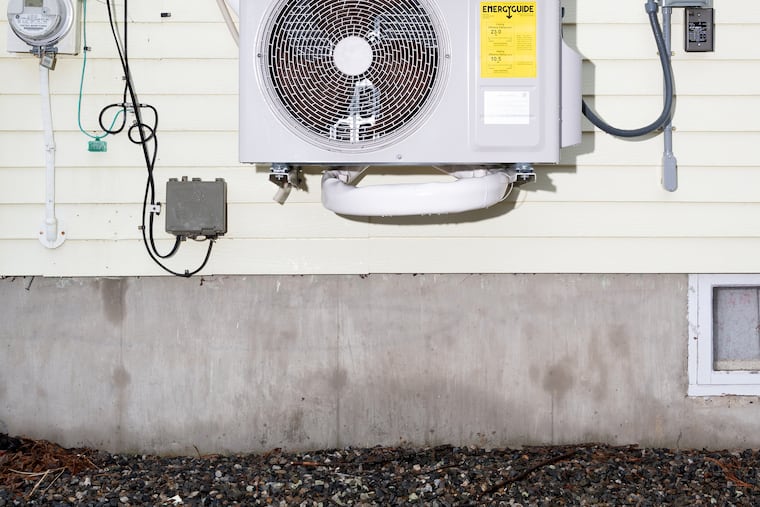
Natural gas is not an option in many rural and suburban areas because laying pipelines over long distances is often financially unfeasible. Some states have offered incentives to get residents to switch to electric heat pumps, which are much more energy efficient and contribute much less to climate change, but installing the devices can still cost residents thousands of dollars.
Consider Vermont, where 35% of homes use heating oil. Of its 285,000 homes, about 80,000 have heat pumps, said Philip Picotte, a utilities economic analyst with the Vermont Department of Public Service. Around 8,000 to 10,000 heat pumps are installed in Vermont every year.
That said, the use of heating oil has been dropping. In 2010, about 6% of Americans used it. Some states have weaned a lot residents off the fuel. Maine has decreased the number of homes that primarily rely on heating oil from 62% in 2018 to around 50% in 2025.
One hurdle to heat pumps is that electricity rates tend to be higher and homes tend to be older in the Northeast than in other regions. That means using heat pumps may not lower heating costs unless they are paired with other home upgrades like insulation and sealing that help minimize energy use.
Another option is propane, a fuel made from the processing of natural gas or crude oil. Around 5% of American households use it, and prices for the fuel have climbed modestly this year — in New York, they’re up about 5.7% compared with last year. But switching to propane also requires replacing home heating equipment, which can be beyond the means of many people.
Natural gas and electricity prices are up less
Households outside the Northeast and Alaska generally will not face as big a financial shock this winter. That’s because about 47% of U.S. homes heated with natural gas as of 2024 and the United States has plenty of it on hand, unlike Europe, where the price of that fuel has been rising sharply.
“We’re really very well supplied for natural gas, and that’s where you see prices where they are,” said Matt Smith, director of commodity research at Kpler.
The wholesale price of natural gas in the first week of September has actually been lower than prices in September last year, according to the EIA.
But the price of gas delivered to homes, which also includes the cost of maintaining pipelines, has been rising. In June, the average retail price was $24.09 per thousand cubic feet, up 3.6% from a year earlier, according to the EIA.
About 42% of U.S. homes used heat pumps or other electric heaters as of 2024, according to RMI, a research group formerly known as the Rocky Mountain Institute. These people will likely also pay somewhat more this winter. In June, the national average residential electricity rate was 18.34 cents per kilowatt-hour, up about 5% from a year earlier, though rate increases vary a lot by state and utility.
This article originally appeared in the New York Times.