‘Babies are dying’: How Pennsylvania’s measles outbreak changed the vaccine mindset of this Amish country midwife
While top officials publicly spar over whether Pennsylvanians are dying of measles, a midwife in Amish country believes the outbreak is so bad she wants to be able to carry the MMR vaccine herself.
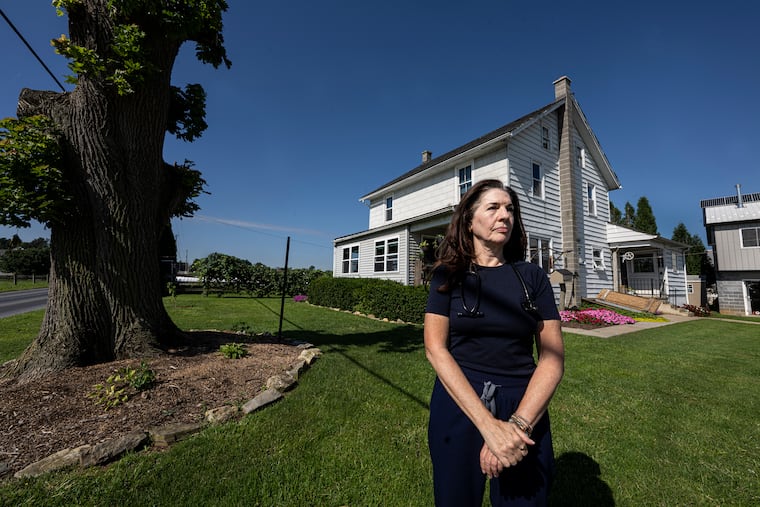
LANCASTER — Amish families peer into Roberta Devers’ Honda Passport as she drives between prenatal checkups along the rolling hills of Lancaster County. They ask her increasingly frequent questions about the vaccine: Do you have some measles in your car?
Devers, 63, works as a traditional midwife in communities at the epicenter of Pennsylvania’s largest measles outbreak in more than 30 years. She belongs to a class of midwives who follow age-old practices and are unregulated by the state, unlike the state-licensed midwives one may find in a hospital. She received the full childhood vaccination schedule but, as an adult, chose not to vaccinate her son and is part of the rising number of people in Pennsylvania refusing to get vaccinated against preventable diseases due to unfounded concerns about their safety and necessity.
But with the growing outbreak now linked to the deaths of two Amish infants and two adults in Pennsylvania — the first measles-related deaths in the state, and the most in the nation in more than three decades — Devers thinks everyone who can should get vaccinated against measles.
And she thinks she should be able to offer the vaccine to her patients, as a trusted caretaker among Amish residents.
“Babies are dying,” said Devers, who is not Amish but has been a traditional midwife for 38 years. She says she fears that Pennsylvania’s Amish community, one of the oldest and largest in the country, cannot wait to reach herd immunity. “You’re going to lose too many babies,” she said.
Devers occupies a unique vantage point from the front lines of the nation’s largest measles outbreak this year. State health officials said the deaths of two local Amish infants were measles-related, sparking a clash between Democratic Gov. Josh Shapiro and President Donald Trump’s Health and Human Services secretary, Robert F. Kennedy Jr., over how to report the outbreak’s death toll. An 18-year-old from Mifflin County and a 40-year-old woman from Jefferson County also died from measles-related illnesses in recent days, according to the counties’ coroners.
» READ MORE: Josh Shapiro’s measles response — and its backlash — reignites COVID-19 fury
As of Wednesday, the state had reported 731 cases in 38 counties. Lancaster has recorded the highest number of known cases in Pennsylvania, as the highly contagious disease has spread among the area’s significant number of unvaccinated people, including many from communities beyond the county’s Amish population.
Traditional midwives like Devers — also known as lay midwives or direct-entry midwives — broadly oppose being regulated by the modern medical system and often do not receive the medical and scientific training or college-level education required of certified nurse midwives and midwives. Because of this, top medical associations like the American College of Obstetrics and Gynecology oppose traditional midwives from being able to practice at all. State law also prohibits traditional midwives from practicing medicine, such as administering vaccines or sutures.
Until this summer when it was quietly repealed in state budget documents, an unenforced 1929 law allowed traditional midwives to practice in Pennsylvania. Devers is part of a group of midwives who have sued the state to formally recognize them, but that would still not permit them to practice medicine, including administering vaccines.
» READ MORE: Why Pennsylvania quietly repealed its 1929 midwifery law — and is now getting sued for it
Yet, traditional midwives are the main care providers who oversee home births in certain Amish communities, or for people who want their help with a personal and private birth experience. Their influence is particularly prominent in Pennsylvania, which has one of the nation’s highest rates of home births. Devers’ practice, Mount Laurel Midwifery, delivers about seven babies per month across south-central and Southeastern Pennsylvania, with a number of student midwives studying under her.
In Lancaster, Devers’ clients are not talking about the political debate. Rather, their conversations center on the spread of measles — did she hear about the recent baby deaths, what should they do if they were exposed, does she have a vaccine with her?
Two doses of the measles, mumps, and rubella vaccine have proven 97% effective at preventing the disease, the Centers for Disease Control and Prevention says. Nine in 10 unvaccinated people exposed to measles will acquire the disease.
Pregnant people are not eligible to receive the vaccine.
In her daily prenatal checkups, she is seeing moms who have the infection’s signature bumpy, red rash and fever, and families who have watched the sickness move through one family member to the next.
About three in 1,000 children who contract measles will die, according to the CDC. Measles can cause severe complications, especially in young children, including pneumonia and brain swelling. And measles during pregnancy can lead to pregnancy loss, premature delivery, and low birth weight, according to the CDC.
Devers said she recently saw a case in which a mother lost her baby at 17 weeks. The Amish woman was recovering from an active measles infection at the time of the miscarriage, in addition to at least one other underlying medical condition, Devers said.
Amish families traditionally have funerals for stillborn babies or miscarried fetuses, sharing obituaries in the local newspaper. Devers attended the funeral for one such death, involving the 17-week-old fetus, last month.
During previous public health emergencies, state and federal governments have used limited emergency approvals to expand who is allowed to administer vaccines, though the authority was not extended to unregulated groups like traditional midwives.
Now, Devers wants state or federal health officials to extend approval to allow traditional midwives to administer the measles, mumps, and rubella vaccine.
But the Pennsylvania Department of Health says it does not have the authority to allow traditional midwives to administer vaccines, because they are not certified healthcare providers. Currently, state law allows licensed healthcare providers like doctors and certified nurse midwives to administer vaccines, and any expansion of the list would require an amendment to state law, spokesperson Stephanie Nojiri said in a statement.
HHS and the CDC did not respond to requests for comment. Devers said she recently accepted an invitation from the CDC to participate in a paid interview to discuss how midwives serving Plain communities are approaching the measles outbreak. She sees the outreach as a signal of the agency’s interest in working with midwives.
The Amish and vaccines
Vaccination rates among Pennsylvania children have been falling for years. The spread of misinformation about vaccine safety reached the highest echelons of the U.S. government after Trump picked Kennedy, a longtime anti-vaccine activist, to lead the nation’s health agencies.
In 2025, at least 249 Pennsylvania schools had vaccination rates below 95%, the level that scientists say is necessary to prevent the spread of measles.
Amish communities do not have a religious objection to vaccinations, said Steven Nolt, a top Amish scholar at the Young Center for Anabaptist and Pietist Studies at Elizabethtown College.
He said low vaccination rates in the groups, who dress in plain clothes and widely object to using technology in favor of a more traditional way of life, are due to their partial abstention from modern medicine, as well as a lack of nearby access given their rural lifestyles.
In Lancaster County, 30% of Amish families had their children vaccinated and believed vaccinations were safe and effective, according to a 2022 survey of 433 Amish and Old Order Mennonite residents, published by Elizabethtown College and conducted by Franklin and Marshall College.
The numbers are much higher among Old Order Mennonites — a different religious group that similarly dresses in plain clothes — with 94% vaccinating their children and 72% believing they are safe and effective.
When a 1991 rubella outbreak spread through Amish communities, families welcomed the booster shots, Nolt said. So did Amish groups during a polio outbreak in the 1970s.
“When there would be an outbreak, that was a bit of a wake-up call,” he added. “Then people would come out for immunizations.”
Another “wake-up call” has now arrived for Lancaster’s Amish residents, Devers said.
Amish groups broadly approach their health through a “medical pluralism” lens — a term coined by Martha King, a medical anthropologist at the University of North Carolina at Chapel Hill. This means Amish communities view medical doctors, chiropractors, midwives, and homeopathic remedies as all being “on the same playing field,” rather than being supplementary to a primary care physician, as is common among most Americans, Nolt said. Sometimes Amish people will choose treatments that contradict each other or lack any scientific backing.
“They kind of all function in a way that doesn’t necessarily make sense the way many ‘normal’ Americans think about healthcare,” Nolt added.
Prior to his appointment as HHS secretary, Kennedy helped lead anti-vaccination efforts across the country. During a 2021 speech in Lancaster County, he mocked measles as a serious threat.
It is unclear what effect the efforts have had on Amish populations, Nolt said. During the COVID-19 pandemic, some anti-vaccine groups ran advertisements in Amish newspapers, discouraging the Amish from getting any immunizations, he added.
Devers said she largely supports Kennedy, but believes Shapiro was right to raise alarm about the need to vaccinate against measles. She said she has been disappointed in Kennedy for downplaying the dangers of the outbreak.
“My God, use your head,” Devers said. “He can’t mean this in the midst of an epidemic like this.”
Pennsylvania’s health department, in partnership with local health systems, says it has been working with Amish communities. And Shapiro has emphasized that the outbreak stretches much further than just among any one community, now that confirmed cases have spread to more than half of Pennsylvania’s 67 counties.
Since the start of the measles outbreak in Pennsylvania in April, state health officials have hosted 124 pop-up vaccination clinics across the state in locations like churches, fire halls, and private homes to give more than 4,100 doses of the MMR vaccine, Nojiri said. More pop-up clinics are planned in the near future.
But traditional midwives should be part of the solution, too, Devers argued.
“Different times call for a change in thinking,” she said.