More than 100 migrants are dead after boat capsizes near Djibouti
Tens of thousands of men and women from Ethiopia and other East African countries make the desperate sea crossing from the Horn of Africa to Yemen every year, officials say.
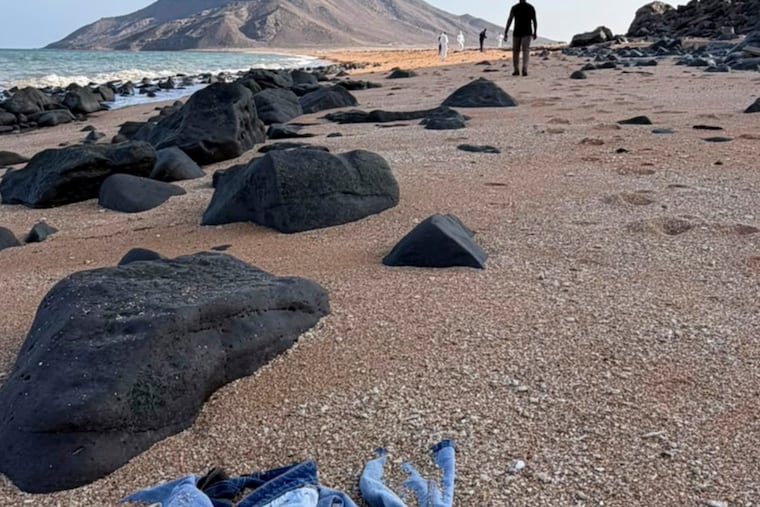
At least 139 people have died, including 15 children, after a boat carrying hundreds of migrants capsized while traveling from the Horn of Africa to Yemen, the International Organization for Migration said Sunday. An additional 84 are still missing, the United Nations body said in a statement, stoking fears that the death toll could climb.
The shipwreck is among the deadliest ever recorded on the route, one of the most dangerous crossings in the world. More than 80 people survived, all of them Ethiopian nationals.
The boat was carrying 305 people when it overturned between Thursday night and Friday morning, near Guhere, north of Obock, a small Djiboutian port town, the migration agency said. The migrants were traveling from Djibouti to Yemen across the Bab el-Mandeb Strait, the agency said. Last year, more than 900 people died or went missing while making the journey, according to an agency tally.
The bodies of nine girls and six boys were among the 139 recovered as of Sunday, the U.N. migration agency said. The cause of the disaster was not immediately clear.
Tens of thousands of men and women from Ethiopia and other East African countries make the desperate sea crossing from the Horn of Africa to Yemen every year, seeking jobs and security in Saudi Arabia and other Persian Gulf states. The boat trip is only the first part of a route fraught with danger. In Yemen, which has been torn apart by civil war since 2014, migrants risk violence, thirst, and hunger as they traverse the country toward the Saudi border, frequently on foot.
The additional risks posed by the heated conflict in Yemen, between the Houthi militia and government forces backed by Saudi Arabia, do not appear to have deterred migrants from embarking on the journey. Last week, the Yemeni government, backed by Saudi warplanes, launched a military offensive to retake territory along the Bab el-Mandeb Strait from the Houthis, who are backed by Iran. Much of the fighting has taken place in and around Ras al-Ara, a key entry point for African migrants arriving in Yemen.
The humanitarian situation has deteriorated sharply in the country in recent weeks, as the pace of the fighting escalates and front lines move quickly. More than 200,000 people have been displaced by the war, the migration agency said Wednesday, a sharp increase compared with the 76,000 displaced people it counted in mid-September.
The death toll as of Sunday makes the shipwreck one of the deadliest in the Red Sea in recent years. In August 2025, more than 60 migrants were killed after their boat capsized in the Gulf of Aden. The previous March, more than 180 went missing after two boats capsized off the coast of Yemen.
“We cannot keep treating these deaths as normal,” said Amy Pope, director-general of the International Organization for Migration. “No one gets into a boat like that unless they believe there is no other safe way,” she said in a statement Sunday. “I am asking governments and donors to act before the next boat goes down.”
Alexandre Coissac, the agency’s chief of mission in Djibouti, described the death toll as devastating. “This tragedy is a stark reminder of the dangers faced by migrants along this migration corridor as they seek economic opportunities,” he said in a statement.
Djiboutian authorities continued search and rescue operations Sunday, even as hopes of finding survivors began to fade. In Obock, the migration agency said it was working with the local authorities to provide healthcare and shelter for the survivors. The Djiboutian Health Ministry did not immediately respond to a request for comment.
This article originally appeared in the New York Times.