After his emotional return, Pope denounces 'machismo' in Peru and demands women be protected
Gender-based violence is an urgent social issue in Peru, which recorded 1,261 femicide victims between 2016 and 2024, according to the National Institute of Statistics and Informatics.
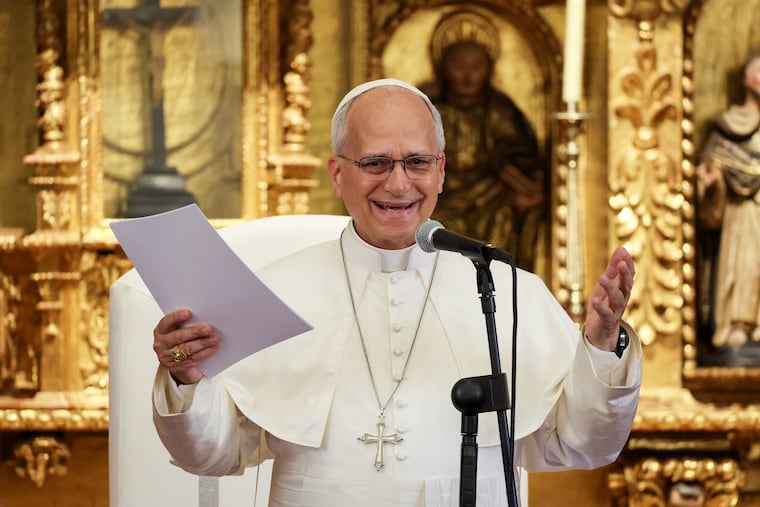
LIMA, Peru — Pope Leo XIV on Thursday denounced widespread “machismo” and violence against women in Peru, demanding that women be protected and respected as he set out marching orders for his beloved Peruvian church and people.
After his emotional homecoming Wednesday, the Peruvian pope got down to business and turned to the challenges facing a church and country he knows well.
He called on the influential Catholic hierarchy to be models of unity and communion, and instructed Peruvian bishops to accompany their flocks and respond to victims of clergy sexual abuse with truth and justice.
But the 71-year-old pope also showed himself to be positively overjoyed to be home and as relaxed as he has been in public since his 2025 election.
Leo sang along enthusiastically as 40,000 people in Lima’s Plaza Mayor serenaded him with “Contigo Perú,” a famous song from Peru’s Pacific coast that celebrates national unity. He drew huge applause when he recited the lyrics of another famous Creole hymn, “Mi Perú.”
“It’s a blessing not only for us Chiclayans but for all of Peru,” said Ángel Esquives, a craftsman originally from Leo’s former diocese in Chiclayo who now lives in Lima. He said he left his home at 3 a.m. to go to the historic center and stand in line to get as close as possible to the pope.
As he showed in the first two legs of his South American trip, Leo was in fine form despite having undergone lung cancer surgery last month. He bounded up a steep flight of stairs Thursday morning without any apparent problems and joked with the bishops that some “doubting Thomases” had predicted he wouldn’t be able to come.
“But God is great and his grace is bigger than all of us and I’m very happy to be here with you,” he said to applause.
An appeal to protect and respect women
In a speech to Peruvians in the plaza, Leo denounced the culture of “machismo” and violence against women that is prevalent in Peru, saying it went against the Christian teaching that proclaims men and women share equal dignity.
“It pains us to see that violence against women — who could be our grandmothers, mothers, sisters, or daughters — continues to be a reality that wounds all of humanity,” he said. He noted that poor, Indigenous, and Afro-Peruvian women are doubly penalized, and called for all women to be valued, protected, and respected.
Gender-based violence is an urgent social issue in Peru, which recorded 1,261 femicide victims between 2016 and 2024, according to the National Institute of Statistics and Informatics. During that period, the number of women killed because of their gender rose by 44%, suggesting the problem is only getting worse.
“While we’ve made progress with women’s suffrage and in being heard more, femicides are still on the rise — or at least they’re receiving more attention,” said Nicole Cruz, who was in the Plaza Mayor for the pope’s speech Thursday.
Cruz said she hopes the pope’s words will help unite women and help “men understand that we’re not complaining, but that we want help and to be loved and heard.”
A massive welcome home for ‘Padre Robert’
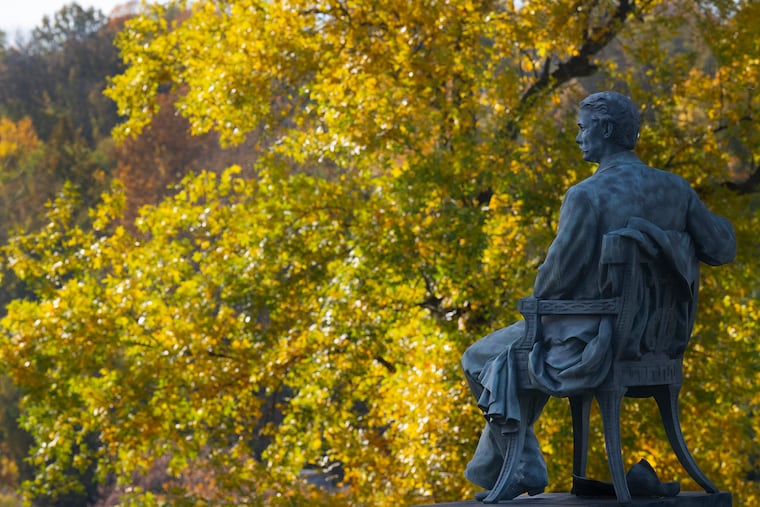
The former Robert Prevost spent two decades as a missionary priest and bishop in Peru and credits the place with teaching him how to be a shepherd. He in many ways has modeled his vocation as a bishop on the 16th century St. Turibius de Mogrovejo, the first archbishop of Lima.
Mogrovejo is revered for having traveled long distances to be with his flock and for having defended the rights of Indigenous and enslaved peoples. He studied Quechua and Aymara and oversaw the printing of the Catechism of the Catholic Church in these Indigenous languages, because he believed the faith had to be transmitted in a language people could understand.
Leo urged bishops on Thursday to model their vocation on his example. Being a bishop, he said, means “entering people’s homes, accompanying the sick, meeting young people, and reaching out to communities which, due to their geographical remoteness or social vulnerability, are rarely able to make their voices heard.”
While the clergy sexual abuse scandal hasn’t exploded publicly in Peru as it has in other Latin American countries, Leo identified it as a “reality that has caused us so much pain.”
“We must respond as Jesus would, with truth, justice, forgiveness, making amends, and an ever more resolute commitment to fostering a culture of prevention and protection for the weakest in light of such crimes,” Leo said.
The online database BishopAccountability has identified 77 priests, brothers, seminarians and lay consecrated in Peru who have been publicly accused of sexually abusing minors. But based on trends in other countries, the organization said that number is a “small fraction” of the total, arguing victims simply haven’t come forward yet in the overwhelmingly Catholic country where the church wields significant influence.
Leo, who was the Peruvian bishops’ point-person to welcome victims while he was Chiclayo bishop, was expected to meet with survivors during his stay in Peru. A protest by a victims group was also planned later Thursday.
Leo’s friends say he is particularly attuned to Peru’s needs
Peruvian Cardinal Pedro Barreto, the president of the Amazonian bishops conference, said Leo was acutely attuned to the needs of the Peruvian people and church, and would offer words of consolation and advice during his days crisscrossing the country, from his beloved Chiclayo in the north to the Andes and rainforest.
“Leo will listen to the anguish and hopes of the Indigenous peoples, especially the pain caused by the violence affecting girls, boys, adolescents, and young people,” said Barreto, who was close friends with both Prevost and his predecessor, Pope Francis, a Jesuit like Barreto.
He predicted Leo would pay special attention to a recent case in the province of Condorcanqui, in the northern Peruvian jungle, where teachers sexually abused Indigenous Awajún and Wampis girls.
The Rev. Peter Hughes, an 84-year-old Irish priest who has lived in Peru for more than 60 years, said Leo was comfortable in Peru not only because he had it as his home, but because he sees its poverty and political polarization as mirroring the global situation.
“That is what makes leaders like Pope Francis and Pope Leo speak the language of the Gospel in very human terms, putting a premium on justice and peace,” he said. “In the Christian sense of justice, the most important people are the poor, the marginalized, and those who have no voice.”