Proposed legislation wants to help fund arts groups by increasing sales tax
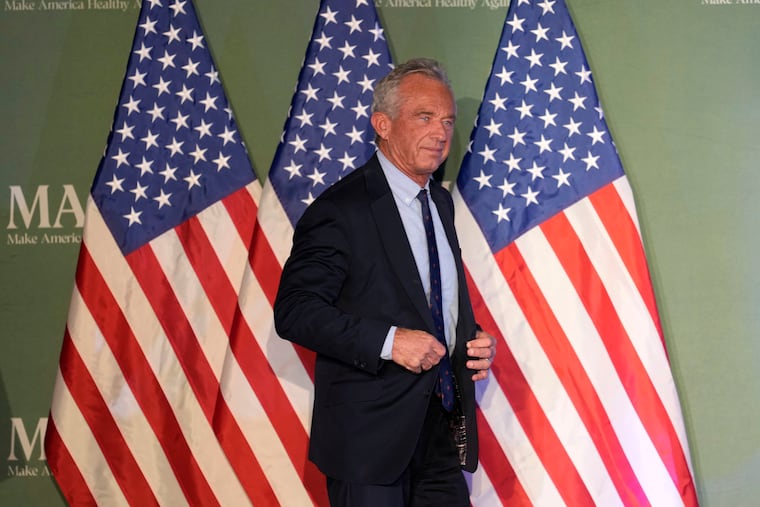
Details remain to be worked out but the money generated from the proposed tax will fund libraries, rec centers, arts and culture groups, said Sen. Nikil Saval.
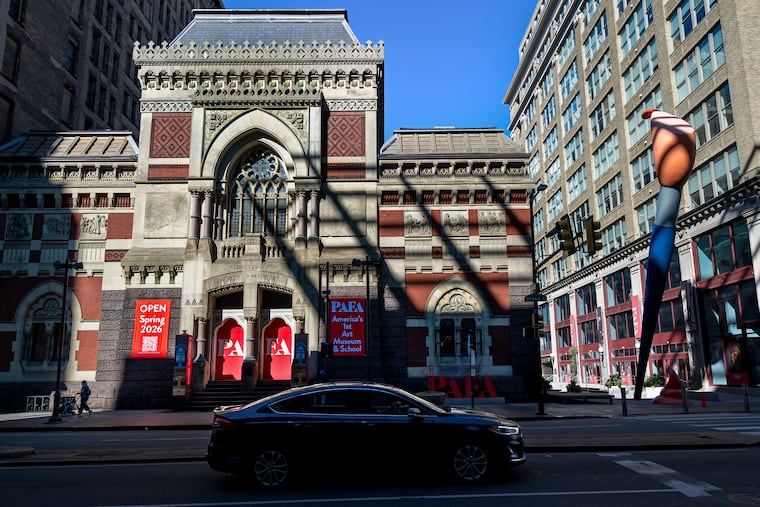
For decades, Philadelphia’s arts and culture leaders have chased the dream of a dedicated source of public funding that could provide some basic support to the sector.
Other cities have it, they’ve argued. Why not Philadelphia?
Now a possible funding mechanism is being proposed. State Sen. Nikil Saval (D., Philadelphia) on Thursday distributed a co-sponsorship memo to other legislators that he hopes will lead to passage of a bill allowing Philadelphia to increase the sales tax to help fund community assets like arts and culture groups, libraries and recreational centers.
Saval says the arts are a “major source of economic, cultural, and human dynamism in our city,” and he cites the demise of the University of the Arts and closing of the museum of the Academy of Natural Sciences of Drexel University as recent evidence that help is needed.
“Investment has a massive effect,” he said. “It’s amazing how much we do with so little, but to actually help sustain or help organizations plan with a sustained source of funding would be enormous.”
A new tax would generate a pot of money each year to be allocated to recipients based on a process overseen by a governing board. Many of the details required to get the idea from concept to reality remain to be worked out. But the idea is modeled on a similar, long-standing program in Pennsylvania, in Allegheny County.
“It’s generated several billion dollars over the course of its existence from the early 90s, which is also the last time incidentally that we had a Democratic trifecta,” said Saval, referring to the Pennsylvania house, senate and governor’s office. “It’s allowed so much to happen in Pittsburgh and Allegheny County. It’s allowed so many institutions to offer reduced or free membership.”
Pittsburgh is among a number of cities that have funding mechanisms providing a dedicated funding stream to arts and culture, including Denver and Portland (Oregon), each with its own funding and spending formulas.
The Allegheny Regional Asset District in its projected 2026 budget forecast distributing $147.9 million in grants to a wide variety of “civic, recreational, sports and cultural facilities, libraries and other entities as determined by the board of directors,” according to the organization’s budget summary.
Arts and culture organizations were allocated 12.8% of that money.
Saval’s memo is a precursor to introducing legislation that would allow the City of Philadelphia to authorize an increase to its sales and use tax and establish an independent board to receive the new revenue and distribute it. The amount of the sales tax increase might be a penny per dollar, he said.
City Council and the mayor would have to approve a bill enacting the new tax, Saval said.
Timing isn’t set, but Saval wants to introduce the concept now to “socialize some of the ideas” and introduce legislation in the new year. If it is approved at the state level and takes effect by the end of 2027, City Council and Mayor Cherelle L. Parker could consider approving the tax in 2028.
The current combined Philadelphia and Pennsylvania sales taxes total 8%, and while increasing taxes is rarely a popular cause, Saval is hopeful.
“We’ve had some conversations with council members and with the city, to let them know that we’re pursuing this. Without wanting to speak for anyone, there’s general excitement about the notion of creating a dedicated arts funding stream,” he said.