Malayshia Allford’s life was treated recklessly. Her death must not be. | Editorial
Wholesale reform of Philadelphia’s child welfare system is just the beginning of what the 10-year-old’s killing necessitates.


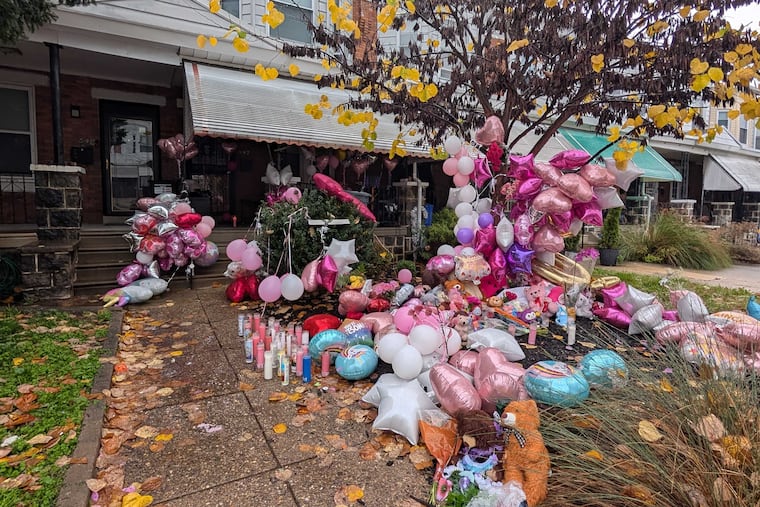
The culpability for the death of 10-year-old Malayshia Allford, whose battered body was found in the trunk of a car at a South Jersey apartment complex this month, allegedly begins with her foster mother, Carprice Williams, who has been charged with her murder.
But it extends to the city of Philadelphia, which had legal custody of the child; the nonprofits contracted to provide for her care; the state officials responsible for overseeing the child welfare system; the city schools which employed Williams and educated her foster daughter; and a society that has horrifically failed children like Malayshia before.
In short, it took a daunting conspiracy of adults to kill this child.
The most damning fact in a story full of them is that another child nearly died under deeply troubling circumstances in the same foster home a few years earlier. In 2021, according to court documents, Williams brought a 4-year-old in her custody to the Children’s Hospital of Philadelphia claiming the girl had fallen. But a doctor found that she had suffered not only a traumatic brain injury but also repeated physical abuse and severe malnourishment. Reported as a near fatality, the case triggered a review by city and state officials, which found that Williams had abused the girl and her sister and should “never be used as a foster parent for other children in the future.”
Just three years after that report was finalized, however, Malayshia was placed in the same West Philadelphia home to allegedly face all too similar cruelties. Much as court records charge in the earlier case, police found the girl was subjected to cruel punishments, repeated beatings, and food deprivation. Unlike Williams’ previous foster children, however, Malayshia did not survive her ordeal.
» READ MORE: The Nvidia mess should end the era of unregulated AI | Editorial
A series of institutional inadequacies and breakdowns appears to have contributed to this disaster. Prominent among them was state officials’ overturning and expungement of the 2021 abuse findings on appeal. The same year, state Auditor General Eugene DePasquale reported that a Pennsylvania Department of Human Services bureau granted about 90% of such appeals by accused abusers, citing flaws in the process that disadvantage the abused.
At the local level, meanwhile, no criminal charges were brought in the earlier case despite a police investigation. The contracting agency that was handling the children placed with Williams, Tabor Children’s Services, settled a lawsuit in the case.
A different case management contractor, Catholic Community Services, was responsible for Malayshia, who was also receiving foster care services from another nonprofit, Pennsylvania MENTOR. Horribly, according to an attorney representing Malayshia’s estate, she was placed with Williams because she had been physically and sexually abused in her previous foster home.
It’s that much more disturbing that Williams has been professionally responsible for children around Malayshia’s age as a teacher for the Philadelphia School District for more than a decade. It didn’t take journalists long to find parents with disturbing accounts of Williams’ handling of that role as well. One mother called it “a gut punch … to know that that type of person was actually allowed into one of the schools to teach our child.”
There are more than enough gut punches to go around here.
» READ MORE: Bike protest of Jewish businesses was indefensible, and it must be condemned | Editorial
Ironically, the city began relying on nonprofits such as Tabor and Catholic Community, known as Community Umbrella Agencies or CUA, as part of the reforms that followed another child’s horrific death on its watch, that of 14-year-old Danieal Kelly in 2006. But the city and its contractors have obviously failed to prevent more such atrocities.
It’s been clear for years, moreover, that Philadelphia is too quick to remove children from their families instead of helping their relatives care for them whenever possible. Despite recent progress on that score, the reliance on such an obviously unacceptable foster home and apparent obliviousness to extreme and consistent abuse show the city still has a mountain of work to do. So do reports that members of Malayshia’s extended family had tried and failed to get custody of the child, suggesting foster care wasn’t the only option. As Nadeem Bezar, the lawyer for Malayshia’s estate, told WHYY, “There is a paper trail of indications that Carprice Williams or her foster home should not have been used, not because it wasn’t suitable but because it was dangerous.”
The case also indicates that the auditor general was right to criticize the state Human Services Department’s Bureau of Hearings and Appeals for its plainly permissive track record on abuse cases. And the sequence of events leading up to Malayshia’s death raises further difficult questions for the school district and the police.
In addition to the review of Malayshia’s death required by state law, Mayor Cherelle L. Parker has ordered a comprehensive examination of the case and its systemic implications, while City Council is expected to hold hearings on the subject.
That’s a solid start for every institution implicated in the case. But the reviews must lead to substantial reforms rather than serving as a substitute for them. For guidance, the city and state should look across the Delaware to New Jersey, where child welfare reforms have dramatically reduced unnecessary family separations.
Parker has insisted in the wake of the killing that “every child matters in Philadelphia.” Sadly, the record suggests otherwise. Malayshia Allford suffered a death — and, in too many respects, a life — that are nearly unbearable to contemplate and impossible to tolerate.
About our editorials
Editorials express an opinion about a matter of policy or public interest that has been researched and written by our Editorial Board, a group of journalists separate from the newsroom. Unlike news stories, which are fact-driven and written by reporters, editorials advocate, champion, argue, critique, and offer solutions. Editorials are not intended to dictate what readers should think, but to cut through the noise of polarized debate and provide a catalyst for elevated discourse.