Trump’s school voucher program could become a public school cash machine
Taxpayers can contribute up to $1,700 to what’s known as a scholarship-granting organization and receive a credit on their federal income taxes.
Forget student fun runs, PTA bake sales and Saturday morning car washes.
The future of public-school fundraising may soon look more like a payroll deduction. Or perhaps door-to-door campaigns each tax season asking filers to earmark donations to support nearby public schools.
When President Donald Trump’s tax overhaul known as the One Big Beautiful Bill last year created the first national school-voucher-style program to help families pay for private schools or home-school costs, it allowed public schools to benefit as well. According to U.S. Treasury guidelines released in June, the program allows specific nonprofits to collect donations that people direct from their federal taxes for a vast array of public school costs, such as transportation or tutoring.
Sara Hazel, president of the Denver Public Schools Foundation, the fundraising arm for Colorado’s largest school district, is among a small but growing number of district leaders who have said they plan to take advantage of the financial opportunity. She said she plans to tell potential donors, “Do you want that money going to the IRS or going to local kids?”
The program doesn’t officially start until the new year, but its resemblance to private-school vouchers has inspired opponents of school choice to line up against it. Still, supporters and even cautious critics say the Republican-backed initiative could mean a financial boon for public schools.
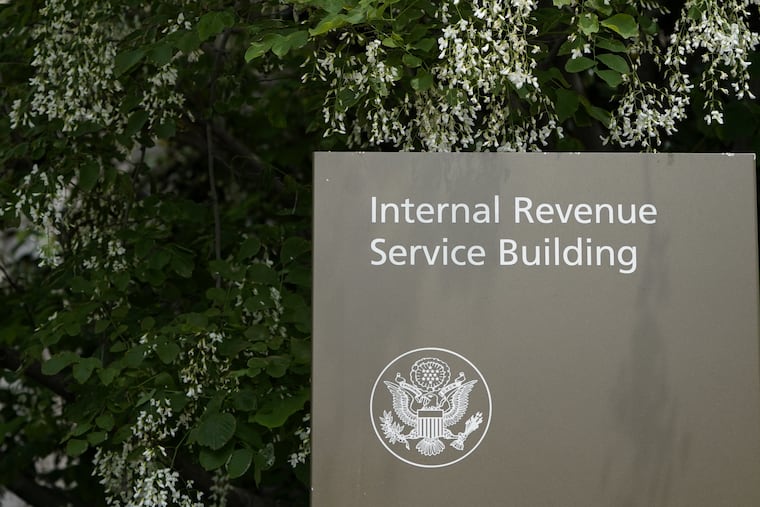
The program works like this: Taxpayers can contribute up to $1,700 to what’s known as a scholarship-granting organization and receive a credit on their federal income taxes. It’s a dollar-for-dollar credit, meaning every pledged dollar reduces what an individual owes to the Internal Revenue Service by the same amount.
These new intermediaries could be formed by an array of nonprofits, including public-school foundations, with approval from their state. The scholarship-granting organization would then pass on the money to private school and home-school applicants in the form of scholarships — or to school districts so they could cover certain services for student applicants.
Marguerite Roza, a school finance expert, has advised school districts — many of which have bandaged their slashed budgets by shuttering campuses or issuing pink slips — that they can’t afford to ignore this new source of funding. “Any time there’s an available revenue source, generally we don’t see districts saying, ‘No thank you,’” said Roza, director of the Edunomics Lab at Georgetown University.
States must opt into the program, and so far, 30 states have done so. Now it’s up to individual school district leaders in those states to decide if they want to try to tap into the money.
School finance experts suggest the scholarships could help districts access funding comparable to 3 percent of their entire budget. But tapping into this unexpected revenue risks political backlash and logistical headaches. Governors and superintendents may face fierce resistance from teachers unions, which in many states have portrayed the new program as a Trojan horse for the expansion of vouchers in education because it also allows money to be funneled to families to pay for private school.
Some opponents also raise concerns about creating a new funding system that could favor school districts with a ready pool of wealthy donors over those in low-income communities where few residents may owe enough in federal taxes to contribute to the scholarships.
“In low-income areas, you’re going to find it’s not easy for school districts to raise this money,” said Thomas Toch, director of the think tank FutureEd at Georgetown University.
He said he worried that the inclusion of public school districts in the legislation was little more than a ploy, a shrewd political strategy to further school choice in states otherwise unlikely to support it.
“It was designed to make the case that this program can support the public sector in order to win support in blue states,” Toch said.
The mechanics of the tax credit scholarships represent a dramatic departure from how the federal government supports schools.
The money for the scholarships never flows through federal Department of Education coffers, entirely bypassing Congress and its spending decisions.
Treasury regulators will soon issue formal rules to set additional guardrails for the program. But the law suggests the scholarships could be used to cover an expansive list of expenses that public schools often struggle to fund including costs such as field trips, textbooks or support services.
The inclusion of public schools now places some governors, superintendents and school boards in a new dilemma: Do they choose to tap into a Trump-backed program that could boost their bottom line, or leave the tax-credit cash on the table for others to claim?
“The reality is this program exists, and if there are dollars on the table that can go to our children and families, I don’t understand the purpose of not trying to do everything we possibly can,” said Justin Dayhoff, chief financial officer for Nevada’s Clark County School District, which includes Las Vegas.
His district, like many around the country, is strapped for cash as health insurance and other costs increase and fewer students enroll in public school due to population decline. Enrollment in Clark County — the nation’s fifth-largest district — has dwindled by more than 35,000 students, or 11 percent, since before the pandemic and it laid off five dozen staff ahead of this new school year.
How big a financial difference the voucher-style program would make for school districts remains to be seen.
Some school finance experts expect soliciting donations could be as simple as districts partnering with employers to enroll their workers in the tax credit program, perhaps as another form in their regular HR paperwork. (Many employers already partner with nonprofits like United Way to collect pretax donations from paychecks.)
Roza, of Georgetown, estimated a district could bring in about $200 per student by enrolling its own employees into the program. Convincing major companies to do the same — directing proceeds to nonprofits supporting students who attend local public schools — could push that figure higher. City and county governments might participate as well.
“Local employers are an absolutely critical piece of this puzzle,” said Hazel, with the Denver Public Schools Foundation.
Her organization hasn’t officially approached any of its corporate partners yet about enrolling their employees in the tax credit program. (Past donors to the foundation have included Chevron, the Colorado Rockies and United Airlines.) But Hazel’s already thinking about whether Denver Public Schools will have to compete with other Colorado districts attempting to woo the same business leaders.
“We’re the largest school district in Colorado, so we already have an advantage,” Hazel said. “But how can we go to a company and say, ‘Your employees must choose between all these great school districts?’”
But her new fundraising plans will come with steep operational hurdles.
Under the new law, at least 90 percent of all donations to scholarship-granting organizations like Hazel’s must go directly to student scholarships, leaving relatively little to cover marketing, staff, annual independent audits and payment processing. Fees already take 4 percent of each credit card transaction, Hazel said.
Yet even as she awaits further clarity from Treasury on how organizations can collect donations, she’s imagining what the money could mean for Denver schools.
“My dream is I can give every second grader a tutor and we get everyone to grade-level reading and math,” Hazel said. “There are things like that that are so scalable and would support every student.”
This story about the One Big Beautiful Bill was produced by the Hechinger Report, a nonprofit, independent news organization focused on inequality and innovation in education.