‘Forever chemicals’ found in nearly all waterways of Philly, its suburbs, and South Jersey
"Forever chemicals" were detected in 96% of waterways tested in Pennsylvania and 91% of waterways tested in New Jersey, according to EPA data.
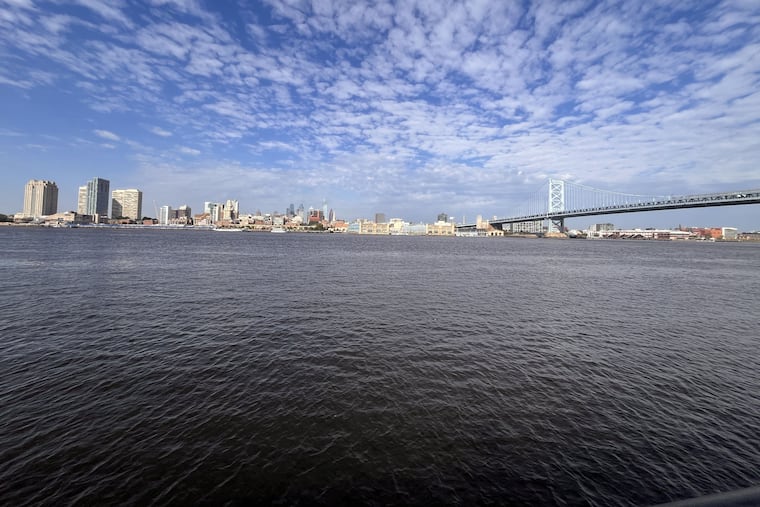
PFAS, or “forever chemicals,” were detected in almost all waterways tested in New Jersey and Pennsylvania, a new report says.
Various types of the synthetic compounds were found in urban, suburban, and rural areas, including New Jersey’s Pinelands.
PFAS were detected in 96% of waterways tested in Pennsylvania and 91% of waterways tested in New Jersey from samples taken between 2022 and 2024.
That’s according to national data from the U.S. Environmental Protection Agency reported and compiled locally by PennEnvironment Research and Policy Center, Environment New Jersey Research and Policy Center, NJPIRG Student Chapters, and the Frontier Group. The results were released Wednesday.
The data come about a week after Pennsylvania officials issued a “do not eat” advisory for fish caught in Wissahickon Creek after PFAS were recently found in a sample. A trout stocking on a section of the creek in Philadelphia was canceled as result.
“Every place that we’re testing, nearly every place we’re testing, we’re finding PFAS,” said Doug O’Malley, director of Environment New Jersey. “This is not just a problem in some places. This is an everywhere problem.”
Per- and polyfluoroalkyl substances are a large group of human-made chemicals that have been used in industry and consumer products for decades. There are thousands of the compounds. And many waterways tested positive for multiple types of PFAS.
Although the effects of the chemicals are still being studied, scientific studies have linked exposure to possible reproductive problems, development effects in children, increased risk of some cancers, high cholesterol, and reduced immunity.
Where were PFAS found?
In Pennsylvania, 88 waterways were tested. In New Jersey, 86 were tested.
The groups released an online map showing the locations and amounts detected.
The compounds were detected in the Delaware River, the Schuylkill, and Frankford and Wissahickon Creeks in Philadelphia. They were found in Valley Creek near Valley Forge, Perkiomen Creek in Collegeville, and the East Branch of Brandywine Creek in Downingtown.
They were found in the Cooper River in Cherry Hill, Big Timber Creek in Glendora, Rancocas Creek in Mount Holly, and the Mullica River near Atsion Lake in the Pinelands.
“The findings from today’s report represent the tip of a toxic iceberg, because many of New Jersey and Pennsylvania’s waterways have yet to be tested at all,” said Stephanie Wein, a clean water advocate for PennEnvironment.
Wein said that though there are thousands of PFAS compounds, most studies test for only a few. The two most well known are perfluorooctanoic acid (PFOA) and perfluorooctane sulfonic acid (PFOS).
Both have been phased out in the U.S. However, the compounds gained notoriety as “forever chemicals” because they resist breaking down in the environment, the human body, and wildlife.
“This poisoning of our water is what happens when we use toxic chemicals throughout our economy for unnecessary uses such as nonstick cookware, cosmetic products, and clothing,” said Tee’Yanah Davenport, coalition coordinator with Rutgers-Camden NJPIRG Students. “It’s time to turn off the toxic tap.”
Impact on drinking water
The Delaware River is one of the most PFAS-laden waterways, O’Malley said. The chemical was found in 98% of samples tested in the lower Delaware River south of Trenton.
The Delaware River watershed supplies drinking water to millions of people, as well as providing a home to fish and wildlife.
Philadelphia gets its drinking water from its two major rivers.
Currently, an EPA rule set during President Joe Biden’s administration — which calls for a maximum of 4 parts per trillion for PFOA and PFOS in drinking water — is being phased in. It set higher limits of 10 parts per trillion for a few PFAS compounds.
Under the Trump administration, the EPA has proposed giving water companies more time to comply with PFOA and PFOS limits, and rescinding limits for other PFAS compounds.
Some of the water sampled for the new study exceeded the current EPA safety levels.
Many water departments have installed, or plan to install, filters that remove most PFAS.
Higher blood pressure, cholesterol
PFAS have also been linked to firefighting foam. The foam was widely used on military bases in Bucks and Montgomery Counties for decades.
» READ MORE: PFAS exposure near Pa. military bases linked to high blood pressure, cholesterol. Researchers find cancer cluster.
Recently, a major study of PFAS-contaminated drinking water among people living near those bases showed associations with elevated cholesterol, increased blood pressure, and lower childhood development, according to preliminary findings.
A separate analysis showed areas of some cancers in or near those communities, but more research is needed to determine whether there is a correlation between cancer rates and the water, the study’s investigators said.
Pennsylvania state legislators are currently debating a bill that would ban PFAS in the foam.
The 40-mile-long Neshaminy Creek, which runs through Bucks County and near the bases, has been associated with high levels of PFAS, including areas that provide public drinking water.
The study released Wednesday showed a level of 102 parts per trillion in the creek near Hulmeville.