Trump demanded Iran’s ‘unconditional surrender.’ He got a surprise instead.
The deal read nothing like a surrender document. Instead, Iran emerged from a confrontation with the world’s most powerful military having not only survived, but with much to celebrate.
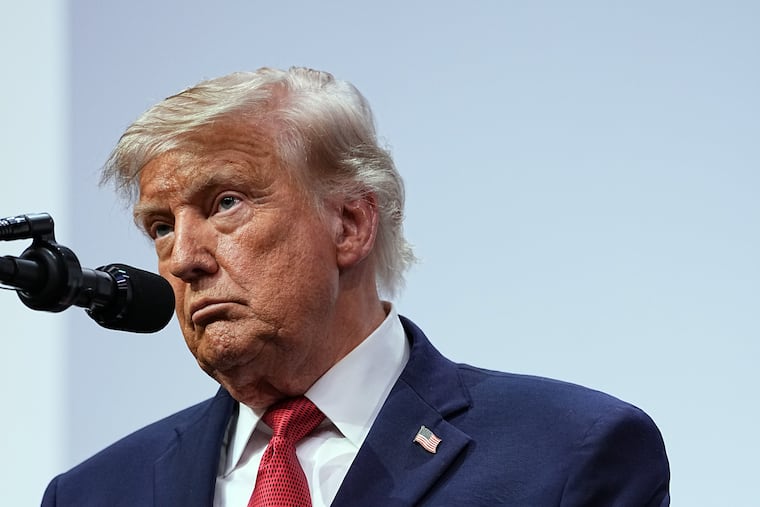
WASHINGTON — It was less than 15 weeks ago when President Donald Trump, at the height of his bravado about how the war with Iran would end, declared “there will be no deal with Iran except UNCONDITIONAL SURRENDER.”
When the text of the deal intended to wind down the conflict was finally released Wednesday, read aloud paragraph by paragraph by a senior administration official who stopped to defend each section, it read nothing like a surrender document. Instead, the Iranians emerged from a confrontation with the world’s most powerful military having not only survived, but with much to celebrate.
It starts with the resumption of Iran’s ability to reap billions of dollars in oil sales, lifting pressure on the struggling regime even as negotiators prepare to begin haggling over a far more lengthy and critical document: the one Trump insisted in an interview Sunday will arrest Iran’s nuclear program for the next 15 or 20 years.
For a president who prizes leverage above all else, that decision is just another mystery of the war. But the wording of the “Memorandum of Understanding” also suggests that, over time, Iran may negotiate some permanent way to exercise sovereignty over the Strait of Hormuz. That seems in contradiction to Secretary of State Marco Rubio’s declarations just a few weeks ago that anything other than the kind of free passage through the strait that the world knew before the war was “not acceptable” and “cannot happen.”
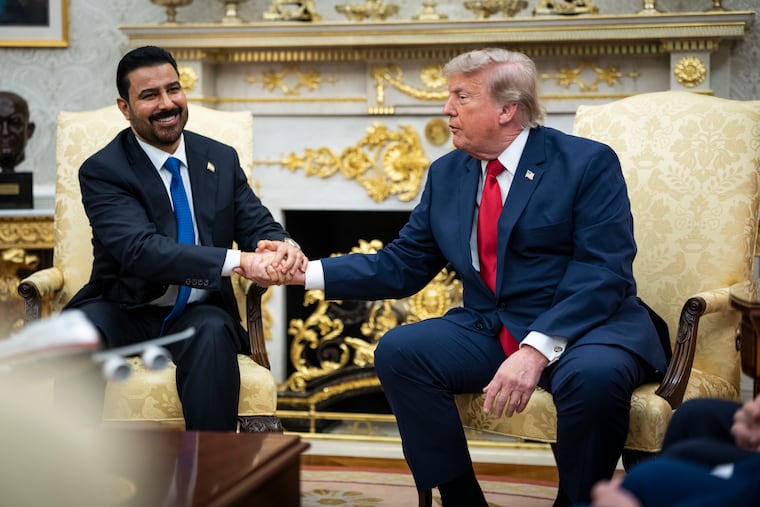
And the memorandum, signed Wednesday evening by Iran’s president and Trump, describes a pathway in which Iran could begin receiving billions of dollars in assets that have been frozen for years. Trump insists the money will only be released in return for “good behavior.” But it is essentially the same concession that Barack Obama made 11 years ago, and that Trump has savaged ever since.
As Trump reminds reporters — often angrily — the United States did have many accomplishments on the battlefield: It sank Iran’s less-than-impressive navy, wiped out its small air force, destroyed much of Iran’s defense industrial base and demolished some of its missile emplacements and mobile launchers. But that was not Trump’s goal. As he said at the opening of the campaign, he sought the total destruction of the nuclear and missile programs, the fall of the regime and, as he suggested later on, U.S. control of the country’s oil industry.
In the next few days, the details of this agreement will be picked apart. Hard-liners in Trump’s party have already been expressing objections. So have the Israelis, frozen out of the negotiations and fearful they are being forced by Trump into a ceasefire with Hezbollah that will interfere with their ability to rip apart the terror group. Historians will grapple for years about the lessons of a conflict in which the United States spent tens of billions of dollars, with 13 Americans and more than 3,000 Iranians reported to have been killed.
But it was Trump himself who offered what may be the most clear-eyed answer about why he needed to end this war so fast. He didn’t want comparisons to Herbert Hoover, he told reporters Wednesday at the Hotel Royal in Évian-les-Bains, on the shores of Lake Geneva.
“He was always the one I didn’t want to be,” Trump said of the 31st president, who presided over the market crash that ushered in the Great Depression. “I didn’t want to see economic catastrophe.” Later he noted that if the war continued, the world would have begun to run out of oil stockpiles.
That combination — economic chaos and disrupted oil markets — is exactly what the Iranians viewed from the opening days of the war as their most potent weapon. They executed on that vision with precision, closing the strait and blowing up petrochemical facilities, desalination plants, hotels and air bases across the Persian Gulf. And by the president’s own testimony, it worked.
If that was Phase 1 of Iran’s strategy, history suggests Phase 2 may be one of delay and more delay. In past negotiations, the Iranians refined the art of arguing over every paragraph, throwing in new obstacles to inspections or reinterpreting the meaning of “nuclear research” to embrace continued uranium enrichment. Few were more skilled at this process, former U.S. negotiators say, than Abbas Araghchi, the Iranian foreign minister, and a veteran of past talks.
And Trump, eager to move on, seems to be paving the way for a long, slow process. On Tuesday, he said he wasn’t especially concerned with getting Iran’s nuclear fuel — now buried under the rubble of last year’s U.S. air attacks — out of the country. On Wednesday, he acknowledged the talks would probably go beyond 60 days.
It is too early to say whether Trump will ultimately be able to claim more accomplishments. If, in the next stage of negotiations, he manages to get the Iranians to ship their stockpiles of nuclear fuel out of the country (as President Barack Obama did in 2015) and cease all enrichment activity for nearly two decades (which Obama failed to accomplish), then he may be able claim some long-term victory.
If the war turns out to have destabilized the Iranian leadership and triggered protests and an uprising, as Trump called for at the beginning of the conflict, he could well claim credit.
But for now it looks like the opposite is taking place. If anything, Trump has propped up the new leadership, ostensibly run by the new supreme leader, the injured and out-of-sight Mojtaba Khamenei, the son of Ayatollah Ali Khamenei, who was killed in the opening strike of the war.
The Revolutionary Guard, which has overseen the nuclear program for years, seems firmly in control, though a senior administration official argued to reporters several days ago that by bringing about a peace, Trump is now forcing the elite military unit to face the travails of governing.
Senior members of the Obama administration, having absorbed years of critiques from Trump about the shortcomings and loopholes in the agreement struck in 2015, saw their moment to exact a measure of retribution.
“The only ‘achievement’ of the ceasefire is the likely reopening the Strait of Hormuz — which was open before the war started,” former Secretary of State Antony Blinken wrote online Wednesday. “And we will apparently pay Iran to do so, in the form of waivers for the export of Iranian crude oil. Iran has now demonstrated the capacity to stop or slow the passage of oil, natural gas, fertilizer and other critical products upon which so much of the world depend.”
Blinken, an architect of the 2015 accord, concluded: “Going forward, it will almost certainly find ways to collect ‘fees’ for safe passage that will help entrench the regime.”
While some Republicans expressed cautious optimism that Trump’s peace-through-negotiation strategy may yet work, a good number of Iran hard-liners and America First adherents could not bring themselves to repeat the talking points in support of the accord that were being e-mailed by members of the administration. Among the most outspoken were those protected by impending retirement.
“Reagan is rolling over in his grave,” Sen. Bill Cassidy, R-La., who lost a primary last month after Trump targeted him for defeat, wrote on social media. He said that Iran’s nuclear ambitions “were not curbed” and that the war had taught the Iranians that they had more leverage over the Strait of Hormuz and the world economy than they knew. Cassidy termed the war “the worst foreign policy blunder in decades.”
But the bigger risk may be this one: When Iran’s leaders begin to clear the rubble left by 40 days of bombing, and think about how to spend the billions in oil revenue that will soon resume, they may well question whether they had the right nuclear strategy.
For more than two decades Iran walked right up to the edge of building a nuclear bomb, but never stepped over the line, figuring that a “threshold” capability was all it needed to deter the United States and Israel from attacking. That enabled it to stay in the nonproliferation treaty, and insist that it had only peaceful intentions, with the security of knowing that in months it could produce a weapon. The result was that it was bombed in June 2025 and attacked again in February 2026.
North Korea, in contrast, raced for the bomb, setting off its first successful nuclear test in 2006, and now has an arsenal of 60 or more weapons, according to U.S. intelligence agencies. It has escaped no nuclear strategist that these days, Trump isn’t issuing threats to North Korea.
On Sunday, when Trump called the Times, this reporter asked him whether Iran might now follow the North Korean model. “He’s got serious nuclear weapons,” Trump said of Kim Jong Un, whom he threatened with annihilation during the first Trump term, then met three times in a fruitless effort to convince him to disarm. “But that should not have been allowed,” he said, asking whether North Korea got the bomb under President Clinton or President Obama. (It made its first test under President George W. Bush.)
But Trump evaded the question of whether his decision to attack Iran could ultimately drive it to follow North Korea’s model. And he insisted his deal would stop Iran, saying Prime Minister Benjamin Netanyahu should thank him for keeping Israel from nuclear annihilation.
“Whatever it takes,” he said. “Forty-seven years,” he said, referring to the 1979 Iranian Revolution, “nobody was able to do it. And we did it. We did it the right way.”
History may prove him right, but it is far too premature to make that claim. Maybe even he knows that, based on his statements Wednesday morning. If the accord didn’t stick, he had a plan, he insisted. He would “go back to bombing.”
This article originally appeared in The New York Times.