N.J. Pinelands Commission approves Atlantic white cedar restoration project, despite objections
The vote gives the go ahead for the New Jersey Forest Service to broaden cedar cover over 171 acres in Wharton State Forest.
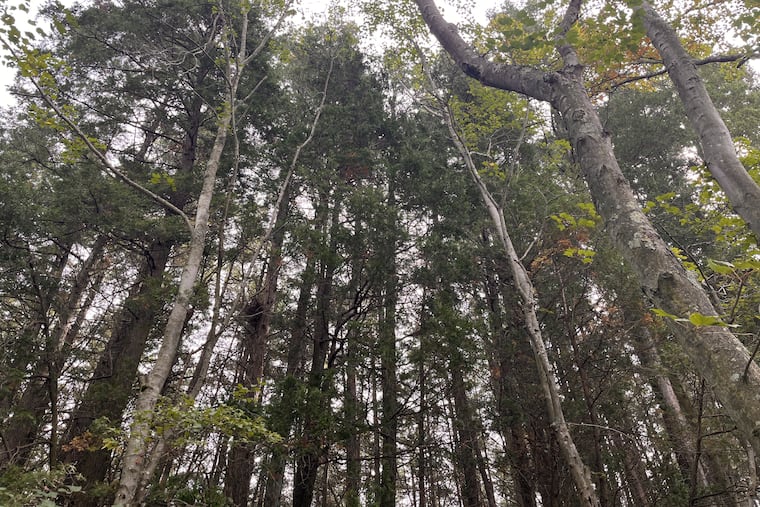
The New Jersey Pinelands Commission voted Friday, with one dissent, to approve an Atlantic white cedar restoration project that has drawn objections from some environmentalists.
The vote by the 15-member commission allows the New Jersey Forest Service to broaden cedar cover over 171 acres in Wharton State Forest.
It’s the first phase of an ambitious $19 million state plan to restore 10,000 acres statewide. The state holds East Coast’s last major concentrations of the tree. It’s historical 115,000 acres have dwindled to 25,000.
But the process has been bumpy as some environmentalists have railed against cutting existing cedars and the potential use of herbicides.
Mark Lohbauer, a commissioner from Pennsauken, was the lone voice of dissent Friday. He said he did not believe there had been enough public input or discussion of the project.
A major sticking point for Lohbauer, and some representatives of area environmental nonprofits, is the location chosen for the project off Sandy Causeway in Waterford Township, Camden County.
They say the tract already has existing, healthy, mature cedars they fear will be cut down as part of the process.
» READ MORE: Environmentalists rally against New Jersey plan to restore Atlantic white cedars
“I’m just not comfortable approving a blanket project,” Lohbauer said before casting his no vote. “The plan as it is includes acreage of what I consider to be cathedrals of Atlantic white cedar … as far as the eye could see.”
He also questioned the potential use of herbicides.
Lohbauer spoke after a lengthy presentation by Bill Zipse, supervising forester, and Todd Wyckoff, the state forester.
Zipse said that the area was chosen because it has healthy cedars that can provide a natural seed bank for regeneration. The plan calls for both cedars and competing hardwoods to be removed to create zones where new cedar can thrive.
He also said that if herbicide is used, it could be limited to one application. Herbicides are often the only way to control rapidly-growing competing vegetation such as phragmites, a reedy grass, the foresters said.