Langhorne residents push back on Route 1 superhighway plan from PennDot
Opponents fear the new cloverleaf interchange would push a massive amount of traffic into residential neighborhoods and onto narrow streets.
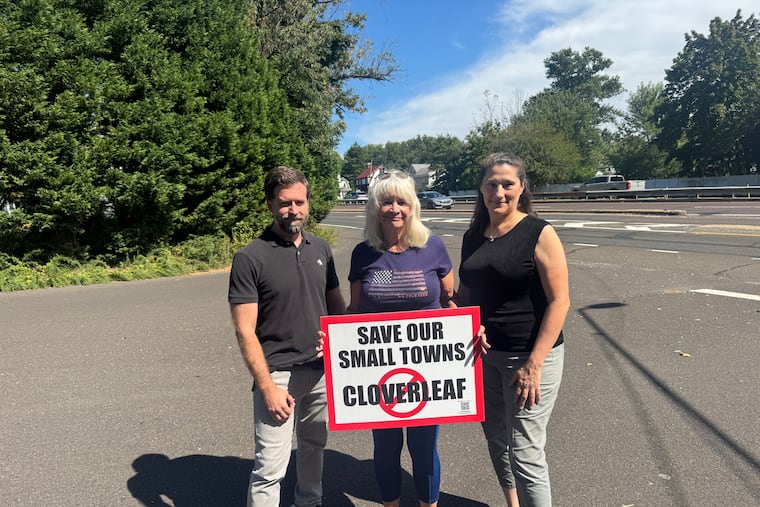
Langhorne Borough wants a PennDot do-over.
On Sept. 9, the borough’s council unanimously approved a resolution pushing PennDot to reconsider its $334 million plan to build a partial cloverleaf interchange with traffic signals at U.S. Route 1 and Pa. 413.
A partial cloverleaf highway design features looping two-level ramps with shorter exits and is used in tight spaces.
The plan would limit access to Route 1 via several miles of service roads that run alongside it, pushing traffic into the narrow streets of Langhorne Borough and its neighboring municipalities in densely populated Lower Bucks.
“PennDot’s safety objectives on U.S. 1 could be achieved at less cost and at less danger to the community by keeping the service roads connected and not building the cloverleaf,” said Kathy Horwatt, president of Langhorne Borough Council. “We cannot advocate for any plan that trades the safety of our residents for the safety of through motorists.”
Making Route 1, built in the 1950s, more like a superhighway for better traffic movement on a vital regional roadway has been a PennDot goal for years. Overpasses, ramps, and other infrastructure also need to be upgraded to modern safety standards, the agency says.
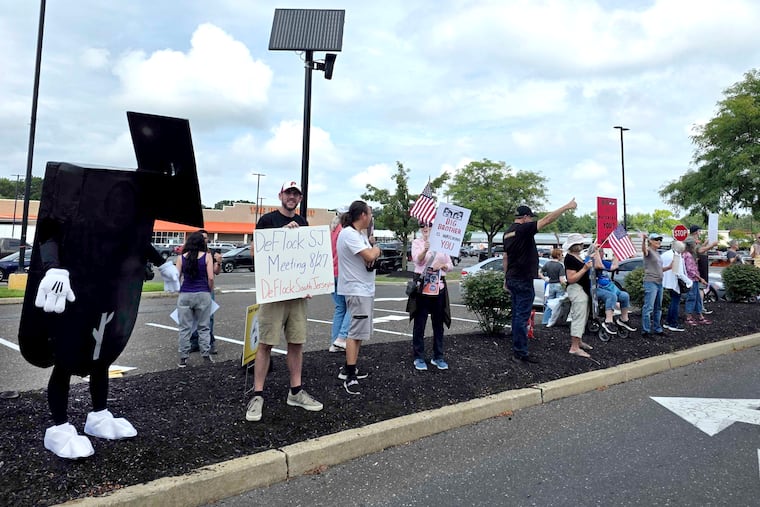
The resolution is the latest in an expanding five-year battle against the proposal from borough residents, joined by people who live in Langhorne Manor and Middletown Township. A sizable number of lawns sport No Cloverleaf signs.
PennDot’s original plan would have eliminated the service roads entirely.
Then in June, State Sen. Frank Farry and State Rep. Joe Hogan, Republicans representing the area, announced that PennDot had confirmed to them that the frontage roads could be retained as part of the cloverleaf plan.
It seemed like a big concession to local residents’ concerns.
But it’s not clear that the roads would continue to provide the same level of access to Route 1, according to the grassroots No Cloverleaf coalition. Local motorists could be forced to use the cloverleaf interchange to get on and off the highway.
“They’re really roads to nowhere” if the cloverleaf interchange is a central part of the Route 1 improvement plan, Langhorne Borough council member Paul Schneider said in an interview.
“The roads’ reason for being then no longer exists,” he said.
The borough’s resolution notes that PennDot traffic studies projected 9.2 crashes per year would occur at two planned signalized intersections on the cloverleaf interchange, at Woods Drive and at Gillam Avenue.
Opponents want the agency to evaluate the option of keeping the service roads as they are and using roundabouts to control traffic through the interchange.
Construction is not scheduled to begin until 2029, following additional environmental studies, detailed responses to community comments, and final engineering designs.
A PennDot spokesperson said nothing is finalized about the project at this point.