Pa. is the only state to split fish and wildlife management. Combining could save $34 million a year.
As fewer people pay for fishing and hunting licenses, both agencies face finacial challenges in years ahead.
Pennsylvania is the only state that splits fish and wildlife management across two separate agencies, totaling a combined 1,298 employees — well above the number in similar states.
Perhaps more dire, the Fish and Boat Commission (PFBC) and Game Commission are expected to see hundreds of millions in reserves drastically reduced within a decade as the number of hunters and anglers continues to decline, according to a new report dated Aug. 31.
The state could save $34 million annually by combining duplicative operations, the report says.
The PFBC and Game Commission contracted the Wildlife Management Institute to conduct the independent study in search of efficiencies and collaboration.
A statement by PFBC said the institute dug into the operations of both commissions, examined finances, looked at physical assets and demographics, and considered employee feedback.
The institute then compared the data against other state fish and wildlife agencies before making recommendations.
In a statement, PFBC said this week that the recommendations are only that, and not mandates.
“The decision on whether to combine the agencies will require detailed analysis of additional factors that are unique to Pennsylvania, as well as potential action by the Pennsylvania General Assembly,” the statement said.
Pennsylvania Rep. Anita Astorino Kulik, who chairs the House Game and Fisheries Committee, could not be reached for comment.
The numbers behind the decline
The report warns that the current way of doing things is unsustainable because the base of both commissions is eroding. Both agencies depend on fees and licenses to hunt, fish, and boat on state game lands and waterways.
Since 2009, the number of hunters seeking licenses has fallen by 100,000, and it appears little growth is on the horizon. There are significantly fewer license sales to hunters aged 21-37 compared with those aged 49-65.
The Game Commission projects hunting licenses will decline by 0.8% per year over the next decade.
Much of the revenue decline stems from the shrinking base of hunters who typically pay full price. Hunters 65 and older pay once for lifetime licenses that require no more payments.
The loss is similar among anglers. Fishing license sales saw a big spike during the COVID-19 pandemic from 2020 to 2021. But sales have declined steadily since. Many of those buying licenses are also older and transitioning to senior lifetime brackets.
The report says that nearly one-fifth of active registered anglers held senior lifetime fishing licenses by 2023.
A senior hunter pays $52 for a lifetime license and an angler pays $85. Seniors also have an option of paying $102 for a lifetime license for both.
Those licenses return only a small fraction of revenue generated by a standard adult license. Meanwhile, operating costs continue to rise.
As a result, rising costs at both commissions are projected to outpace revenues within a decade.
What’s in the report?
Steve Smith, executive director of the Game Commission, noted in a statement that the report does not call for the two agencies to be completely merged.
“The Pennsylvania Game Commission takes its fiscal responsibility seriously, and that includes being good stewards of every dollar entrusted to us,” Smith said. “In part, that is why we chose to do this study now, when the commission is in solid financial standing.”
He also noted that the study does not recommend immediate action.
The Game Commission has a sizable $504 million cushion, and revenues are expected to grow a bit. However, the report said annual expenditures will soon outstrip that. As a result, the Game Commission is on course to use 95% of those funds by 2034.
Meanwhile, PFBC is projected to exhaust its $145.8 million in reserves within the same time frame.
The institute recommends consolidating some operations, which would reduce the number of employees by 17%, saving about $34 million annually.
How would it save money?
The study looked at staffing and physical assets at five states comparable in size with similar geographic and ecological profiles: Michigan, Minnesota, New York, Ohio, and Wisconsin.
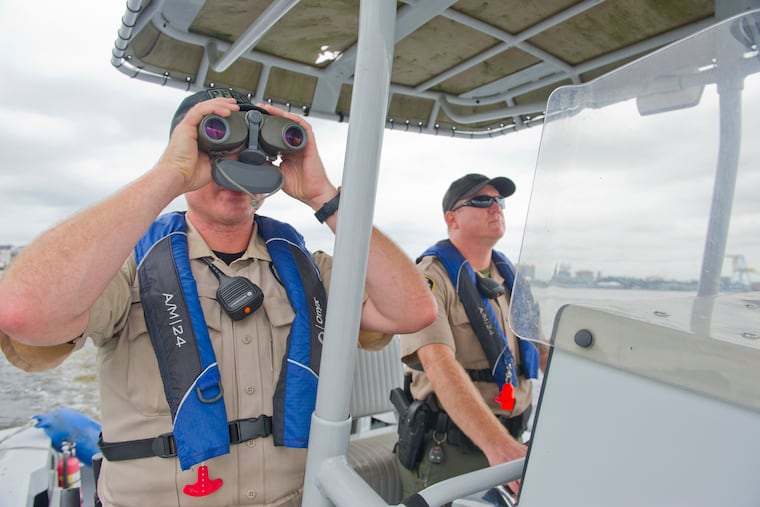
The authors say the biggest savings to Pennsylvania would come from unifying the law enforcement branches of each commission. Currently, the combined law enforcement workforce totals 337 sworn officers, surpassing those of comparable states.
The Fish and Boat Commission’s waterways conservation officers enforce fishing, boating, and environmental laws and regulations by patrolling streams, rivers, and lakes on foot, in vehicles, and on boats.
The Game Commission’s wardens patrol state game lands. They investigate poaching, illegal shooting, and trapping violations.
Bringing the number of officers down to 222 would streamline the number of supervisors and enhance field coverage during peak seasons, the report found.
It also recommends reduction of overlapping administrative positions, including top supervisors, legal counsel, human resources, and engineering.
The number of buildings could also be reduced. The Game Commission has 74 field offices, compared with an average of 29 in other states. Sharing facilities would cut utility and maintenance costs.
However, such changes would likely require legislation by the Assembly. There is currently no bill proposed, but combing operations could be tricky given that hunters and anglers have long had their own views of what the state should prioritize.
Pennsylvania has a sprawling network of state game lands covering 1.55 million acres of public land popular with hunters and anglers. And it has 86,000 miles of flowing waterways popular with anglers and boaters.