As Lemon Hill Park restoration begins after FIFA Fan Festival, park caretakers doubt long-term city support
The dead grass fields will soon grow back, but park caretakers are concerned that once restoration ends, they’ll be left with paltry funding and support.
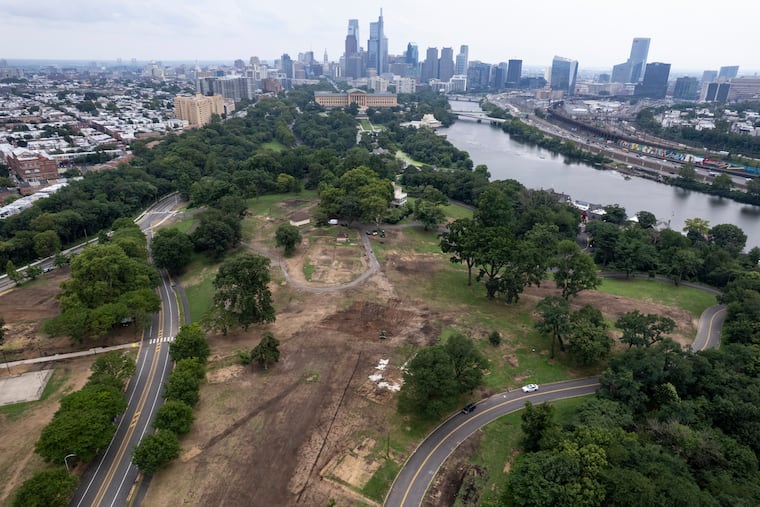
The marred fields of Lemon Hill Park are the remaining signs of the longest summer party the city has ever seen. Half a million people gathered in the park for 39 days straight, dancing to the All-American Rejects, cheering on World Cup matches, and sharing meals on blankets across more than a million square feet of the Fairmount park.
The FIFA Fan Festival, by most accounts from the city, tourists, and residents, was a resounding success, offering a premium World Cup experience at a sliver of the cost of attending a game. Philly’s fan experience was considered one of the most affordable and popular in the country.
Now that the party is wrapped, the caretakers of Lemon Hill and nearby residents are hoping the city makes good on a promise to restore the park to its former glory, if not better.
Philadelphia Soccer 2026, organizer of the FIFA Fan Festival, committed $4 million to park upgrades, from new picnic pavilions and a playground to safer sidewalks and traffic-calming measures at intersections. Additional funding will come from the city, but when asked, a city spokesperson declined to reveal the total budget and said more details will come during a groundbreaking celebration in September.
The city gathered input from the community across nine public engagement sessions beginning in 2024 that netted 350 comments from 200 participants that helped shape which improvements would be prioritized.
While residents and caretakers welcome park improvements, it is not lost on them that financial backing comes only after large companies use the space, though locals have been requesting help for years, said Shaun Cerborino, a co-organizer of Lemon Hill’s volunteer parks group. What’s more, without long-term maintenance funding, the upkeep of the park and its new upgrades will fall to caretakers once again.
Deferred maintenance billed as ‘legacy projects’
A month after the World Cup ended, the largest Lemon Hill field that staged the festival is still mostly filled with dirt, patches of wilting grass, and the occasional leftover screw and other small construction waste. The city began aerating and preparing the soil for regrowth in July.
The grass will grow back, said Cerborino and Nissa Eisenberg, Fairmount residents and co-organizers of the Lemon Hill Neighbors Association, which provides regular volunteer maintenance to the park. But what caretakers truly are concerned about is long-term support after the city finishes its upgrades months from now.
Additionally, many of the improvements considered legacy projects are really “deferred maintenance” that had been requested for years, and came about only when corporations needed to use the park, Cerborino said.
“Instead of properly funding Parks and Recreation, the city looks toward private ventures to help keep the lights on and generate enough money to maintain — which we’re barely doing anyway,” Cerborino said.
In Philadelphia, there is no dedicated budget for parks and open space; instead, the city and volunteers rely on the Philadelphia Parks and Recreation budget to maintain parks. They also look to grants, private nonprofits, and thousands of volunteers who weed, fix, and maintain trails and park space as part of “Friends” groups. Philadelphia relies on volunteers at more than twice the national average.
Since taking office, Mayor Cherelle L. Parker has raised the parks and recreation department’s budget each year, doubling its spending from $53 per resident on parks in 2024 to $110 per resident in 2026. And while 97% of Philadelphians can walk 10 minutes and find a park, far exceeding the national average, Philadelphia still spends about half as much on its parks as the national average, according to the Trust for Public Land.
Improvements like upgraded sidewalks, lighting, signage, and recreation areas are standards that should already be met by the city, which is home to some of the highest-ranked parks in the country, Cerborino said.
Residents may have their park back, but restoration is far from over
Fairmount residents are all but back to their usual park routines after the festival equipment was removed, but they say it is still a long way before Lemon Hill is back to normal.
Last month, Samantha Tartaglino was walking her German shepherd, Marley, through the flattened fields. Marley sprinted through swaths of dead, brown grass, unfazed by the patches. Tartaglino said Marley was just happy to be back in wide-open spaces, as the dog had to make do with a smaller park nearby for weeks.
Lemon Hill’s open fields are a key reason for why many move to this part of Fairmount, Tartaglino said, but even before the fan festival, residents felt the park was not being supported to its fullest potential.
“I feel like FIFA and World Cup put the city under pressure and kicked them into gear,” Tartaglino said.
The city has already put into place many of its legacy commitments, like new ADA-compliant sidewalks and ramps along Sedgley Drive, traffic-calming measures at the intersection of Sedgley and Poplar Drives, and additional lighting fixtures.

- New electrical service for power distribution within the park, provided by Peco
- Lemon Hill Drive road repaving
- New ADA curb ramps and accessible walkways, including a new ADA asphalt walkway from Sedgley Drive to the upper parking lot
- Repaired and regraded sidewalk along Sedgley Drive
- Rebuilt walkway connecting Poplar Drive and Sedgley Drive, with added benches
- Roadway striping, signage, and crosswalk improvements for pedestrian safety
- Fishpond repairs, including coping, historical railing, and drain clearing
- Historic Gazebo restoration, including handrail repair and invasive species clearing
- Invasive plant and dead tree removal for pedestrian safety
But the community’s request for permanent bathrooms, water fountains, and portable water stations has gone unanswered, Eisenberg said. The city says those things can happen only if there is an on-site park staffer due to concerns about maintenance and vandalism.
A project with a longer timeline will be a new 43,500-square-foot playground, with construction expected to stretch into April 2027, according to Philadelphia Soccer 2026 and the city. And while construction is underway, the playground and basketball courts will be closed.
Eisenberg lamented that. What was once presented as a plan for residents to give up park space for two months during the World Cup will now last much longer, she said, as grass fields will need to grow back and other amenities are closed for renovation.
“The basketball court is one of the most heavily used assets of the park, but they’re planning to use the court as a staging area for the construction,” Eisenberg said. “Which I get because it’s conveniently located, but you just put on this multimillion-dollar event; I’m sure you can find another area to stage construction materials so that at least the basketball court isn’t offline all winter.”
City officials say the plan is worth the wait.
“We expect the legacy improvements to be completed next spring and are excited for neighbors and future visitors to enjoy a renewed Lemon Hill … that builds on the excitement of this summer while serving Philadelphians for years to come,” a city spokesperson said.
Lack of long-term maintenance funding
While projects such as renovating the playgrounds, basketball courts, and baseball fields are welcome, the Lemon Hill Neighbors Association fears that once city crews finish the work, the caretakers will be right back where they started — working off “love and duct tape” with little financial support.
This means park improvements come only after long periods of push and pull between Philadelphia Parks and Recreation staffers and volunteer park caretakers, leaving long-term maintenance to fall to volunteer groups that dedicate their time and money to keeping parks usable.
“We understand that a lot of times Parks and Recreation is understaffed or underfunded, but then that means we’re going to have to pick up that role,” Eisenberg said. “We need help, and the Parks and Recreation budget needs to reflect it.”
Earlier this week, Temple graduate student Kyle McCurly was lounging in the undamaged grass surrounding the large field that just housed the festival. Having grown up in rural Georgia and recently back from a trip to Austin, Texas, McCurly said Philly’s parks could be so much more with long-term maintenance, and not just at Lemon Hill. He noted that Austin invests twice as much money as Philadelphia does in its parks per resident, according to the Trust for Public Land.
“Everyone’s going to have different opinions on how the funding itself is created,” McCurly said. “But I think that it’s worth consistent investment to make green spaces more accessible and enjoyable in the city.”