Ramah Day Camp, a Jewish summer program in Cheltenham, is closing due to low enrollment after 30 years
This is the final summer for Ramah Day Camp in Cheltenham, leaders announced, as enrollment has nearly halved since 2014.
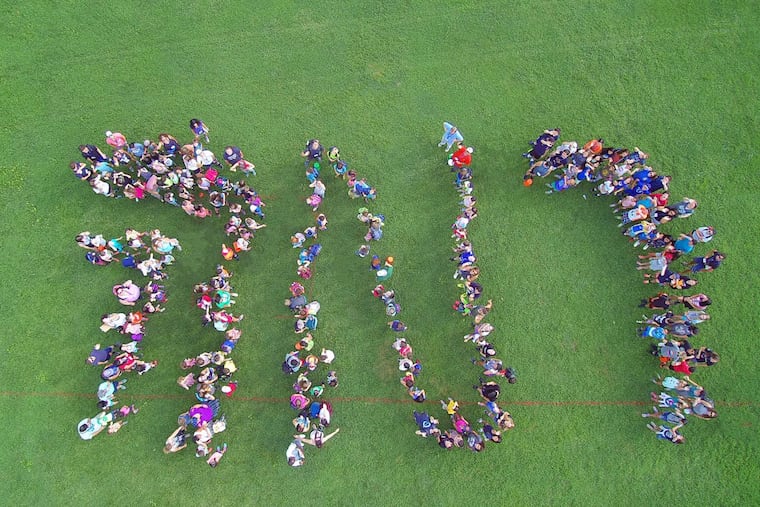
Ramah Day Camp in Cheltenham will close its doors after this summer, leaders announced in June.
After 30 years, this will be the Jewish day camp’s last season due to low enrollment and a financial deficit, Ramah officials said.
There are 164 campers this summer — about half the 2014 enrollment.
“We don’t have the money to run it, and people aren’t sending their kids,” said Debbie Albert, former president of the nonprofit Camp Ramah in the Poconos, which runs the Cheltenham program.
In Cheltenham, kids from pre-K into high school dance, swim, practice Hebrew, learn about their faith, and connect with recently returned IDF soldiers for up to six weeks.
“It’s really heartbreaking,” said Sara Ravitch, a longtime staffer whose 4-year-old son attended the camp for the first time this year. “It’s a place where you can feel proud to be Jewish.”
Although Cheltenham is closing, the Ramah network has expanded elsewhere in recent years, adding Boston and Los Angeles day camps in 2023 and 2024. The closure will not affect the Poconos overnight camp, according to a June email addressed to the Ramah community announcing the Cheltenham closing.
Ramah has competed with a number of secular day camps in the Montgomery County area. While Ramah campers take a three-minute bus ride to a nearby pool, other day camps like Sesame/Rockwood in Blue Bell have five pools on site.
And some local Jewish youth programs are thriving, but the day camp is also located in an older community: Montco’s Jewish population grew slightly from 2009 to 2019, according to U.S. Census data in a report for the Jewish Federation of Greater Philadelphia, but more than a third in southeastern Montco were 65 or older, and just 11% were under 18.
Ramah’s leaders have tried for years to sustain the Cheltenham program, Albert said. While the overnight camp is “thriving,” the day camp has been losing money for over a decade.
“We cried over the data,” Albert said. “This is killing all of us.”
Then there are the facilities: Ramah rents space at the Perelman Jewish Day School, owned by the Jewish Federation of Greater Philadelphia, Albert said, and Ramah officials believe their landlords may want to sell that property. (“There is no property currently for sale on the campus, and the closure of Ramah Day Camp is unrelated to any federation property transaction,“ a federation spokesperson said.)
Ramah was never able to afford its own day camp site, which would cost “millions and millions of dollars,” Albert said.
Ramah has been central to some Pennsylvania communities for decades, even earning a shout-out on the Jenkintown-set sitcom The Goldbergs.
“As a Jewish community of Greater Philadelphia, it is a huge loss,” said Rachel Bloom, a former camper and staffer.
Bloom attended Ramah Day Camp’s first summer back in 1996. She returned on staff in 2005 and met her husband, then a 25-year-old sports director in a navy blue Hillel shirt with cutoff sleeves.
“Most of our bridal party were camp people,” Bloom said, and their wedding was filled with Jewish traditions: pre-ceremony tisch and badeken, and an impromptu sermon at the rehearsal dinner.
Without Ramah, “I don’t think I would’ve had all of these things at my wedding,” Bloom said. “Going to a Jewish camp is like an extra special gift that is very hard to explain.”
Though officials have long fretted over the camp’s future — the nonprofit did a multiyear review with a group of staff, parents, and board members, CEO Miryam Seid said — some staff and alumni felt blindsided by the news.
“It feels a little bit — I don’t know if it’s a betrayal, but they weren’t so transparent with how many struggles they were facing," Ravitch said.
Bloom said she sometimes attends Shabbat at the camp, and she never noticed their shrinking numbers.
“There’s always been spirit, no matter what,” Bloom said. “The spirit fills the space.”

Inquirer Greater Abington
This suburban content is produced with support from the Leslie Miller and Richard Worley Foundation and The Lenfest Institute for Journalism. Editorial content is created independently of the project donors. Gifts to support The Inquirer’s high-impact journalism can be made at inquirer.com/donate. A list of Lenfest Institute donors can be found at lenfestinstitute.org/supporters.