Fellowships shelter exiled writers. The hard part comes after.
An Algerian novelist in Pittsburgh asks: Is there a rescue after the rescue?
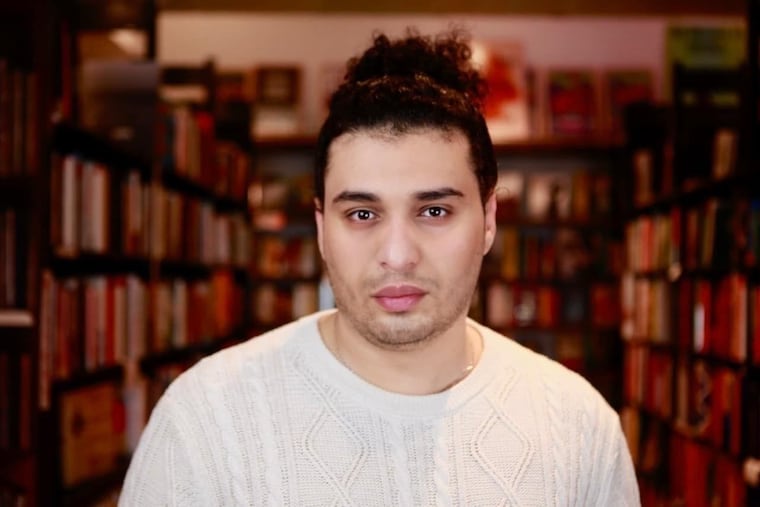
Not long ago, I was a celebrated exiled writer, one of the most visible faces at City of Asylum Pittsburgh — a grassroots organization that helps endangered writers build new homes and new lives in Pittsburgh. Today, I am alone, unable to find a job, without health insurance, and, if I remain in this situation, I may soon be unable to pay my rent and find myself — God forbid — homeless.
My story begins in Algeria — the country that prompted Salman Rushdie and other writers to first establish the “parliament of writers” internationally in 1993 because of the alarming number of attacks on, and assassinations of, writers in the country in the ’90s during the civil war. This is the same country that had earlier welcomed the international Black Panthers, and many African liberation movements since its independence from France.
I came here as a threatened writer.
For years in Algeria, I was persecuted because of my novels, my legal and constitutional struggle as a gay Muslim man, and my defense of women’s rights, LGBTQ+ rights, and freedom of expression.
In 2015, I was the first Algerian to call for the legalization of same-sex marriage. I started speaking up on taboo topics, crimes against children, for example, and family laws that relegated women to second-class citizens and prioritized men in the family. In 2017, I was interrogated for hours about one of my novels, which highlighted the participation of the LGBTQ community in the war of independence against the French — another taboo topic.
In 2019, I broke the greatest taboo of all in Algeria, calling for the truth to be told about the 20,000 young men kidnapped during the civil war.
I was tried and sentenced to pay a fine for using humor to criticize the presidential elections in 2020, and then in 2021 I was interrogated for hours about two articles I had written: one in which I criticized the president, the other, a call to liberate “God” from politics.
I was already in the U.S. when I was sentenced, in absentia, to a year in prison in Algeria for those same articles.
The German Bundestag honored me through its “Parliamentarians Protect Parliamentarians” program for human rights advocates, and I was shortlisted for the Index on Censorship Freedom of Expression Awards in 2021. There were other recognitions, but also so much pain, which finally pushed me to escape.
I say escape because I chose myself, for the first time in my life. I chose to live. In 2017, PEN International contacted me and proposed that I get in touch with the International Cities of Refuge Network, a Norwegian organization that has a network of many cities of asylum around the world. In 2021, I got Artist Protection Fund funding, and through that, I got a fellowship with the City of Asylum Pittsburgh and Carnegie Mellon University.
City of Asylum welcomed me in Pittsburgh and gave me an important period of safety and opportunity. During this period, I taught Arabic and worked at Carnegie Mellon, where I also studied translation as part of the employee educational benefits while holding a fellowship there. These opportunities changed my life, and I am grateful for them.
But eventually, as happens with fellowships, programs end, and the difficult question of what comes next begins.
Excitedly, I began applying for jobs related to my degrees and experience. When that didn’t pan out, I applied for translation jobs and positions requiring Arabic or French. I applied for work that matched my résumé, and for work that did not. Being an immigrant, I lowered my expectations and looked for work almost anywhere. To give you the full picture, I applied for cleaning jobs, including one cleaning hotel toilets in Pittsburgh.
I wanted a job that would preserve my dignity and my life.
I hoped to find anything that would protect me from the bitter winter cold and the eyes of racists. Above all, I wanted a job that would preserve my dignity and my life. I did not have many conditions. Any legal work would have been enough to begin my life again. But perhaps because of a curse, bad luck, or something beyond my ability to understand or predict, I was not successful.
Today, I live afraid, on the verge of homelessness, in debt, without health insurance, and without a passport because the Algerian Embassy will not renew mine. I do not know where to turn or what to do. All doors seem closed to me. And all that comes to mind is the applause of audiences at the many events where I was once a guest speaker, on days when I truly believed myself to be an “important” person. Now it seems like a joke.
We do not matter much as immigrants. U.S. Immigration and Customs Enforcement hunts immigrants down, and politicians direct hateful rhetoric against us. We are labeled with the ugliest descriptions in the media. I am a queer immigrant from Algeria. I have become almost everything some politicians in this country hate.
After the Gaza War, many Arab and Muslim scholars and students spoke with me about their fears. When students were arrested during pro-Palestinian protests, many of us became afraid in a country that had promised us we would not need to be afraid again.
I am afraid. Do I have the right to say this? Or must I live within a diplomatic discourse that allows only gratitude to be expressed after a rescue?
I need to write about the difficult side of rescue, the “after the rescue” nobody speaks about.
My story is perhaps personal, but it is bigger than me. It is about exiles brought into this country with hope — who later discover how fragile their survival is. While we are often presented as examples of success, many exiles live in psychological, economic, and legal fragility and under indescribable pressure.
The danger for an exiled writer, scholar, or artist does not end simply because a fellowship ends. I do not doubt the sincerity of the people and the organization that brought me to America and sheltered me. I am not trying to blame my failures on it or on others. But I want us to reconsider the rescue model on which it is built and to work toward sustainable mechanisms of support.
The danger for an exiled writer, scholar, or artist does not end simply because a fellowship ends.
Perhaps the end of a fellowship should be announced with the same energy as its beginning. When an exiled writer or artist arrives, organizations often use newsletters, social media, institutional networks, and public events to introduce the new fellow to a city. The arrival becomes news. But the departure, and the professional uncertainty that may accompany it, can happen almost silently. Why not use the same networks to announce that a fellowship is ending and that a writer, scholar, or artist is entering the job market? Visibility should not disappear precisely when it may be most vital to survival.
Host organizations can make introductions, advocate, and help open doors that are often inaccessible to a newcomer navigating a foreign labor market. Many exiles have advanced degrees, years of professional experience, and strong résumés. What they lack is access: knowledge of the hidden mechanisms of the local job market, professional references, institutional introductions, and networks capable of converting experience into employment.
Most importantly, the path toward employment after a fellowship should be treated as part of the fellowship. This work should begin even before the fellow arrives. What credentials may need recognition or supplementation in the host country’s labor market? What legal barriers to employment might exist? These questions should be asked from the beginning, revisited throughout the residency, and followed beyond its formal end.
I want to be clear about what I am saying. City of Asylum Pittsburgh helped me in many ways. I am not dismissing that assistance. The question is not whether individual people tried to help me. The question is whether the fellowship model itself is adequately designed for what happens after the fellowship ends.
What matters in the idea of rescue is not the moment of rescue itself, but the possibility of survival afterward. We do not want to remain symbols of rescue; we want to survive.
All of us want to be beings breathing under the sky — but not in fear that it is about to fall on our heads.
Anouar Rahmani is an Algerian novelist, writer, journalist, and internationally recognized defender of freedom of expression. Rahmani’s literary and public trajectory has positioned him as one of the most visible contemporary Algerian voices confronting censorship, religious and moral authoritarianism, and the criminalization of imagination.