Letters to the Editor | Oct. 21, 2026
Inquirer readers on President Trump’s diesel deal with Russia and the health of Eagles quarterback Jalen Hurts.

Looking out for No. 1
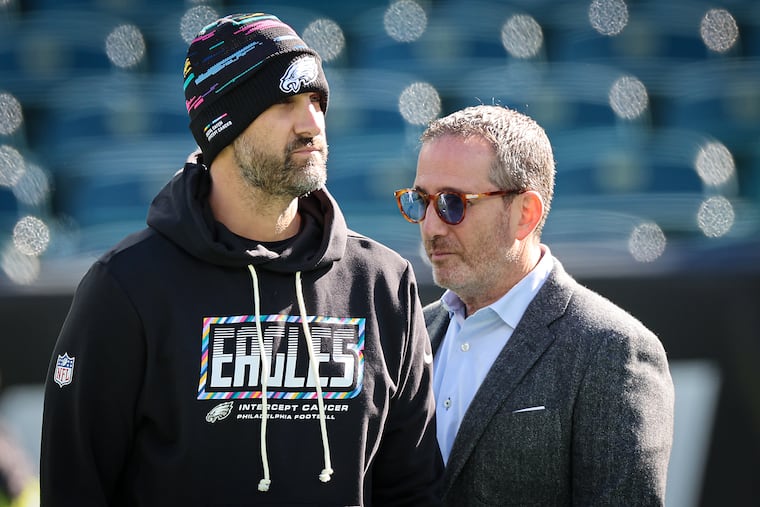
As a retired respiratory therapist who worked in healthcare for 40 years, I was irate after the announcement that doctors have found blood clots in the lower extremities and lungs of Eagles quarterback Jalen Hurts. I think I speak for a lot of us when I say that there are so many questions: Why was Hurts discouraged from sleeping before the London game? Why was he allowed to take the field at all? And why did he fly back on an international flight, when traveling is a well-known risk for those with clots?
Although none of us certainly has all the facts (nor should we since this is Mr. Hurts’ private medical history), it’s clear that there’s a lesson here for anyone in similar circumstances, whether it’s pee wee football or professional sports: Get a second opinion.
We’ll all learn more in the days and weeks to come, but from what we know so far the handling of this injury seems like an example of disgraceful decision-making across the board — from the medical advisers to team management.
The Eagles need to reassess their priorities and responsibilities toward their players — whoever decided that this was at all appropriate demonstrated poor stewardship toward one of Philadelphia’s most beloved athletes and cherished citizens.
Kathleen English, Swedesboro
...
I hope Jalen Hurts prioritizes his health — even though it appears that the Eagles certainly did not. Wishing QB1 well, and here’s hoping that he fully recovers from deep vein thrombosis.
K. Mayes, Philadelphia
Profits for Putin
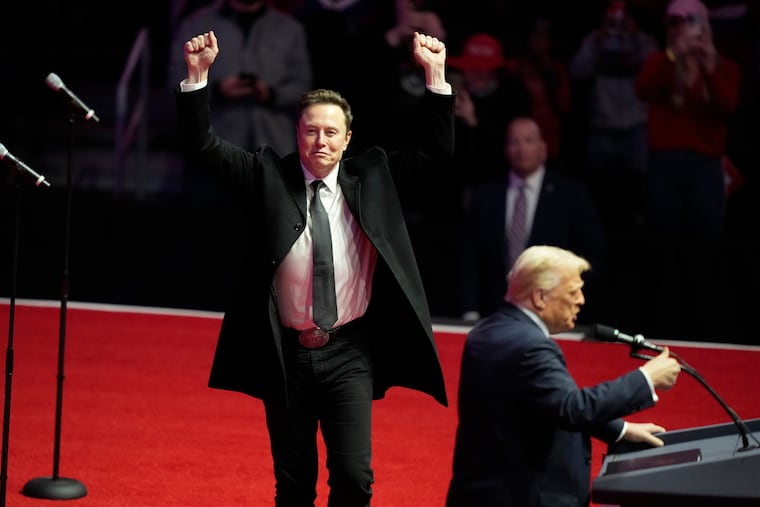
The Inquirer’s recent series of editorials extensively documented Donald Trump’s abuses in office, including his family’s profiteering and his own misuse of the Justice Department for personal revenge. Yet not long after the Editorial Board compiled this list, Trump committed a further abuse of equal — or greater — magnitude: a deal with Russian President Vladimir Putin to provide the U.S. and global markets with 300,000 tons of diesel fuel.
As a means to reduce U.S. fuel prices, the deal is pathetic. Even if Russia — itself suffering from gas shortages — were to provide this much diesel, it would offset less than a typical day of consumption by Americans.
However, the deal will have additional impacts, all grim. Putin will use the diesel revenues to further his war of aggression against Ukraine. Lifting sanctions also violates the 2022 law that bans importation of Russian oil for that very reason. To aid an authoritarian aggressor in a murderous war against a democracy is morally repugnant and deeply at odds with American values.
The Republican-controlled Congress has been distressingly tolerant of Trump’s violations. Surely, though, this abuse must be addressed. Let us hope and demand that, in this instance, our representatives rise to play the role the Constitution requires.
John Francis and Elaine Fultz, Philadelphia
…
On Dec. 16, 2025, Sen. Dave McCormick (R., Pa.) issued this statement: “Any nation or entity that buys Russian oil is actively funding Russia’s aggression in Ukraine. Vladimir Putin has demonstrated he is unserious about bringing this war against Ukraine to a close, and continuing to fuel the war machine should carry consequences.”
At that time he stood in solidarity with a group of lawmakers who introduced the Decreasing Russia Oil Profits (DROP) Act of 2025, which required “targeted sanctions on anyone, anywhere dealing in Russian oil.”
Where does McCormick stand now? Will he support Donald Trump’s corrupt oil deal and betray Ukraine? Or will he have the courage to stand up for justice in defiance of Trump?
Alex Pearson, Merion Station
…
There has been a lot of discussion about how Donald Trump’s deal to buy fuel from Russia violates the law named for the late Sen. Lindsey Graham that established sanctions on Russia. However, it might be even more serious than that.
The only crime defined in our Constitution (Article 3, Section 3) is treason. Part of the definition is “giving Aid and Comfort” to our enemies. Given that Russia is giving Iran intelligence that it uses to kill American troops — and that Russia was having financial difficulties because of both their war against Ukraine and the economic sanctions against them — Trump’s deal seems to clearly meet the definition of treason.
Jules Mermelstein, Dresher, jules.important.email@gmail.com
Shared prosperity
We write to express our enthusiastic endorsement of the recent piece by Rick Sauer and Daniel Betancourt that called on Philadelphians to support the Community Reinvestment Act.
As Sauer and Betancourt pointed out, the CRA is indeed, “a foundational pillar for creating access to opportunity by requiring banks to provide credit and investment to low-and moderate income communities.”
Since the mid-1970s, when the CRA was enacted, a historically unique collaboration has evolved among the banking industry, community organizations, and government. In Philadelphia, this collaboration has greatly expanded homeownership and modernization, small-business development, and economic revitalization in our city’s struggling communities.
Our partnerships date back to the pioneering Philadelphia Mortgage Plan, which offered reduced-rate home mortgages. They include foundational support for pioneering efforts like Judge Annette Rizzo’s Home Mortgage Remediation program. Her program mandated face-to-face remediation meetings between homeowners and lenders before a home can be foreclosed upon.
Forged during a period of great distrust between the American people and big corporations, the CRA has enabled the banking industry to build these multisector partnerships that set it apart from other industries.
Far from needing softening, the CRA should be held up as a model for how the federal government can encourage private industry to work with citizens, nonprofit partners, and local government for the common good.
Don Kelly and Don Haskin, Philadelphia
Haskin is a former journalist at The Philadelphia Daily News. Both writers are retired bank community reinvestment officers.
Naming allegations
I read with some alarm Jonathan Zimmerman’s recent column, in which he scolded those who named the alleged Cornell University rapists, saying that naming them may put others with similar names in danger.
That’s quite a take. I suppose Ted Bundy shouldn’t have been named until after he was convicted, because that might have negatively affected a different Ted Bundy, such as the guy I found online from Youngstown, Ohio? Does Zimmerman believe that The Inquirer should have protected the identities of Raymond “R.C.” and Eugene Horsch, given that their sex crimes are only alleged and there are other people with the name Horsch?
If we give alleged rapists a carve out as Zimmerman proposes, doesn’t equal protection under the law also dictate that we grant burglars, muggers, arsonists, school shooters, and other violent criminals anonymity until conviction as well?
I also wonder why Professor Zimmerman often defends the aggressors instead of the victims? I ask because back in 2012, your columnist wrote: “Rather than simply vilifying pedophiles like Sandusky, we might also pause to consider how our shifting views of them have affected American childhood.” I didn’t realize Americans had shifting views of pedophilia, but that’s for another letter.
Brendan Skwire, Philadelphia
National lottery
Every day we participate in a national lottery, one with odds better than the almost 300 million-to-1 chance of winning the grand prize in the Powerball jackpot. That is the likelihood that, on any otherwise normal day, any of our parents, spouses, siblings, children, grandchildren, friends, and neighbors may be shot on our streets, schools, places of worship, or, actually, anywhere.
As far as I can tell, there is no way to opt out. Apparently, although we are a nation famous for achieving great, almost impossible things, there is nothing we can do about this.
What a shame.
Jim Kempner, Holland
Join the conversation: Send letters to letters@inquirer.com. Limit length to 150 words and include home address and day and evening phone number. Letters run in The Inquirer six days a week on the editorial pages and online.
About letters to the editor
Letters feature a reader’s written opinion and are submitted in response to an article in The Inquirer or another topical issue. Submissions should be sent to letters@inquirer.com. Limit length to 150 words and include the writer’s home address and day and evening phone number. Letters are published in the Inquirer six days a week on the print opinion pages and online.