The other dictators on the ballot: Big Tech | Will Bunch Newsletter
Plus, the racism against Indian Americans no one is talking about.

It’s a scandal the way that the Philadelphia Eagles’ season has utterly imploded over the space of one agonizing month. I mean literally a scandal — an NFL-style Watergate, as in, what did the Birds’ team doctors know about QB Jalen Hurts’ blood clots, and when did they know it? Why was someone in his medical condition a) allowed to fly across the Atlantic and back and b) put on the field in London with zero hours sleep? The fallout from this one will be nuclear.
If someone forwarded you this email, sign up for free here.
From cash to censorship, Big Tech is all over the election. It’s backfiring
One of the best ways to tell what’s really on people’s minds is to head out to your local movie theatre. In late 1967, for example, you could walk out of The Graduate or Bonnie and Clyde with a pretty strong sense that a center built around traditional authority was not holding.
In the autumn of 2026, America is grabbing a big bucket of popcorn to watch a new kind of authority figure — the richer-than-God tech moguls of Silicon Valley — get their comeuppance on the wide screen.
Moviegoers could choose at the multiplex this past weekend between You Can See Everything, the wildly acclaimed comic documentary about convicted Theranos swindler Elizabeth Holmes; The Social Reckoning, the sequel in filmmaker Aaron Sorkin’s obsession with the monetary rise and moral fall of Facebook founder Mark Zuckerberg; and Musk, a searing four-hour closeup on the world’s richest human.
Yet despite the boffo reviews and the decent box-office for grotesque super-villains from Silicon Valley instead of the Marvel Comics Universe, the combined films didn’t earn nearly as much as one of their subjects — the world’s first (briefly) trillionaire Elon Musk — is spending in an effort to buy just one U.S. Senate race in Texas.
Just two years ago, it was a big deal (although not as big as I thought it should have been) when Musk spent $290 million on elections to help deliver the presidency to Donald Trump, who rewarded his fellow Wharton grad with a made-up White House job that aimed to chainsaw government spending and only succeeded in killing African babies.
Two years later, that Joe DiMaggio-like “unbreakable” spending record is about to be toppled by Musk himself.
The New York Times reported last week that Musk in just about three months burned through $276 million in support of Republican candidates — remarkable for a year with no presidential race. Indeed, some $158 million that the Tesla CEO gave to an outfit called the Senate Leadership Committee was funneled straight to a political-action committee backing the Texas GOP candidate Ken Paxton in his race against Democrat James Talarico. With two more weeks to go, it’s likely there’s much more Musk money to come.
I know they say everything’s bigger in Texas, yet this is an ungodly sum to spend on just one election. This money-to-burn is why even here in Philadelphia we’ve seen Musk-funded pro-Paxton ads during Eagles’ games, yet the donations are a tiny fraction of Musk’s current $904 billion net worth. It’s the nightmare so many of us feared nearly 17 years ago when the Supreme Court opened the spigots of billionaire election-buying in Citizens United.
But actually it’s worse than that. Musk isn’t just a $900-billion man with large federal contracts, but he’s also an open supporter of extreme right-wing political parties who has spewed and promoted racism on the popular social-media site that he transformed from Twitter into X.
When I last wrote in this space about Musk back in June, it was because he’d unleashed a series of hateful tweets against immigrants on X that helped egg on local residents in the Northern Ireland capital of Belfast in fomenting a race riot. That inspired me to finally leave the former Twitter for good, but it was part of a much bigger pattern. The South African native has frequently posted anti-immigrant vitriol while endorsing the worst proclamations of white supremacy.
“As the most-followed man on his social media website, X, Musk amplifies far-right accounts, spreads racist propaganda and endorses calls for violence against those deemed ‘invaders,’” the New York Times’ great Jamelle Bouie wrote recently. Bouie wonders, as do I, why Democrats in this election season have been pressed continually to defend the existence of a once-obscure left-wing streamer named Hasan Piker, while Paxton and other top GOP candidates are never asked about Musk’s posts or why they’re so willing to accept his dirty money.
It’s little mystery why Musk is willing to spend more money than we mere mortals can comprehend. A Democratic Congress might investigate his use of X as a political platform, his government contracts through SpaceX, or the massive harm he caused during his relatively short time at the invented Department of Government Efficiency (DOGE). Other tech moguls also seem eager to keep Trump allies in control of the government, bringing the total of Silicon Valley campaign spending to well over $500 million.
But Big Tech could spend trillions on political spots, and it wouldn’t matter if it has nothing to say. That seems to be the case in 2026. With artificial intelligence and the noisy, polluting data centers that power it wildly unpopular with voters, the ads purchased by Musk & Co. tend to be instead about superfluous and often fake claims such as Democrats “wanting boys to play in girls’ sports.” But polls show that not only do voters rank transgender issues near the bottom of their concerns, but that — according to a new ABC/Ipsos survey — they actually trust Democrats on this topic over the GOP, 38% to 29%.
With their big-money power play not working, the last few days has seen some of the giants of Silicon Valley embrace a brand of raw censorship that suggests they will stop at nothing to preserve the oligarchy that has enabled their vast wealth.
Zuckerberg’s Meta (the parent company of Facebook) seemed determined to prove the point of The Social Reckoning when its own employees acknowledged that its Instagram platform impeded posts by Brazilian President Luiz Inácio Lula da Silva while boosting his authoritarian rival, Flavio Bolsonaro. That incident made Meta’s it-was-just-an-accident explanation less plausible on Saturday when, here in the U.S., the Instagram account for the No Kings movement was suspended at the height of a nationwide protest.
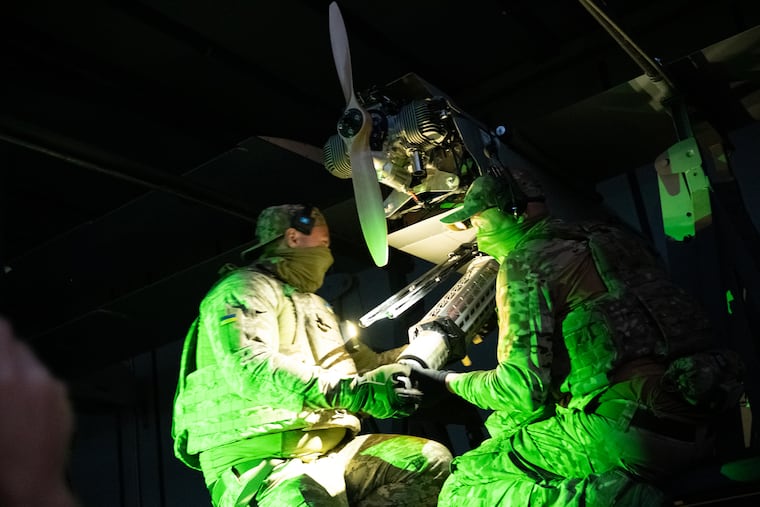
Still, the Instagram outages paled in importance to reports that Musk’s SpaceX had throttled Ukraine’s access to a Starshield satellite communications system, hampering its ability to defend its nation against Russian aerial attacks. An air assault by Vladimir Putin’s regime killed as many as nine people, including women and children. Musk and the Trump White House pointed fingers at each other, but neither seemed upset about advancing a brutal Russian dictator’s war aims.
It truly felt this weekend like dictators and tech oligarchs were sticking together, especially when TikTok, which — again, thanks to help from Trump — is now owned by a consortium that includes billionaire Trump ally Larry Ellison, banned promotional posts for the highly critical Musk documentary. It was a raw power play by the tech companies who’ve amassed so much control over our daily lives...
...or was it just another sign of desperation?
A North Carolina state senate candidate named Southey Blanton posted this weekend that “while canvassing recently people don’t ask what party I am running with but simply am I for or against data centers.”
The grassroots public rebellion against data centers is a powerful statement that beaten-down everyday folks want to reclaim power in their daily lives. They’re mad as hell about how much money someone like Musk has amassed while they struggle to fill up their gas tank, or that someone like Zuckerberg can censor them with the flip of a switch.
And the midterm election is finally their chance to scream they’re not going to take it anymore.
The last few days have been a reminder that Trump isn’t the only wannabe dictator hovering over America this fall. The takedown of Silicon Valley that started at the multiplex is building toward an epic grand finale at the ballot box on Nov. 3.
Yo, do this!
Indeed, I ventured out from my undisclosed location to see The Social Reckoning this weekend. The movie had gotten lukewarm reviews from critics who compared the film unfavorably to Aaron Sorkin’s first shot at Mark Zuckerberg and the rise of Facebook, 2010’s The Social Network. But I found it highly entertaining — arguably the best movie about investigative journalism since 2015’s Spotlight — with another star turn by Oscar-winner Mikey Madison as Facebook whistleblower Frances Haugen. The only problem with Sorkin’s Zuckerberg/Facebook drama is that society hasn’t written a happy ending...yet.
For the majority of Philadelphia sports fans who are sadly not following the Union’s dramatic unbeaten streak on the soccer pitch, 2026 has been the autumn of discontent. A much-anticipated Eagles season feels over, barely after it started. But things are supposed to change at 7 p.m. Tuesday night when the 76ers — a dream team of rising stars and established superstars, led by the acquisition of all-timer LeBron James — challenge the defending champion New York Knicks at Madison Square Garden. Thursday’s home opener brings one of King James’ former teams, the Cleveland Cavaliers, to town. Sixers, our city turns its lonely eyes to you. Woo woo woo.
Ask me anything
Question: What do you think will be priorities during the lame duck session [in Congress]? — Jackie Gardina (@jackiegardina.bsky.social) via Bluesky
Answer: Jackie, I got several questions this week about this, as readers are clearly thinking ahead to what comes after a Democratic election sweep two weeks from now. I definitely think what until now has been the do-nothing 119th Congress will at least attempt to spring to life not long after the votes have been counted. Republicans would almost certainly use their final two months of power on Capitol Hill to ensure as right-wing a judiciary branch as possible by ramming through new judges; don’t be shocked if one or both of the two oldest conservatives on the Supreme Court — Clarence Thomas and/or Samuel Alito — retire to allow the Senate to speed the appointment of young conservative justices-for-life. The GOP might also try to throw more money at pet causes like the military or immigration enforcement and strip dollars from programs favored by liberals, using the reconciliation process to bypass a Senate filibuster. Other efforts to limit Democratic power in 2027 would probably require an impossible 60 votes...thankfully.
What you’re saying about...
A lot of readers are worried — as I agreed in my most-recent column — about the probability that Donald Trump will take extraordinary measures, such as declaring a national emergency, in a last-ditch effort to prevent Democrats from retaking control of Congress. And most of you would take to the streets in protest, despite uncertainty over whether that would actually work. “First, the protests cannot be a single day — they must go on and on and be coupled with a nationwide strike,” wrote emailer relandis (PLEASE...include your full name if possible). But Tracy Yeomans wrote, “I have to admit to feeling hopeless and shackled in the face of this possibility.”
📮 This week’s question: With just two weeks before Election Day, readers are focused on the midterm elections from coast to coast, and the likelihood of some unexpected results in a Democratic “blue wave.” Which House, Senate or gubernatorial election seems primed for an upset that no one sees coming (I have my eye on Senate races in Mississippi and Montana)? Please email me your answer and put the exact phrase “Midterm upset” in the subject line.
Backstory on a surge in hate toward Indian Americans
It’s almost hard to say which silence was more terrifying. Was it the moment earlier this month that a 19-year-old Taco Bell worker brought a high-powered rifle to a packed Hindu temple in Aurora, Ill., only to see the weapon jam when he attempted to pull off the mass shooting he’d envisioned in an eight-page hate manifesto? Or was it the quiet of the American mass media that barely covered this story — even after it came out the local member of Congress, Democratic Rep. Raja Krishnamoorthi, was attending services with his family when the would-be shooter came to the temple in the bustling exurb 40 miles west of the Chicago Loop.
“I am horrified that a white supremacist attempted to carry out a mass shooting targeting Indian Americans at the Hindu temple in Aurora where my family worships,” Krishnamoorthi said later. But the public reaction to the story was less horror and more of a yawn. Maybe some of that is because the Illinois shooter failed — a friend tipped off police to the jammed-gun incident and the manifesto, which described Indian, Jewish, and Black people as “subhumans” — in a week when other killers, including a teen who murdered three grade-school children and a teacher in Bend, Ore., were tragically successful. Or maybe the sewage-filled sea of online hate speech is becoming so vast that growing venom toward Indian Americans feels like a few more drops of water.
But we need to notice that our Indian American neighbors are becoming targets, and we ought to be more outraged.
A couple of weeks ago, the right-wing “thought leader” Christopher Rufo — who most famously jolted American schools by fomenting a scare over “critical race theory” — hosted an hour-long podcast that focused on what he called “the Indian Question,” discussing whether immigrants from the South Asian nation can assimilate into American life. Rufo framed the conversation as basically “just asking questions” in the wake of another viral incident, when a Texas GOP candidate named Bo French posted a photo of South Asian students cheering at a University of Texas football game and wrote: “The problem is now obviously far worse than anyone imagined.”
Of course, the phrase “The Indian Question” alarmed many folks because it echoed similar uses of the “question” framing from the 19th and 20th centuries that history saw answered by widespread racism and pogroms — especially after “the Jewish Question” arose in Germany in the 1920s and ‘30s. People should be alarmed, because hate against Indian Americans has been skyrocketing since Donald Trump and his xenophobic platform returned to the center of U.S. politics.
A report by the Centre for the Study of Organized Hate found the monthly volume of hateful posts about South Asians on the Elon Musk-owned X more than tripled between January 2024, as Trump was launching his White House bid, and June 2026. Other studies have found Indian Americans hearing a sharp rise in racial slurs, while reported hate crimes, especially toward the community of Sikh immigrants, have also spiked. The failed attack on the Illinois temple was preceded by shots fired at a Krishna temple in Utah and vandalism at a Hindu place of worship in California.
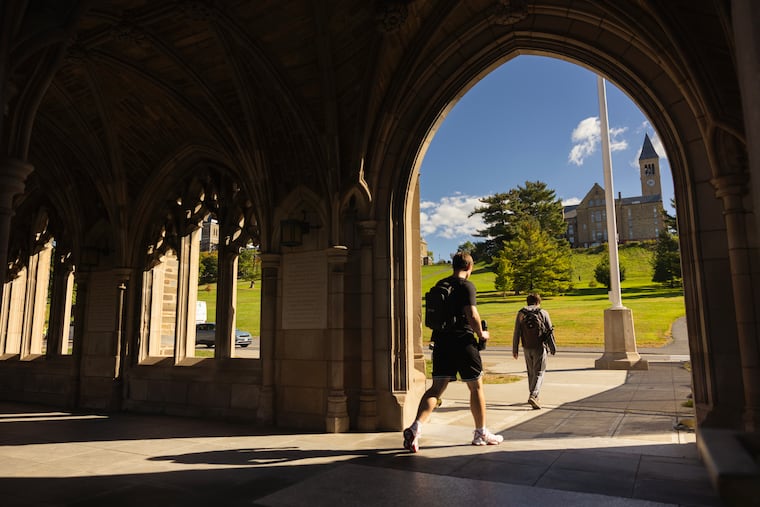
The irony over racism and violence against Indian Americans is that while Trump slanders immigrants as the worst people or as murderers and rapists, the growing visibility of South Asians in America is largely a story of success. Indian immigrants comprise more than 70% of the H-1B visas awarded to highly skilled workers, which helps explain why you see South Asians in the football stands at an elite college, or Indian restaurants and temples in affluent suburbs or exurbs, near high-tech office parks. In other words, their prominence is happening in places that had been bastions of white privilege, and the hateful response from some people is utterly despicable. But it won’t stop until more of us start paying attention to the racism that nearly boiled over in Aurora.
What I wrote on this date in 2019
Is it possible for a column to be overwrought and prescient at the same time? On this date seven years ago, I was also warning about the danger of a Donald Trump dictatorship — about 70% of the way through his first term — because the 45th president had sought to award the G7 summit conference to his own Doral, Fla. golf resort. But in 2019, the adults in the room got Trump to back away from that scheme, and in 2026, that level of corruption feels like terribly small potatoes to today’s billion-dollar heists. (Indeed, Trump is hosting a G20 summit at Doral in December.) I wrote then: “On the 1,001st day, Trump’s convoy of corruption finally careened out over the cliff, as we all knew it would.” With a sense of nostalgia, read the rest from Oct. 20, 2019: “About 50 Republicans are going to decide whether America becomes a dictatorship.”
Recommended Inquirer reading
Just one column this week as my earlier police-and-immigration reporting bounced around the Inquirer online and in print. In the new column, I looked at the alarming research by two former Democratic White House officials into all the emergency powers — in essence, a coup — that Trump could invoke to avoid losing absolute power if the Democrats retake Congress in next month’s election. Co-authors Joel McCleary and Mark Medish are particularly worried about at least 56 special emergency orders that have already been drafted for the continuity of government in a nuclear war, which currently sit in a White House safe. We should be worried about the possibilities.
At least once a year, I use this space to make sure everyone knows that not only is The Inquirer one of just a few U.S. outlets with an international-affairs columnist, but that Trudy Rubin — two-time Pulitzer finalist — is the best in the business. She started covering war and other crises in this crazy, mixed-up world back in the 1970s, and now at an age when some of her contemporaries have probably retired to the mah-jongg table or something, Rubin’s determination to tell these stories is still taking her to risky places like the battle lines of eastern Ukraine. When the talking heads were trying to make sense of Donald Trump’s stunning embrace of Russia in the four-and-a-half-year-old conflict, Rubin was there in person to give Inquirer readers a first-hand account of Ukrainians’ determination to keep their democracy. Globetrotting journalism can’t happen without reader support. You can expand your world by subscribing to The Inquirer.
By submitting your written, visual, and/or audio contributions, you agree to The Inquirer’s Terms of Use, including the grant of rights in Section 10.
About our columnists
In contrast to news reporters, who operate within an independent, nonpartisan framework, columnists are charged with including their perspectives, opinions, and viewpoints when presenting their reporting. Inquirer columnists include Jenice Armstrong, Will Bunch, Luis F. Carrasco, Paul Davies, Daniel Pearson, Trudy Rubin, and Sabrina Vourvoulias.

Sign up for the Will Bunch Newsletter