Immigrant children are being held in custody for months, in facilities designed for brief stays
Because of policy changes, unaccompanied minors who averaged 30 days living in a refugee resettlement shelter a year ago, now average 200 days. That concerns pediatrician Katie Lockwood.
Katie Lockwood is a pediatrician at Children’s Hospital of Philadelphia Primary Care Network in Flourtown and an associate professor of clinical pediatrics at the Perelman School of Medicine at the University of Pennsylvania.
It’s been nearly three years since I first looked in my rearview mirror into the teary eyes of a 7-year-old boy in my backseat who had just traveled for weeks by himself to the U.S. southern border to escape violence, poverty, and unrest in his country of origin. We didn’t speak the same language, but his fear didn’t need translation.
Troubled by the devastating images of kids in cages in 2018, my husband and I reached out to an agency that worked with immigrant children and became licensed foster parents for asylum-seeking youth who crossed the border alone.
That 7-year-old spent 10 days in my home then; if he crossed the border now, it’s unlikely he would have that same experience before reuniting with his dad. Today, children are languishing in federal custody for months, in facilities designed for brief stays.
In addition to being a foster parent, I am a pediatrician, acutely aware of the negative effects of trauma on young people, and I am deeply concerned for the children who are being held for long periods of time in custody.
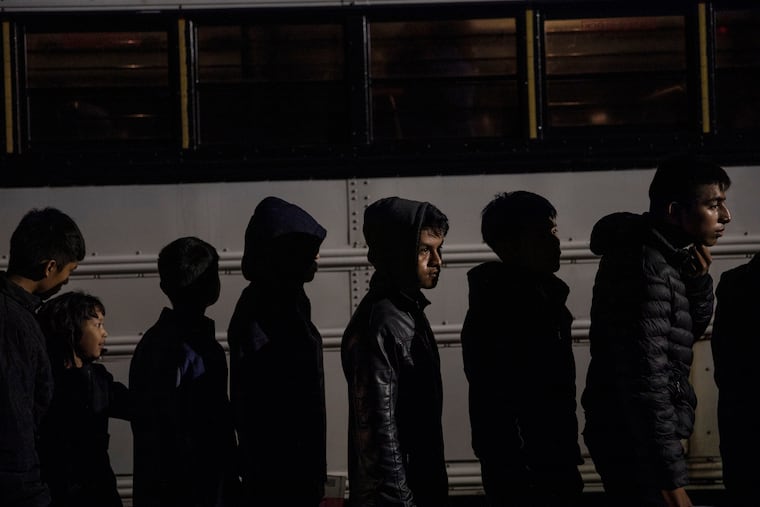
When unaccompanied immigrant children arrive at the border, they are typically placed in a shelter managed by the Office of Refugee Resettlement until a case manager can find a safe sponsor — usually a family member living in the U.S. — who will care for them while their immigration cases proceed.
Transitional foster care homes like mine are used for the most vulnerable children, such as those under age 13, pregnant or parenting teens, and children with special needs. These children were immediately placed in homes like mine, without a stop in a shelter.
Over two years, I cared for five asylum-seeking children from five different countries across North, Central, and South America. The children arrived with similar trauma from the instability they faced in their home countries, the treacherous journey to find safety in the U.S., and the pain of being separated from their families. They arrived at the agency dirty, hungry, constipated, and sometimes covered in lice.
And despite just meeting me, they begged me not to leave them alone at night. I spent many weeks in a sleeping bag on the floor, reassuring a crying child that they were safe.
But then in 2025, the calls from our agency stopped coming.
Children were not being placed in our home. The extra bed in our house remained empty. Books and toys went unused. And shelters expanded.
We learned why: The federal government had decided to cut many foster care placements for children and did not renew its contract with the foster agency we worked with, ending its transitional foster care program.
This decision is particularly troubling because unaccompanied children are now spending nearly 200 days on average in government custody before they are unified with a sponsor — compared to just 30 days in early 2025 — because of policy changes that make it more challenging to connect children with their relatives in the U.S.
The sponsor vetting process, even for close relatives of a child, has become more difficult and includes a focus on the immigration status of a potential caregiver. This has been coupled with new policies that allow that information to be shared with Immigration and Customs Enforcement — and ICE has used this information to arrest family members coming forward to care for children. The result is that sponsors who could safely care for them in communities are afraid to do so.
It is imperative that we ensure children are placed with sponsors who are safe and appropriate, and that children do not fall victim to trafficking. From my experience, sponsors who came forward all showed proof of kinship to the children, as well as stable housing, income, and the ability to enroll the children in school.
Lawmakers should support the Children’s Safe Welcome Act to protect these vulnerable children and improve their care.
I also saw the pure joy and longing on the children’s faces as they video-chatted their families they would soon be united with. I watched their reunions, where everyone cried tears of happiness and relief, and one dad enveloped his daughter in an American flag as they hugged for the first time in years.
I have kept in touch with the children I fostered and they are now thriving with their parents in the U.S. Within a year of being in my home, they were fluent in English and happily reported how much they love school and regular childhood joys like soccer, dancing, and Spider-Man.
They all tell me how scared they were when we first met, but that in our home they felt safe and loved.
Shelters can’t offer that same warmth and security. Reuniting with family as soon as possible, or being placed in foster care, allows these children the chance to begin healing from their trauma and jump-start their new lives.
The federal government should prioritize safety and stability for all children and release children from shelters without unnecessary delays.
Lawmakers should support the Children’s Safe Welcome Act to protect these vulnerable children and improve their care. Children have a right to seek humanitarian protection in the U.S. and this process should prioritize their health and well-being.
Every time I look at our empty guest bed, I can’t help but wonder if there’s a child who has been in a shelter for many months dreaming about sleeping somewhere like it.
About guest essays
Guest essays, or op-eds, are commentary pieces that present the opinion or perspective of the author. Many are submitted to us by Inquirer readers and writers with insight on the news, but we also solicit op-eds from authors on specific topics. For more information visit our guidelines.