I watched ‘Six’ with my sister. I didn’t expect a side serving of racism.
Who gets to decide who is expected to occupy certain spaces? What kind of audacity propels someone to assume we couldn’t possibly belong?
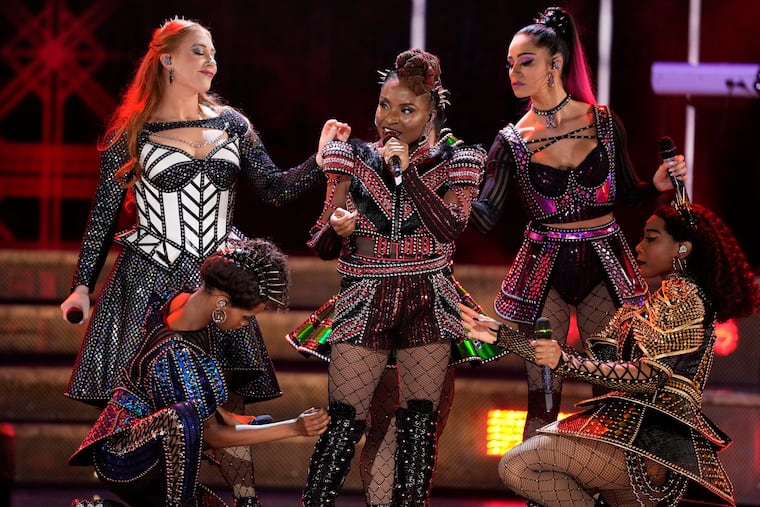
Toward the end of Six — in which the six wives of Henry VIII reweave their stories of divorce, beheadings, death, and survival into a celebration of 21st-century girl power — the protagonists wondered whether by repeatedly recounting the horrors of their experiences, they were inadvertently platforming the patriarchy.
In recounting the stories of the harm he had inflicted, had they inadvertently made him the main character and axis of their lives? Was he still shaping their identities? Who were they without Henry?
I often wonder the same about racism. Are we feeding the monster of white supremacy and racism when we choose not to ignore it? When we decide to tell and retell our personal experiences of it?
See what you think.
My sister and I love Broadway, so earlier this year we went to the musical as part of a birthday trip she planned for me.
As we sat, waiting patiently for the show to start, an older white lady sitting next to me turned and asked, “Are you also on Row A?” Her incredulity almost seemed obligatory.
I looked at her, my senses ringing the alarm. If you are Black, you probably know where this is going.
“What does that mean?” I asked the woman. I made sure my voice was calm and measured. I wanted to give her the benefit of the doubt.
“I want to know if you are also here,” she said, and pointed to our row.
“You can see us sitting here, can’t you?” I said, keeping my face neutral and unreadable.
Her voice buckled a bit, but again she insisted, “Are you sure you’re not in the wrong seat?”
“Why would we be in the wrong seats?” I held her gaze as I asked it.
Her voice started to quiver. “I just … but I just wanted to check.”
There is a pervasiveness to racism, to whiteness really, and how it imposes itself with vehement insistence. It demands — perhaps dares you — to define yourself as it defines you. But the moment you push back, it raises its hand in utter disbelief, armed with feigned innocence and wondering why you would be so offended.
My sister and I ended up having a phenomenal time at the show and in New York. When I talk about our trip to friends, family, and even acquaintances on Instagram, I don’t leave out this disrespectful incident.
Coincidentally, our experience happened a day before two of our best and brightest actors got called a racial slur on the world stage. Does recounting Michael B. Jordan’s and Delroy Lindo’s experience, or telling the story of my Broadway encounter, shift the main character of our stories?
What manner of insanity emboldens someone to doubt that two Black girls cannot afford front row seats at a Broadway show, and then to express that doubt to them? Who gets to decide who is expected to occupy certain spaces? What kind of audacity propels someone to assume we couldn’t possibly belong?
In the end, the very function of racism, as Toni Morrison put it, is distraction. It ruffles us (or at least tries to). It wants to squeeze out every iota of joy from us. It keeps us explaining over and over again why it’s devastating for two Black men to get called a slur in a room full of their peers — even if the intent was not malicious.
So, when that lady acted shocked to see Black girls in the front row, what it revealed was her own assumption about who is supposed to occupy spaces associated with art, pure, undiluted, transcendent art. It is rooted in a stereotype that “Black people don’t go to Broadway,” and comes from the same cultural logic that sees certain forms of enjoyment, art, joy, prestige as belonging only to a particular race or class.
And this is where I respond, because she couldn’t be more wrong. The problem with stereotypes, acclaimed writer Chimamanda Ngozi Adichie once said, isn’t that they are untrue; it is that they are incomplete.
In our intricate hair, in our swagger, in our style, in our diversity, we, ourselves, are art. Theater has never been foreign to us.
Performance traditions have always been central in African societies, such as in Nigeria, where storytelling, masquerade traditions, dance, poetry, and staged community performances have long been a part of public and cultural life. Even today, stage plays and live performances remain an important part of Nigerian culture.
Enslaved Africans did not arrive in the Americas without these artistic traditions. Performance and storytelling have endured among African Americans who have used these expressions for activism, for redemption and resistance, and for escapism since the era of slavery.
In much of the 19th century, one of the most popular forms of entertainment in America was minstrel shows, which involved white performers portraying Black people in a dehumanizing manner while stealing performance elements from Black acting troupes.
In 1821, William Alexander Brown founded the first Black theater in Lower Manhattan. And in the next century, the Harlem Renaissance marked a particular zeitgeist of African American creative expression across literature, arts, and performance.
Black audiences have participated in American theater for generations.
However, Broadway itself was historically segregated, culturally exclusionary, and increasingly expensive. During the Jim Crow era, for instance, Black theatergoers were often forced into separate or inferior seating sections.
In response, Black performers and audiences built their own theater ecosystems because mainstream venues excluded them. Even so, when white attendees came to see the shows, they were often “hostile, harassing the actors and rioting until the performances couldn’t go on.” Rather than arresting the disruptors, police would arrest the Black performers.
In 1993, when Washington’s Arena Stage attempted to expand the body of work it presented to make it more diverse, it lost many subscribers, with former subscribers calling the multiracial casting “disconcerting,” “distracting,” and even outright advocating for white supremacy.
Broadway has long skewed toward affluent audiences, with recent Broadway audience reports showing the average household income of Broadway attendees is over $250,000, making it inaccessible to many working- and middle-class people of all races. Broadway audiences are still disproportionately white — not because Black people devalue theater, but because Broadway has historically been marketed, priced, and culturally coded as an elite white space.
The easy thing, some might argue, would have been to laugh off that woman’s prejudice and shove it down into the same silence we have been forced to swallow for too long, where it festers into wounds carried across generations.
But silence relinquishes the power to define belonging to those who have always assumed it was theirs. As the protagonists of Six reclaim their stories from Henry VIII, so we must keep reclaiming ours from those determined to exclude us.
Ifeoluwa M. Olawole is a political scientist and writer. You can find more of her writing at www.themoderncedar.com and on Instagram @themoderncedar.