Columbia University free speech controversy underscores how censors on campus echo Donald Trump
The cancellation of a press freedom event at the Ivy League school shows how institutions of higher learning can fall short in their efforts to “dialogue across difference.”

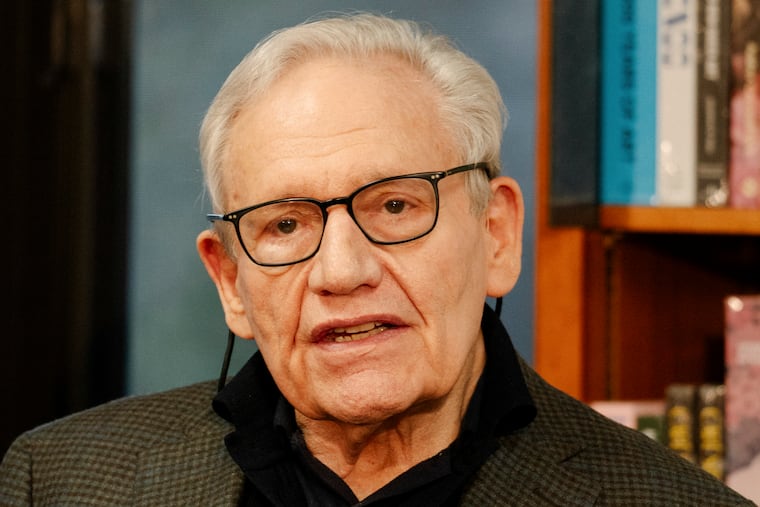
Jonathan Zimmerman teaches history and education at the University of Pennsylvania and graduated in 1983 from Columbia, where he was editor-in-chief of the Columbia Daily Spectator. His next book, “Schooling Citizens: How Education Can Save Our Democracy,” will be published in the spring by the American Philosophical Society Press.
Cancel culture is a myth. It’s brought to you by conservatives who want to malign higher education. The real danger to freedom at our universities is President Donald Trump and his Republican henchmen, who have tried to censor any speech they don’t like.
That’s what you’ll hear from a lot of my colleagues on campus. They’re right about Trump and the GOP, but they’re wrong about cancel culture. It’s alive and well.
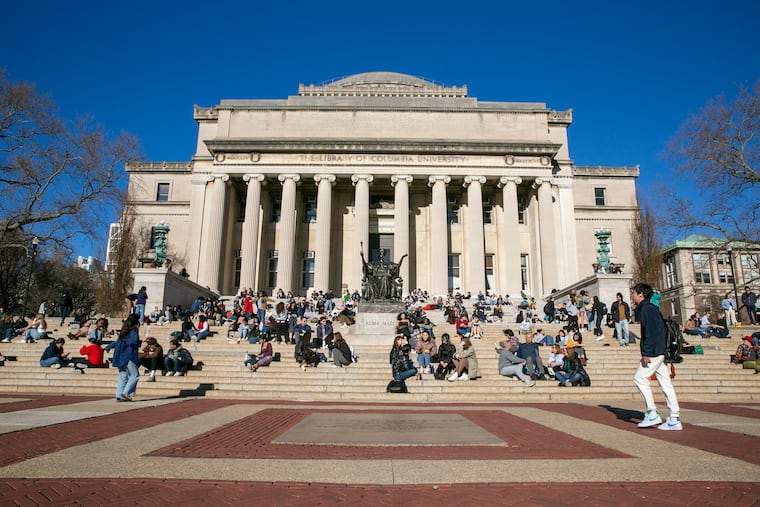
Look no further than last week’s controversy at Columbia University, where a forum about press freedom was called off because of objections to a student editorial. Yes, you read that correctly. An opinion piece caused so much “pain” and “harm” — according to its critics — that they shut down an event devoted to the free expression of opinions.
And you can’t blame that on Trump. We talk a good game about “dialogue across difference” at universities, but we don’t really believe in it. When something is really different — that is, when it challenges our most fundamental beliefs — we try to stamp it out. Just like Trump does.
The Columbia brouhaha began when two student journalists published an article questioning the “‘preferred’ narrative” around the reported 2024 gang rape at Cornell. Women, they said, can sometimes make “bad decisions.” And “consensual sex … can later reveal itself as traumatic and immoral.”
Quoting the gender theorist Camille Paglia, the editorial said that the defenders of the Cornell victim were “infantilizing” her by imagining that she couldn’t exert choice or autonomy. And they had “ushered in a climate on campus in which it was difficult to disagree” about the matter.
» READ MORE: Free speech, hypocrisy, and the real ‘Marxist’ problem at our universities | Jonathan Zimmerman
As if to prove the last point, Columbia exploded with invective against the piece. Both of its authors received death threats, and one of them got a message encouraging him to kill himself.
Meanwhile, other campus periodicals denounced Sundial — the magazine in which the piece appeared — for publishing it. One journal said Sundial “perpetuates violence.” Another called on it to reevaluate its contributor guidelines and its “commitment to public safety.” Even other writers at Sundial circulated a petition demanding that it “suspend organizational operations” until the editors could explain why they ran the piece.
Most astonishingly, the Columbia Open Discourse Alliance (CODA) — forged, ostensibly, to promote dialogue across difference — canceled a planned event about press freedom, where a Sundial editor was scheduled to speak. And all of that happened in the name of, yes, free speech.
“Open discourse requires that every member of our community be able to speak,” the CODA executive board declared. “This article does the opposite: it promotes rape culture and works to silence survivors of sexual assault.”
Got that? The article itself is a threat to free speech because it might make some people afraid to speak up. Never mind that you could censor anything — literally, anything — on those grounds. If it makes you scared or uncomfortable, it has to go.
I understand why some readers were offended by the piece, and of course I support their right to criticize it. But that’s different from cancellation, which seeks to censor and punish rather than to engage and persuade. To the critics of the column, its authors were accomplices to evil. They didn’t deserve a respectful dialogue; instead, they needed to be pilloried in the public square.
When something is really different — that is, when it challenges our most fundamental beliefs — we try to stamp it out.
And that’s at Columbia, where free speech was already under assault from You Know Who. The Trump administration is seeking to deport anti-Israel protest leader Mahmoud Khalil, a former Columbia graduate student, who appealed last week to the U.S. Supreme Court.
The university already agreed to pay the federal government $200 million for allegedly failing to protect students from antisemitic harassment. It also agreed to a monitor who will report on its “progress” every six months.
So everyone at Columbia has to watch their words about Israel and Palestine, lest they say something that might bring them into the government’s crosshairs. And now they have to bite their tongues about the Cornell incident, too. If they depart from the dominant consensus, they’ll be canceled by their peers.
False equivalence alert: Canceling is worse when the president of the United States does it. After all, he has more power than anyone else. But the attack on Sundial was Trumpian in spirit. The goal was to malign and demean the enemy, so it would never open its big mouth again.
To its credit, the Columbia Open Discourse Alliance has rescheduled its forum on press freedom for next month. And it kindly invited me to speak at the event.
You can already guess what I’m going to say. If you’re outraged by Trump’s attacks on free speech, you shouldn’t attempt to muzzle it yourself.
About our columnists
In contrast to news reporters, who operate within an independent, nonpartisan framework, columnists are charged with including their perspectives, opinions, and viewpoints when presenting their reporting. Inquirer columnists include Jenice Armstrong, Will Bunch, Luis F. Carrasco, Paul Davies, Daniel Pearson, Trudy Rubin, and Sabrina Vourvoulias.