Trump’s coup begins. It’s alarming...yet weak | Will Bunch Newsletter
Plus, why are media outlets ignoring a Trump rape allegation?

Philly sports diehards like to consider ourselves “four-for-four” fans, meaning, for better or worse, we’re all in for the city’s quartet of major pro teams: the Eagles, Phillies, Sixers and Flyers (although as you can imagine I find the Union disrespect more than a little irritating). This week, democracy lovers are aiming to go four-for-four, after the ouster of Serbia’s long-time autocrat and the shock defeat of the right wing in Brazil, with looming accountability for Israel’s Benjamin Netanyahu and Donald Trump here at home. Break out the brooms!
If someone forwarded you this email, sign up for free here.
Trump’s preelection moves are dangerous but probably won’t work*
A news crew for a Palm Beach TV station got something of a scoop this weekend when it spotted and filmed something new at the region’s international airport: a Humvee-mounted Avenger short-range air defense system.
Military officials from the air-defense command NORAD and the U.S. Northern Command confirmed to WPTV and later to the Washington Times that the unit is part of a new defense system — to protect ground troops and “critical assets” (no, that’s not a Nicki Minaj joke) — around Donald Trump’s Florida retreat, Mar-a-Lago.
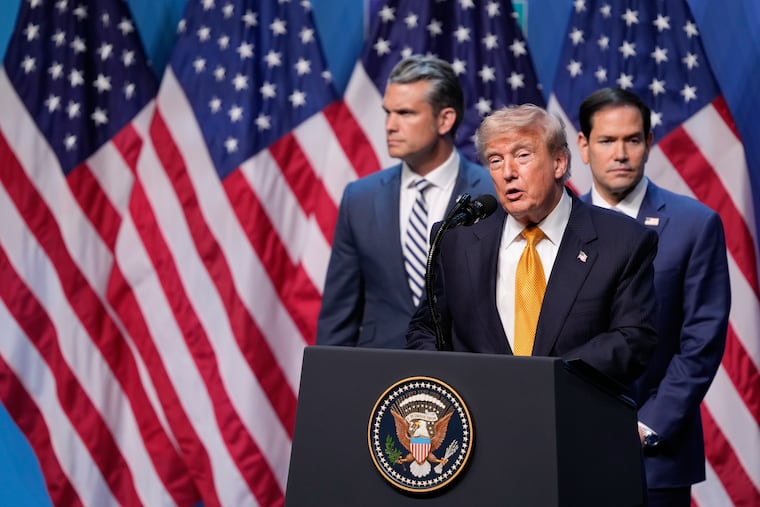
It felt like just the latest sign that Trump is not expecting the coming weeks or months to go smoothly — either for him or for the nation he so shakily leads.
It was just nine days ago in this space that we were talking about a) how Trump cares about literally nothing else but his own power and wealth, b) he looks increasingly terrified at the risk that Democratic control of Congress poses to those two things, and c) an increasingly imperial presidency has accumulated considerable yet mostly still-untapped powers that could be used to cancel an election result.
Now, with the 2026 midterm election just one week away, the 47th president and MAGA team are already starting to show their cards in what they hope will be a winning hand in an effort that could make Trump’s attempts to thwart his 2020 defeat look like a bland NFL preseason game.
In Minnesota, Trump’s badly compromised Justice Department has launched what is, ultimately, a quest to reduce the number of Democratic House members by one, by proving the rather ridiculous assertion that the father of Rep. Ilhan Omar lied on a document when she came to America in the 1990s, creating a case for stripping her citizenship and then deporting the Somali-born legislator.
In Alaska, the same unjust Justice Department — reportedly on Trump’s direct order — has launched a never-seen-before preemptive strike by filing a challenge in a U.S. Senate election that has not yet happened, claiming that a loss by incumbent GOP Sen. Dan Sullivan would be invalid since another Alaskan, also named Dan Sullivan, qualified for the ballot.
In California, Trump’s DOJ handed state and local officials a list of 20,000 registered voters that the federal government claims — almost completely erroneously, according to officials in California and experts — are noncitizens, backed up with threats of legal action if those on the list are allowed to cast ballots.
The key word here? Pretext.
The Trump regime moves, which are almost all being challenged in court, and have been panned by legal experts, are revealing strategies — narrow for now, but likely to become broader in the coming days — that could be used to undo what polling suggests will be major Democratic gains.
Expect to see more arguments that certain Democratic victors are ineligible to serve, or that something was more broadly amiss in the election, whether the hyperinflated claim is about local issues, like the name question in Alaska, or the regime’s unsupported insistence that noncitizens are voting in large numbers.
The arrival over the last week of these desperate measures are a sign that the first wave of election interference — redrawing district maps in the Deep South and elsewhere to eliminate Democratic seats, or toothless executive orders to impose new voting requirements or ban mail ballots — are not working in the face of an anticipated blue tsunami.
The moves are inarguably a brand of White House election meddling that is more aggressive than what preceded the Jan. 6, 2021 insurrection and are thus some of the gravest threats to democracy in the nation’s 250-year history.
And yet the maneuvers only hint at what’s to come. Would the effort to disqualify Omar and, somehow, a few other Democratic winners spark a more sweeping ploy under GOP House Speaker Mike Johnson to not certify all newly elected Democrats? Would the persistent, albeit false, claims of tens of thousands of noncitizen voters serve as a pretext for either sending in troops before Election Day next week, or seizing ballot boxes after the votes are cast?
Frankly, we’ve reached a stage of the fall election season when the question of how Trump will respond to a likely bad result is a much more compelling story than talking about the actual campaign. Just flip on your TV and you’ll see it again and again. Voters, including a lot of folks who voted for Trump when he won a plurality victory in 2024, are mad about high gas prices and tired of the president’s shtick. The political mystery is less whether the Democrats win next Tuesday, but rather by how much.
The real question for November then becomes: How much of a dictator is Trump — both in ambition, and in his ability to pull it off?
All one needs to do is look to the recent past — remember, the Trump campaign lost 61 of 62 court challenges to the 2020 election, and the one win was a minor procedural matter — to imagine that proposed moves like deporting Omar or overturning a Democratic win in Alaska will fail again in the legal system, even in rulings by Trump-appointed judges.
That means the only way Trump can block a Democratic House and probably Senate that will investigate the billion-dollar corruption of the president, his family, and his cronies is an all-out coup — tanks in the streets, martial law, et cetera.
That’s the asterisk in the headline, the chance for a full-blown banana-republic type situation. To be sure, he’s purged generals and admirals, installed a spineless Justice Department, and created a masked secret-police force. But Trump’s popularity is so low that it’s also easy to imagine a lot of folks disobeying such illegal orders.
When the president orders a raid on the home of a political opponent like Omar, or when he files lawsuits that are likely to again be laughed out of the courtroom, America’s wannabe strongman is not displaying strength. These are acts of weakness, and desperation, and they are bound to fail.
Trump could not have chosen a worse moment to search for a balcony. The fundamentals of what the political scientists call competitive authoritarianism — right-wing populists staging pretend elections — are failing because their misrule has imploded so badly they can no longer win even those rigged contests.
In Serbia, Aleksandar Vučić — the Eastern European nation’s strongman ruler since 2012 — thought he’d consolidated his control, only to lose a critical election this weekend at the hands of a movement led by student protesters. In Brazil, leftist president Luiz Inácio Lula da Silva stunned many observers by winning his runoff election against his right-wing rival Flavio Bolsonaro, who’d received more votes in the first round.
Both election victories were widely cheered on American social media by voters looking anywhere on the globe for hope just days before a make-or-break U.S. election — for signs that the masses of good people can still beat back the money and the tech moguls and the xenophobia and the hate.
Nov. 3 cannot come fast enough. Trump’s coup may be underway, but it’s already fizzling. And a few missile launchers aren’t going to save him.
Yo, do this!
Regular readers know that I’ve been on a crusade this year against the federal program known as 287(g) that sees local beat cops partnering with U.S. Immigration and Customs Enforcement (ICE) to terrorize immigrant communities. I knew it wouldn’t be long before some of the news media’s bigger fish caught on. This weekend, two ProPublica journalists teamed with the New York Times to publish a truly remarkable longform article about the tiny border town of Ingram, Tex., where one police officer cruising the main drag in a black Dodge Charger has arrested about 200 mostly Mexican immigrants, which is more than 10% of the town’s population. This piece will be a roadmap for future historians who want to learn how America lost its moral compass.
Another thing that probably won’t shock newsletter readers is that October has been a month for bingeing on sports — the World Series, the Union’s playoff run, the start of the LeBron James-led Sixers and the end, apparently, of the Nick Sirianni-led Eagles. But the demand for boomer-nostalgia documentaries is also peaking, so I’m creating a watch list. On top is a celebration of the 1970s’ SCTV, which was often funnier and more creative than SNL; SCTV: The Greatest Show You’ve Never Heard Of launches Friday on Netflix. I’m also hoping to catch a second documentary on Netflix: Save the Children: A Concert for the Ages, which is the film of a 1972 concert organized by the late Jesse Jackson that stars the Jackson 5 (heh, no relation), Marvin Gaye, Roberta Flack, Isaac Hayes, The Temptations, Bill Withers, and Curtis Mayfield. Wow.
Ask me anything
Question: Are the polls going to break our hearts again? — Joanne T. (@tessajop.bsky.social) via Bluesky
Answer: The answer, my friend, depends on how easily your heart is broken, because even the biggest wave year is never a 100% clean sweep for the dominant party. I’ve watched many midterm elections in my lifetime and since Richard Nixon’s 1974 resignation I’ve never seen a scenario more favorable for the Democrats. I think the pundits guessing the party might gain 15 seats next Tuesday are wildly underestimating. But such elevated hopes always lead to a few disappointments. Some Democrats in deeply red states (perhaps Scott Colom in the Mississippi Senate race) will fall short of their big-eyed ambition. I see potential agita in Maine, where every voter seems to have met, and many inexplicably like, Republican Sen. Susan Collins despite her corruption and her betrayal of her supposed pro-choice position. But my fingers remain crossed for a good night for democracy.
What you’re saying about...
One thing I’ve learned while doing the newsletter — yet still manage to forget once a year or so — is that normal people look at elections differently than political journalists: Either you hate punditry, or you want the semi-professionals to do it for you. So last week’s question about whether readers are watching any particular races for an upset was a total dud. Regular contributor Daniel Hoffman did respond to say that “it’s useless to speculate on upset races and states when we’ll find out in two weeks.” So there!
📮 This week’s question: This is a variation of a question I’ve asked here before, but it’s more salient than ever as Democrats appear to rise in the polls. What should be the absolute top, No. 1 priority for the party if it regains control of Congress in January? An issue, a particular bill, an investigation, or something else? Please email me your answer and put the exact phrase “top Dem priority” in the subject line.
Backstory on Trump, Epstein, and a media fail
OK, I had a busy afternoon with a lot of distractions on Monday, including working on this newsletter, but I was flabbergasted when I finally looked at my phone and saw that the current president of the United States of America had been accused in a congressional report of violently raping a woman — and that I hadn’t heard anything about it for six hours. That’s probably because as I write this early Tuesday morning, most of the A-list mainstream news outlets — such as the New York Times, MS Now, and CNN, have elected not to delve into the dramatic new details in a report by minority-party Democrats on the House Judiciary Committee on the problematic relationship between Donald Trump and his late financier and convicted sex-offender friend, Jeffrey Epstein.
The report felt newsworthy to me, but especially the new details offered by Beatrice Keul, a model and former Miss Switzerland who says that Trump raped her in the Plaza Hotel in 1993. It says something about Trump and his sordid trail of sexual assault and misconduct allegations lodged by more than two dozen women, including a jury finding Trump liable for sexual abuse in the case of E. Jean Carroll, that Keul’s name had surfaced previously but was somewhat lost in the sea of accusations. The news here is that Keul has spoken with investigators for the House Democrats and provided much greater detail to her story about what happened when she met Trump 33 years ago.
The new report says Keul told the investigators that she met Trump at a press luncheon for the American Dream Pageant that had partnered with the then-Manhattan real-estate mogul. The Swiss woman said Trump promised he would help her obtain a U.S. visa and gain admission to New York University at the event, where she also met Epstein, who told her he had organized “many parties with Don.”
The report alleges that Trump later invited the young woman to a hotel suite at the Plaza, which he owned, and there he “grabbed Keul from behind and forcibly raped her,” causing “bleeding and bruising on multiple parts of her body.” Trump, it says, repeated his promise to help her with a visa and with NYU — but only if she told no one about the assault. It said Keul stayed in the beauty pageant only because officials were holding onto her passport.
The House Democrats on the panel, led by the high-profile Rep. Jamie Raskin of Maryland, released the report exploring Trump’s ties to Epstein just eight days before the midterm election. They called for a special prosecutor to investigate allegations involving the president and Epstein, including what is in the millions of pages of the so-called Epstein Files which have been released — but not entirely — under the law passed in 2025. The report was arguably a sneak preview of the aggressive oversight that Democrats promise if they regain control of the House and possibly the Senate as well in January.
The White House sought to portray the document as purely a political maneuver. “This ‘report’ is nothing more than a desperate attempt by crazed Democrats to distract Americans from the surging Republican momentum driven by President Trump’s historic achievements,” White House spokeswoman Lauren Bis said Monday.
But the timing — and the response, or lack of a response, to the report — is not only notable because of the election. In recent weeks, the stunning reports about a 2024 fraternity gang rape at Cornell University and the initial tepid response from school administrators rekindled the anger about sexual abuse and patriarchal control that also boiled over with the #MeToo movement in 2017, right after Trump became president the first time. A lot of that rage can sourced to the fact that American voters have cast aside the multiple allegations against Trump — not once, but twice. A jury believed Carroll, who testified that Trump raped her in a department-store changing room in the mid-1990s — an incident strikingly similar to Keul’s account of what happened to her.
A Google News search for “Keul” early Tuesday morning showed the rape allegation was covered by a handful of outlets such as Time magazine, HuffPost, the New Republic, People magazine, and the Miami Herald, the paper that exposed the Epstein scandal during Trump’s first term. But a six-paragraph story in the Times included zero specifics about Keul or other specific alleged victims, which seemed also the case with other major TV or traditional news outlets.
Maybe editors agreed with the Trump White House that this was too close to the election, or felt that Keul’s name was already out there, although judging from the social-media reaction her alleged rape was news to just about everyone who did see it yesterday. This only fuels the outrage by many women (and some men) that America’s political culture, like the bigwigs at Cornell, still is not taking rape seriously. In this case, poor news judgment about a White House rape scandal is also part of the scandal.
What I wrote on this date in 2019
Masses of people out in the streets, furious about the high cost of living. It’s happening right now in cities like Paris and Barcelona, and on this date seven years ago it was happening in Santiago, Chile, where the trigger was an increase in subway fares. I linked those protests to what seemed like surging progressivism in the 2020 Democratic presidential primaries. I wrote that “you don’t need to fly a helicopter over the streets of Santiago to see that there’s a lot more of us than there are of them.” Well, yes and no. Chileans did elect a left-wing president, only to replace him with a right-wing rival earlier this year — the political circle of life these days. Read the rest from Oct. 27, 2019: “A revolution in Chile sparked by U.S.-style economics. Our billionaires should be very worried.”
Recommended Inquirer reading
Only one column this week because my children insisted on being born during election season. In that piece, I looked at an outrage that’s currently under construction in Pennsylvania — a giant gas-fired power plant in Homer City, Pa. for a complex of 36 data centers to power AI for Amazon Web Services that would become the state’s largest pollution source — and the warped politics that’s driving it. Donald Trump praised it. Gov. Josh Shapiro’s administration provided “concierge” permitting. Many neighbors hate it. But Trump’s son-in-law Jared Kushner and his Arab oil backers have made a sizable investment in this monstrosity.
Did I mention there’s an election coming up? There’s been a lot of controversy in recent years over how the media covers politics in America — especially the debate over whether there is too much “horse race” coverage and not enough substance. The Inquirer is giving our readers all of the things. Yes, we did publish polling in Pennsylvania’s four most-contested U.S. House races this fall, which had highly encouraging news for the Democrats fighting for GOP-held seats in Bucks County, and in and around Allentown, Scranton, and Harrisburg. But we’ve also published a highly comprehensive voters guide that gives you the candidates and issues in every race. Meanwhile, my colleagues on the Inquirer Editorial Board have been working overtime to crank out endorsements for governor and those make-or-break House races in the Lehigh Valley and over in South Jersey. A strong news organization is essential for democracy to flourish on Election Day. You become a part of that when you subscribe to The Inquirer.
By submitting your written, visual, and/or audio contributions, you agree to The Inquirer’s Terms of Use, including the grant of rights in Section 10.
About our columnists
In contrast to news reporters, who operate within an independent, nonpartisan framework, columnists are charged with including their perspectives, opinions, and viewpoints when presenting their reporting. Inquirer columnists include Jenice Armstrong, Will Bunch, Luis F. Carrasco, Paul Davies, Daniel Pearson, Trudy Rubin, and Sabrina Vourvoulias.

Sign up for the Will Bunch Newsletter