Trump looks to plunge us deeper into a misconceived Iran war after the midterms
The Iran war will not end Tehran's nuclear program, but may push hard-liners to sprint for a bomb.
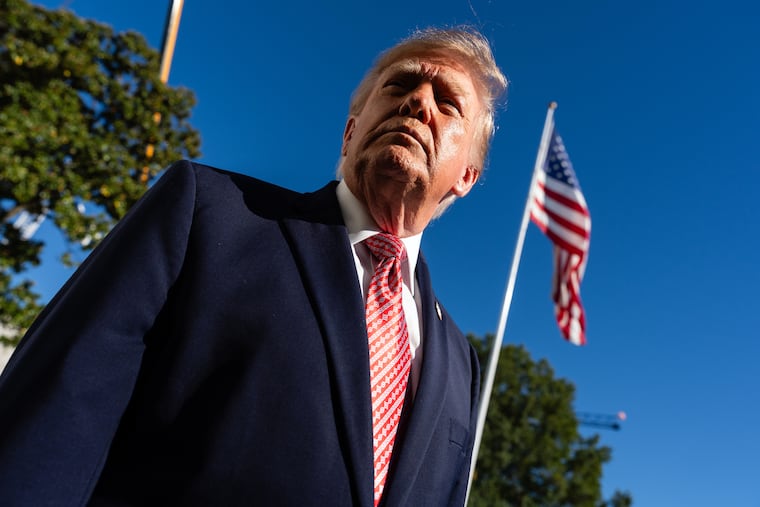

Donald Trump famously declared in his 2024 election victory speech that he was “not going to start wars, I’m going to stop wars.” He constantly denounced the “forever wars” started by past presidents.
“We had no wars,” he proclaimed about his first term during an October 2024 campaign rally at State College, Pa. “We had peace through strength. I will not send [your kids] to fight and die in a foolish never-ending foreign war.”
The biggest irony of the 2026 midterms, then, is that the GOP’s prospects are being hammered by the impact of Trump’s war with Iran, which has dragged on for eight months with no end in sight.
Yet the real story of this misconceived conflict is even bigger than the economic damage it has done to energy prices around the globe and to the overall American cost of living. Trump’s war of choice has exposed — with the clarity of the screen dropping in front of the Wizard of Oz — a president with no clue how to make peace through strength.
The Iran war is one of impulse, started with no apparent forethought about strategic consequences, on the false premise it would end quickly. And the president has no coherent Plan B to extricate himself from his self-made mess.
Before U.S. voters go to the polls, they should take a good look at what Trump has already wrought in the Middle East region. Unless a new Congress can rein him in, he appears set to attack Iran again in a strike that will only add to America’s military and economic problems.
Let me say here that I believe the murderous regime in Tehran is a blight on its people and the region and should not have nuclear weapons. But the issue is how to prevent that without making the situation worse.
Embroiled in battle
Disdaining expertise, Trump made a quick decision to go to war with Iran early this year after Israeli Prime Minister Benjamin Netanyahu assured him that the regime could be changed quickly and a malleable leader put in place.
The backstory, which there is no space to detail here, was so crazy that anyone with a modicum of Iran knowledge would have recognized it as a no go.
But, of course, Trump relies on his own smarts.
The surprise February attack took place while U.S.-Iran negotiations were ongoing, which negotiator Oman thought were making substantial progress.
But Trump, entranced by the quick extraction of Nicolás Maduro from Caracas in January, confused Iran with Venezuela. Instead of his (and Netanyahu’s) fantasy of a U.S.-friendly government in Tehran, hard-line military commanders have taken over Iranian leadership from assassinated ayatollahs.
“The lesson they’ve taken from the last year,” the excellent Iran analyst Karim Sadjadpour told a Carnegie Endowment webinar this week “is that you don’t win concessions from President Trump by compromising and taking a step back.”
The U.S.-Iran war is not focused now on eliminating Iran’s nuclear program — no matter what Trump says — but on ending the fighting over the Strait of Hormuz, where Iran can still strike international oil tankers.
Tehran never blocked the strait before the war, but since the war began has realized it can keep passage through the Persian Gulf so risky that insurance and tanker costs remain sky high. So does the price of gas and oil. Add to that, when the U.S. bombs Iran, Tehran takes out its reprisals against the energy facilities of America’s oil-rich allies in the Gulf, guaranteeing energy prices don’t fall far.
This is why Trump’s apparent plan to bomb Iran again, after the midterms, is so dangerous — and so foolish.
Bombing from the air won’t unearth the hidden enriched uranium. Moreover, the president’s threat to use a “bunker buster” bomb rings hollow because that weapon can’t penetrate deeply enough to destroy Iran’s nuclear site under Pickaxe Mountain.
More bomb strikes would lead to Iranian reprisals against Gulf oil nations and against U.S. bases that still aren’t sufficiently protected against Iranian drones.
Trump’s search for the quick fix, with no backup plan or coherent strategy is a self-defeating way to wage a war.
“I don’t see any possibility of what President Trump is looking for, which is like a knockout punch, a military strike that will essentially force the Iranians into a compromise or capitulation,” Sadjadpour said.
Instead, a post-midterms strike is more likely to increase Mideast and energy-market chaos, unless a new Congress and an angry public can finally check Trump.
Easy obsession
What’s crazy making is that Trump had the means to keep Iran’s nuclear plan under control without plunging into a new forever war. Instead, the new hard-line rulers are more likely to sprint for a bomb.
America’s satellite eyes in the sky could have monitored Tehran’s nuclear sites, which had been damaged b U.S. and Israeli bombs in 2025. Precise strikes could have checked any efforts to dig out the enriched uranium. With those under control, the president could have pursued tighter sanctions on Iran’s oil sales, and, eventually, restarted nuclear negotiations as the squeeze on that country’s economy worsened.
But Trump’s obsession with the easy win makes him prefer the military option. His delusions about his own brilliance put our military and our economy at risk.
These same delusions about the quick fix are obvious whenever he brags about achieving “peace through strength.” He constantly insists that he has ended eight wars — which fact checks quickly show is nonsense.
Two of the eight conflicts on his list weren’t wars; five (including the Gaza war) have stalemated; and his role in one — a border ceasefire between India and Pakistan — is disputed by the Indian government.
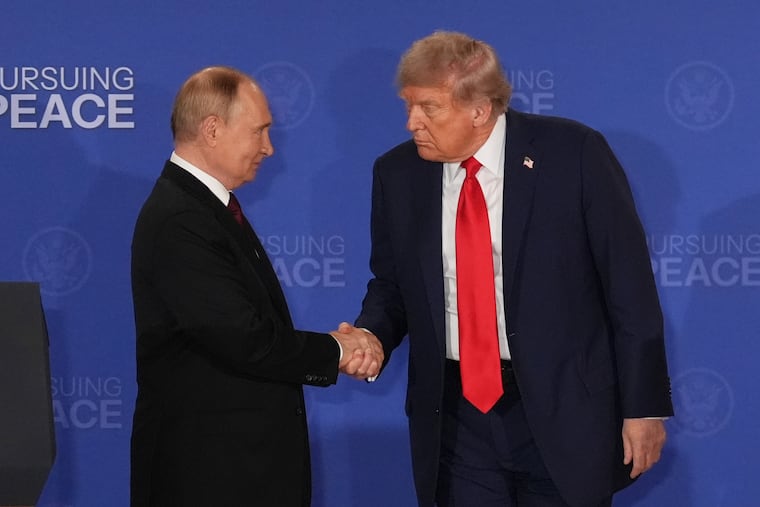
Perhaps his ugliest delusion is to believe he can end the war between aggressor Russia and Ukraine by selling out Kyiv to Vladimir Putin. He has ghoulishly claimed that “Russia, frankly, has been fine on Ukraine” at the same time Moscow was bombing women and children, including a baby in a stroller.
Trump’s chief “peace” negotiator, Steve Witkoff, slavishly praised Putin Wednesday as a “humanitarian” — at the same time as Russia was bombing apartment buildings in Kyiv. The Soviet phrase for starry eyed Westerners who blindly swallowed Kremlin propaganda was “useful idiot.” It seems brutally appropriate here.
Meanwhile, Trump and Elon Musk continue to trade blame for downgrading Ukraine’s critical Starshield internet coverage, which still had not been fully restored as of Saturday. Meantime, the Pentagon still refuses to let European nations transfer Patriot missiles to Ukraine that the Europeans already paid for. Officials from Trump to Secretary of State Marco Rubio lie about condemning Ukrainians to preventable death.
Of course, seeking “peace through strength” is exactly what Kyiv is doing in its brave struggle to hold off Russian aggression. If Trump understood the phrase he would be helping Ukraine, and he could gain the credit for truly standing by his slogan.
“But my primary consultant is myself and I have a good instinct for this stuff,” Trump famously told MSNBC’s Morning Joe.
That is why we should be very afraid if the next elected Congress is unable to restrain Trump from plunging further into this unnecessary war.
About our columnists
In contrast to news reporters, who operate within an independent, nonpartisan framework, columnists are charged with including their perspectives, opinions, and viewpoints when presenting their reporting. Inquirer columnists include Jenice Armstrong, Will Bunch, Luis F. Carrasco, Paul Davies, Daniel Pearson, Trudy Rubin, and Sabrina Vourvoulias.