Why we need vaccines
As Pennsylvania grapples with two deaths from measles, the former health commissioner of Philadelphia offers a novel way to think about vaccinations — as providing soldiers for a war against enemies.
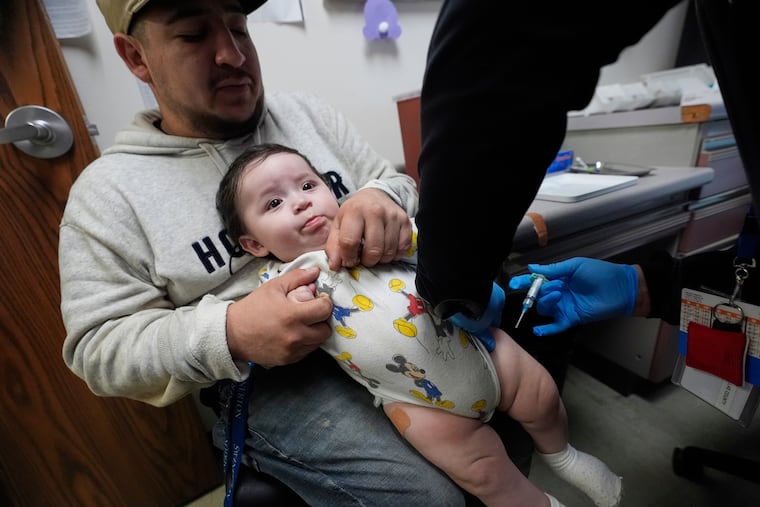
Imagine you are a general about to go to war. The enemies are known to be fierce fighters. Would you rather have three soldiers on your side or 300,000?
Let’s personalize it. You are the general of your body under attack by a new flesh-eating bacterium. Would you rather have three antibodies on your side or 300,000 antibodies? Survival or death? Pretty easy choice.
There is a lot of misunderstanding surrounding vaccines, but their greatest value is in creating the antibodies to fight off initial infections.
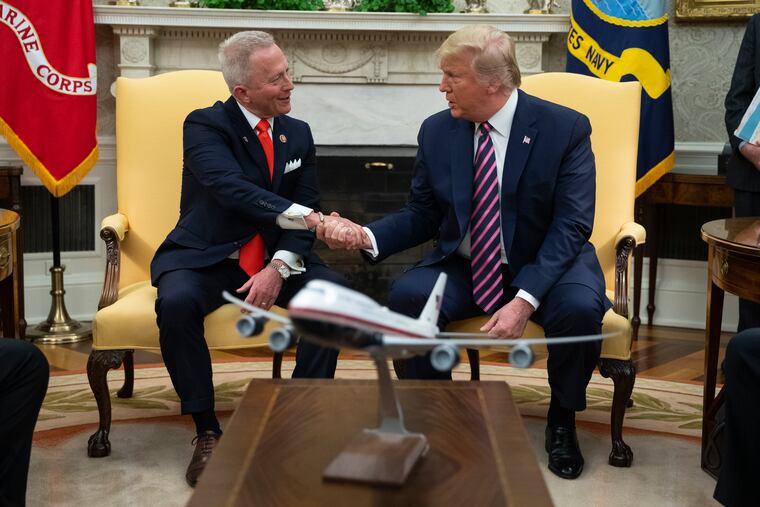
President Donald Trump, now playing a role as pseudo-physician, has announced an executive order to reduce the number of childhood vaccines from 17 to 11. Hepatitis B, one of the nastiest viruses, is among the vaccines that are no longer required.
Hepatitis B is a highly infectious virus, even more infectious than HIV. Undetected, it can pass from a mother who is carrying the virus to a baby during birth, infecting the newborn on Day One of life. Months later, the virus has infected the liver, causing the newborn to be fatigued, not eating, maybe even jaundiced. Years later, they can develop chronic hepatitis B and even liver failure or cancer.
What is remarkable is that all of this is preventable with a vaccine administered at birth.
Americans are very concerned about healthcare costs. The greatest way to cut healthcare costs is to prevent the disease in the first place. The more antibodies in our bodies able to fight the onslaught of viruses out in this hostile world, the more likely we will be in preventing disease in the first place.
People, including Trump, wonder why there are so many vaccines. There are three factors: First is that there are a lot of bacterial and viral diseases. Each needs its own unique antibodies to fight them. There are a lot more than just 11 or even 17 viruses or bacteria in the world — which is why new recommendations and combinations are tested and recommended.
Second is that researchers can measure antibody levels, and building up enough antibodies to defeat diseases may require more than one shot.
At least two current vaccines can prevent cancer.
Finally, viruses are very tricky and can mutate, camouflaging their detection from existing antibodies. Classic viruses that have this capability are influenza and SARS-CoV-2 (the virus that causes COVID-19). So recommendations have changed to reflect the changing flu and COVID shots to be given annually rather than just once and done.
Vaccine researchers are on the cusp of even greater breakthroughs.
At least two current vaccines can prevent cancer. The HPV vaccine prevents human papillomavirus from infecting the cervix, which, in turn, prevents cervical cancer. HPV has also been linked to head and neck cancer.
And the aforementioned hepatitis B vaccine can help prevent liver cancer.
The Nobel Prize-winning discovery of mRNA vaccines developed by Philadelphia scientists is being used to create inactive tumor proteins that our immune system can recognize. Future researchers will be able to identify our personal cancers, create individual tumor proteins that our immune systems will recognize, and create a personalized immune response that can kill cancers in our bodies.
These are heady times in medical research, which desperately needs the support of our government. Unfortunately, many of these discoveries, including new vaccines against scourges like Ebola, bird flu, hantavirus, malaria, and many others, are being stopped by our failure to invest in research. It is a lost opportunity to prevent disease using our own bodies’ immune system by creating an army of antibodies at the ready.
And nothing is more frightening than trying to fight a virus with only three antibodies.
Walter Tsou is the former health commissioner of Philadelphia and the past president of the Philadelphia County Medical Society.