Smoky skies? Throw shade at the fossil fuel industry.
To quibble about how much of the Canadian fires are due to human-caused climate change as opposed to poor forest management or normal climatic changes is to not see the fire for the trees.
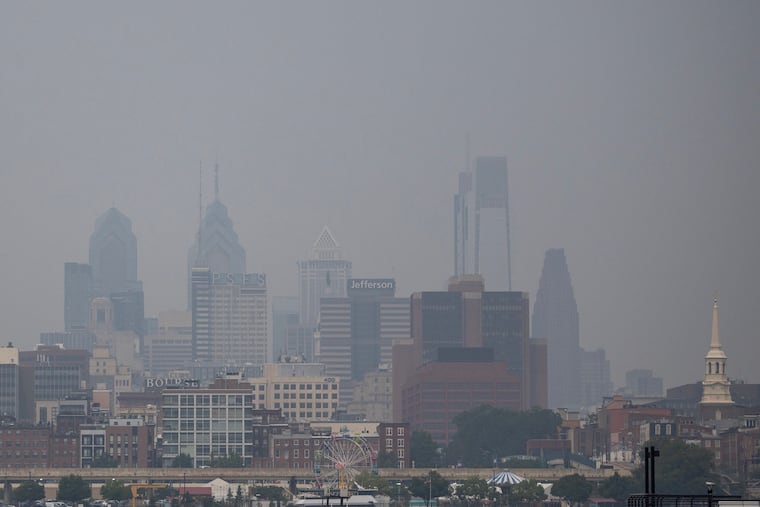
Last week’s air quality is brought to you by the fossil fuel industry.
To quibble about how much of the Canadian fires are due to human-caused climate change as opposed to poor forest management or normal climatic changes is to not see the fire for the trees. The fossil fuel industry has created human-made climate change, and it has won the war against it.
If your first reaction to this claim is to think the climate is always changing and that there is nothing out of the ordinary about the speed of current global temperature rise, that, too, was brought to you by the fossil fuel industry.
Since the 1970s, this industry has known about the impact of its products on climate. Rather than prioritize planet over profit, it chose to “manufacture uncertainty” about these impacts, fostering climate denial in order to delay government action that might otherwise address the problem.
The fossil fuel industry’s “playbook” involves sustained and well-funded efforts to diminish climate reduction targets, protect subsidies to fossil fuel companies, and push for “energy independence” that is achieved through more oil and gas drilling. To extend their reach beyond their very successful lobbying of politicians, energy corporations have even sponsored university centers that lend academic credibility to their preferred climate solutions, such as relying on natural gas rather than renewable energies that would have far lower climate impacts.
If thinking about the role of climate change in causing the fires that are to blame for last week’s haze makes you feel guilty about your own energy consumption, that guilt was also brought to you by the fossil fuel industry.
Most prominently, in 2004, British Petroleum funded a $250 million marketing campaign to introduce the public to the “carbon footprint calculator” while rebranding itself as a green energy company. This fostered widespread framing of the climate problem as something caused by individual lifestyles, a problem that could be solved by individual behavior changes such as recycling and the use of energy-efficient appliances.
The carbon footprint framing created and promulgated by the fossil fuel industry focused public concern on voluntary changes that could be made by individuals, rather than on regulation of the industry profiting from sustained use of planet-heating fuels.
That guilt you feel about your own energy consumption was put there to prevent your individual anger from turning into collective anger that could bring down the industry profiting from your fossil fuel consumption.
But the industry isn’t just making you personally responsible for climate change; it’s using its immense economic power to influence political decisions shaping domestic automobile markets.
It is fitting, then, that a large part of North America is choking on smoke from rampant fires at the end of a fiscal quarter in which China’s BYD electric car company again outsold Tesla in global electric vehicle sales.
In contrast to many countries around the world that are benefiting from access to low-price, high-quality EVs manufactured in China — which will simultaneously diminish the cost of driving and its climate impact — the Trump administration is doing a solid for Elon Musk’s EV company by virtually blockading Chinese EVs from entering the U.S. domestic market through the use of 100% tariffs and related technology bans.
Effectively, this protects billionaire Musk’s domestic market dominance while keeping EV prices high enough to ensure Americans stay dependent on gas-powered cars.
It should come as no surprise that the fiscally savvy prime minister of Canada just pivoted to deliver a blow to the fossil fuel industry that President Donald Trump will never even try to land. In a reversal of its protectionist stance, Canada cut its 100% surtax on Chinese EVs down to a 6.1% tariff rate, allowing up to 49,000 Chinese EVs per year, conditioned on Chinese automakers’ investment in joint ventures with Canadian manufacturers.
Access to affordable, high-quality EVs that diminish climate harms currently wreaking havoc on Canada is no consolation for all the humans and animals whose homes, habitats, and lives are currently being burnt to a crisp. But it reflects the behavior of a country that is still capable of doing something besides protecting the profits of its billionaire class.
If you want to do something that will save your bank account and your lungs, stop voting for political candidates who are bought and brought to you by the fossil fuel industry.
Breena Holland is an associate professor of political science and environmental studies at Lehigh University. Her research focuses on domestic environmental policy and air quality in the Lehigh Valley.