America lost its way after 9/11. We don’t have to stay on the wrong path.
When the planes hit the World Trade Center towers on Sept. 11, 2001, most of us did not realize it was the first step in the dismantling of the world we knew.
On Sept. 11, 1990, President George H.W. Bush gave a speech to a joint session of Congress with his vision for a “New World Order.” He promised that instead of the spheres of influence and deadly competition that had dominated international politics, there would now be a future where “the rule of law supplants the rule of the jungle.”
For a while, it seemed like this could be true. War and conflict did not end in the 1990s, but peace seemed plausible.
A United Nations-sanctioned coalition pushed Saddam Hussein out of Kuwait. Israeli and Palestinian leaders signed the Oslo Accords, which promised a shared future of two states for two peoples. Genocidal leaders in Rwanda and Serbia were removed from power. Even the Irish conflict, famously “800 years” old, was ended with the Good Friday Agreement.
The United States reigned as the world’s sole superpower, and the next strongest militaries and economies mostly belonged to our allies. The Pax Americana seemed to have reached an unassailable zenith.
Then it all came crashing down.
When the planes hit the World Trade Center towers on Sept. 11, 2001, most of us did not realize it was the first step in the dismantling of the world we knew. I certainly did not. After all, I was only 12 years old.
My seventh-grade classmates and I initially had no idea what had happened. We knew that our teachers were upset, and we caught a glimpse of maneuvering warships on the faculty lounge TV. The next thing we knew, we were being told to head home. For me, that meant hopping on SEPTA’s 67 bus. My younger brother and I watched news coverage of the devastation from our living room couch.
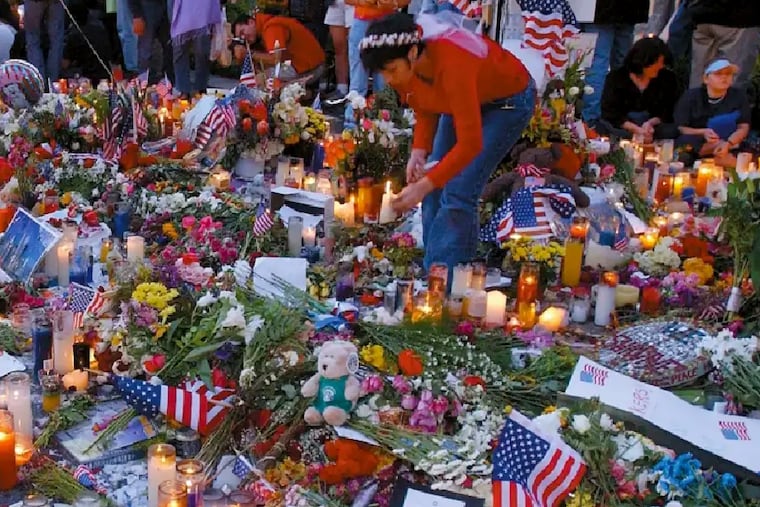
At first, the attacks seemed to make the country stronger. We heard the inspiring story of the passengers who fought back on United 93, their plane crashing into a Pennsylvania field instead of its intended Washington target. When President George W. Bush threw out the first pitch at Yankee Stadium on Oct. 30 during the World Series, it felt like everyone was cheering him on, Republican or Democrat, Yankees fan or not. When he delivered a strike despite wearing a bulletproof vest under his pullover, it seemed like a promise that everything would get back to normal.
It never did. Now, 25 years later, Americans overwhelmingly believe the country is on the wrong track, that we’ve strayed from our founding principles, that there is corruption in the federal government, and that the lives of our children may be worse than our own.
Much of what went wrong can be traced to our initial efforts to avenge the dead.
When the U.S.-led international coalition invaded Afghanistan in October 2001 to destroy al-Qaeda and bring its leader, Osama bin Laden, to justice, it seemed like a moral and strategic necessity. In March 2003, the Bush administration expanded the war on terror to Iraq under dubious claims of the existence of weapons of mass destruction. A year later, as the justification for the war was falling apart, revelations of brutal torture at Abu Ghraib prison in Iraq destroyed what little credibility and international goodwill Bush had left.
The reaction to 9/11 itself also presaged what was to come. While most Americans rallied to the flag after the attacks, a persistent subculture insisted they were faked in some way. The so-called 9/11 Truth Movement may have been a collection of cranky conspiracy theorists, but they represented a model for where America was heading — a time when people increasingly cannot agree on basic facts and no longer inhabit a shared reality.
It isn’t just failures abroad that have fostered this sense of cynicism. In the ‘90s, there was a great spirit of optimism about new technologies. The internet was heralded as a way to break down barriers and foster international cooperation. Initially, this also seemed to be true.
On message boards, once-lonely hobbyists found one another, sharing knowledge about topics as disparate as model trains, hiking, or fashion. Even fierce political opponents like Bill Clinton and Newt Gingrich could agree on letting the internet mostly regulate itself.
Today, 41% of Americans report having little to no confidence in tech companies. Instead of democratizing access to information, social media has flooded the zone with nonsense. Online ad revenue is reaped by tech companies while content providers fight over the scraps. Many local newspapers, their economic model upended, have either disappeared or been hollowed out. More and more, people are getting their news from short-form video apps like TikTok or Instagram, or from influencers who rarely cite their sources or explore the nuance behind any issue. The public’s distrust of Big Tech has somehow not spread to the figures the companies’ algorithms have pushed to the forefront.
The 2008 financial crisis also took a toll. Americans have disagreed over just about everything in our history, but the wave of foreclosures, stagnation in wages, and continued affluence for the country’s wealthiest sapped away at the public faith in the American dream. During the Great Depression, some wealthy figures like Charles Schwab and the Vanderbilts saw their fortunes shrink. During the Great Recession, the big banks received a $700 billion bailout, while 10 million ordinary Americans lost their homes.
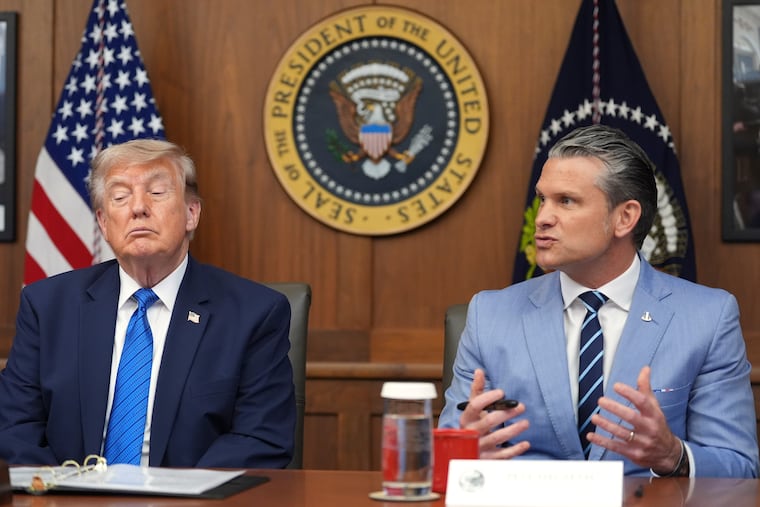
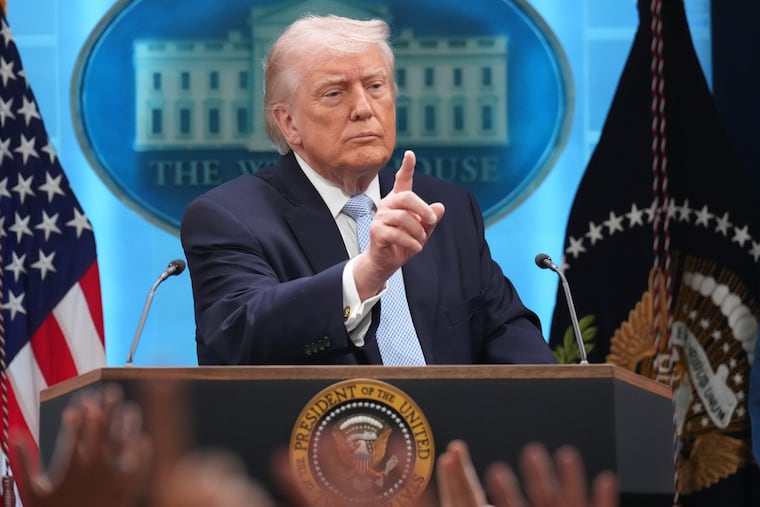
In the 2000 election, both Democratic candidate Al Gore and Republican George W. Bush were viewed favorably by most of the American electorate. These days, a more divisive politics rules. Supporters of Donald Trump, convinced by the president that the 2020 election was stolen, stormed the U.S. Capitol. While it is true the 2000 election was itself controversial, with lawsuits about recounts in Florida ultimately reaching the U.S. Supreme Court, Gore conceded “for the sake of our unity as a people and the strength of our democracy.” Both Gore and President Bill Clinton attended Bush’s inauguration.
Today, roughly 60% of Americans disapprove of President Trump, and just as many disapproved of President Joe Biden at the end of his term. Both major political parties are also unpopular, and railing against the party establishment has become a popular tactic in primaries.
Of course, given the failures of the last 25 years, that establishment deserves to be questioned. The mainstream leaders of both parties share responsibility for the erosion in public confidence. Not only have they failed to anticipate the challenges of the 21st century, but their relentless partisanship has also made crafting sustainable solutions impossible. Nor have they offered new ideas that can compete with pledges to put every American on Medicare or claims that all our problems will disappear if we simply deport enough people.
That doesn’t mean the next 25 years can’t be better.
The beautiful thing about government of the people, for the people, and by the people is that we are in control. Just as our predecessors freed themselves from British rule, destroyed the power of slave holders that was corrupting our republic, reined in Gilded Age trusts, defeated fascism, and marched to finally make good on our nation’s stated belief that all men are created equal, those of us charged with the rights and responsibilities of citizenship today can also change our nation for the better. We must.
Even as the Russian invasion of Ukraine drags toward year five, radical Israeli settlers seize land meant for a Palestinian state, and our nation divides itself over every ginned-up bit of culture war ephemera, we retain the same qualities that made us the world’s hegemon in the first place — ingenuity, openness to risk, and drive.
Like the brave passengers on United Airlines Flight 93, we must recognize our predicament, find our resolve, and fight to ensure terror doesn’t win.