With more modes of speech, why aren’t we freely communicating?
Americans are increasingly uncertain about participating in our nation’s public conversation. This should alarm us all.
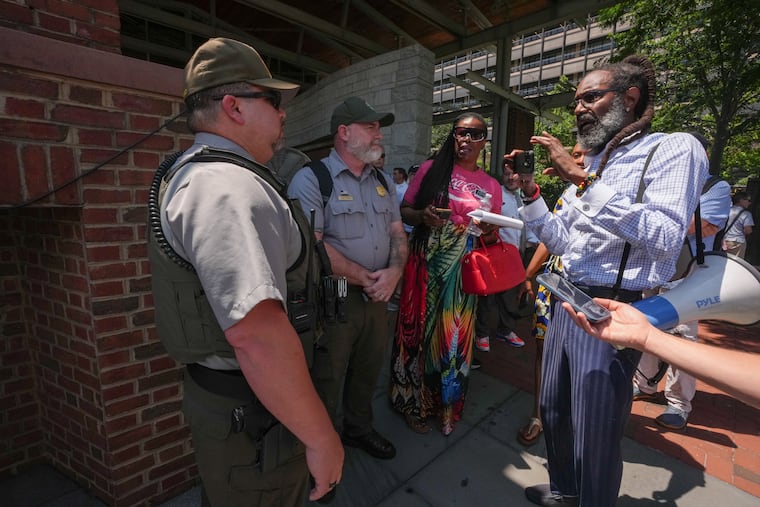
We have never had so many ways to speak. Yet rarely has speaking felt so fraught.
A defining feature of this moment in history is its extraordinary capacity for speech. Social media offers direct pathways to audiences. Generative tools can now help us refine our own voices. The barriers to speaking have never been lower.
But the expansion of our ability to speak has not necessarily strengthened the conditions for free expression or led to more meaningful exchange. The same technologies that connect us to vast audiences also keep us within communities of shared views. And even as avenues for expression have multiplied, many Americans feel less certain that they can speak freely.
New research from the John S. and James L. Knight Foundation and SSRS found that across activities from journalism and art to protest and political expression online, barely half of Americans believe they can exercise their expressive rights freely.
Just 54% say they feel “very” or “mostly” free to express their political views without government interference or punishment. Asked to think back 10 years, 72% said they had felt that free. Looking ahead 10 years, only 42% expect to. While some among us may feel this more or less acutely than others, the pessimistic outlook holds across a host of different demographic and partisan groups.
There may be more ways to speak than ever, but Americans are increasingly uncertain about participating in our nation’s public conversation. This should alarm us all.
The First Amendment protects our right to speak, but free expression also depends on venues where people can actually use that right. In recent decades, we have invested enormously in technologies that increase the quantity of expression while neglecting the places — whether civic institutions, public spaces, or so-called third places — where we cultivate social trust. The spaces where constitutional rights grow into habits of forthrightness, curiosity, listening, and mutual respect; where we learn to recognize one another as participants in a shared civic life.
The First Amendment gives us the framework. It’s up to us to foster the spaces where it comes to life.
Critical infrastructure
Our civic institutions are part of the critical infrastructure of free expression. They create opportunities for discovery and encounters that enrich our understanding. Museums invite us into the complexity of the past, revealing the stories, context, and perspectives that give history texture and meaning. Universities bring competing ideas into conversation and subject them to scrutiny, an aspiration that has always been messier in practice than in principle. Libraries give us the freedom to follow our curiosity, pursue knowledge on our own terms, and venture beyond the familiar. Where they still exist, local newsrooms surface stories that might otherwise go untold.
None of these institutions gets it right every time. But their value lies partly in creating environments that welcome people in while making room for the friction that meaningful inquiry inevitably produces: disagreement, challenge, surprise, and sometimes a change of mind.
The same technologies that connect us to vast audiences also keep us within communities of shared views.
The information economy generated enormous investment in the technologies that have reshaped our civic life. But investment in the institutions that help us make sense of these changes has not kept pace.
Philanthropy has an important role in this work. It can invest where markets won’t and governments can’t. It can absorb the risk that comes with genuine experimentation in new approaches to civic learning and engagement. It can identify and bring to scale emerging, community-led models that renew the institutions, relationships, and face-to-face experiences that remain essential to democratic life, even as more of our lives move online. And it can help institutions lower barriers and welcome new audiences.
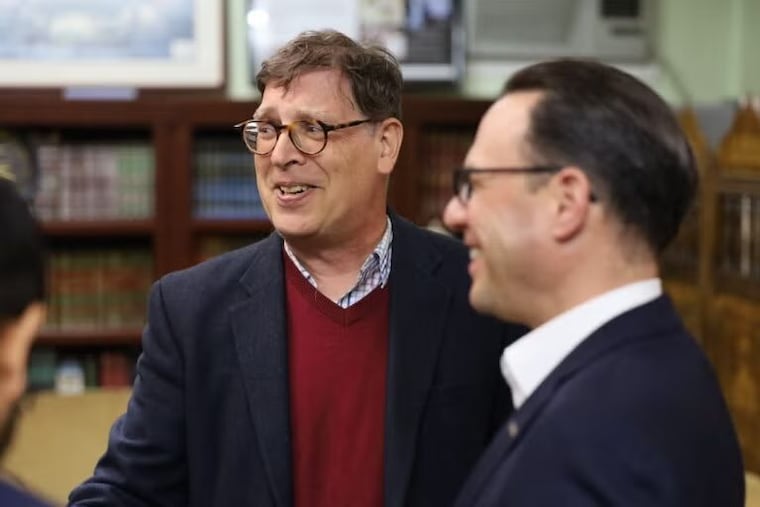
A new partnership between the National Constitution Center and Knight Foundation is one effort to put these ideas into practice. On Wednesday, the center will host its inaugural First Amendment Day, inviting visitors to explore our expressive freedoms through history, conversation, creativity, and civic engagement. They will have opportunities to exercise their own rights, encounter the perspectives of others, and join conversations about the changing landscape of speech being shaped by new technologies. Later that evening, Govs. Josh Shapiro (D., Pa.) and Spencer Cox (R., Utah) will discuss free expression and civic dialogue at the Kimmel Center. And to ensure this special programming is available to as many people as possible, admission is free to all.
The goal is not simply to teach what the First Amendment says, but to practice the culture it makes possible.
Philadelphia has a rich history of civic discourse and debate. It is here that these ideas took root. The Civic Decade ahead, as we celebrate the 250th anniversaries of the Constitution and the Bill of Rights, offers us a chance to invest anew in our institutions of self-government. Building a culture of free expression should be part of that work.
We have more ways to speak than any generation before us. We must be just as ambitious about nurturing the spaces that remind us not to take our First Amendment rights for granted.
Julie Silverbrook is the chief content and learning officer of the National Constitution Center. John Sands is vice president of information and society at the John S. and James L. Knight Foundation.

Inquirer Opinion Newsletter