America should move beyond the two-party system
Having more than two parties wouldn’t magically solve all problems, but it could broaden democratic competition and debate.

It may be hard to remember in today’s polarized political climate, but there used to be a time when members of Congress — and even Democratic and Republican presidents — would work across the aisle to approve important pieces of legislation.
And there was no way around it.
Until Newt Gingrich came up with his Contract with America in 1994, Republicans had been the minority in the House for 40 consecutive years, making partnering with Democrats unavoidable. Gingrich, then the House minority whip, elevated local races to the national stage, crushing the former conservative Democratic stronghold in the South and flipping it for Republicans. The new GOP platform also moved the focus away from compromise to a more confrontational approach.
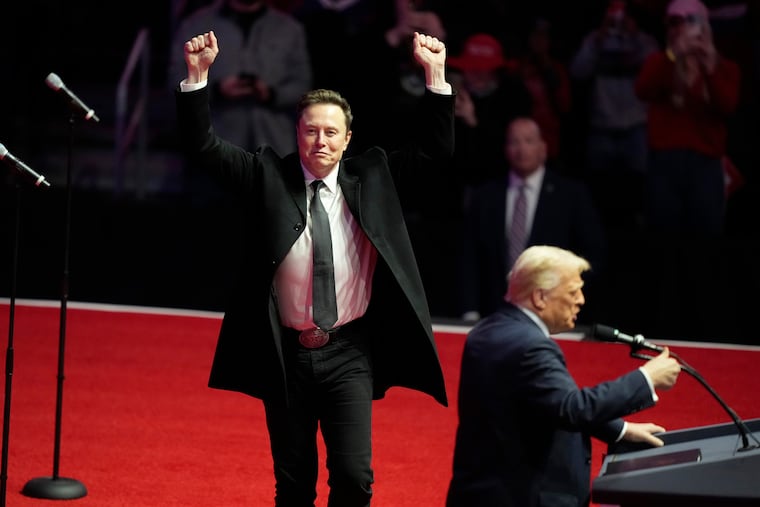
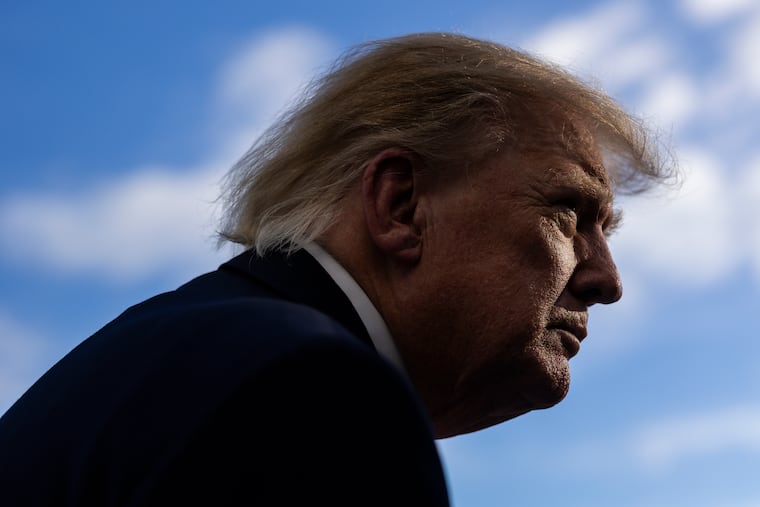
This brutalization of partisan politics has reached a new nadir under President Donald Trump. His hateful rhetoric and frequent attacks on Democrats have made it nearly impossible for members of both parties to constructively work together.
Meanwhile, with the midterm elections around the corner, the parties themselves seem to be fracturing.
For the GOP, Trump’s own MAGA candidates are having to deal with increasing competition from traditional Republicans after the president’s laundry list of failures — a war of choice in Iran, soaring gas prices, and a rising cost of living — continues to grow.
Add to this the Silicon Valley billionaire crowd and the MAHA movement that was brought in by former Democrats Robert F. Kennedy Jr. and Tulsi Gabbard, and you get a party disagreeing on basic ideals. For Democrats, the Democratic Socialists of America are trying to radically change the societal landscape and are pulling the party to the left more than many pragmatic centrists would like.
With many voters tired of political division that gets nothing accomplished, yet strongly divided themselves over what issues they value most, the U.S. should consider whether the big tent politics of the past are still relevant, or whether it’s time to move beyond a two-party system.
In Europe, countries like France and Great Britain have already undergone this shift.
In Germany, where I’m from, there was a strict three-party system after World War II, with the Liberals often serving as power brokers between Conservatives and Social Democrats. In 1983, the Greens made it into the federal parliament, or Bundestag, paving the way for the first real left-wing coalition between Social Democrats and Greens in 1998.
Through the coalition, the Greens were able to negotiate a gradual end to nuclear power. The party also introduced incentives for investments into renewable energy as well as an ecological tax on fossil fuels — along with taking the first step toward marriage equality for gay couples.
After German reunification, the successor of East Germany’s state party united with a separatist movement of the Social Democrats, forming another strong contender left of the established spectrum that put heavy societal pressure on the introduction of a minimum wage, rent freezes in metropolitan areas, and a renewed focus on subsidized and public housing.
Most recently, the Alternative für Deutschland, or AfD, keeps shaking up the system with its MAGA-influenced right-wing approach, being especially successful in the German east and being on track of having its first prime minister at the state level this fall. Even without a majority, the AfD’s growing electoral gains have already led to stricter border security and asylum policies by the other parties.
There are currently five major parties represented in the Bundestag, while many smaller parties are involved in local governments across the country. Those are a lot of options for a country just short of 85 million people.
Meanwhile, in the U.S., there are 350 million people coming from all walks of life and facing a host of local issues that often get lost in the push for nationalized politics. Having multiple parties would give voters more choices and solve problems more effectively while weakening polarization.
For example, here in Pennsylvania, environmentalists and proponents of Big Tech could compromise over data center regulations that protect communities while still making way for artificial intelligence development. Progressive Democrats and union-backed Republicans like Brian Fitzpatrick and moderate Rob Bresnahan could work out solutions for the structural changes of the former coal and steel regions of the state.
Of course, having more than two parties wouldn’t magically solve all problems, but it could broaden democratic competition and debate, give minorities more of a voice, and even help the GOP and the Democrats come together.
Yes, there would be fewer people under their respective tents, but the major parties would be able to focus on their own raison d’être again, since it’s impossible to stand for something when you’re trying to stand for everything.
The United States is a huge country with impressive diversity — it’s time to have a party system that reflects this.
Wim Orth is a journalist with WELT in Berlin and an Arthur F. Burns fellow at The Inquirer.