Letters to the Editor | Sept. 9, 2026
Inquirer readers on the closure of the Academy of Natural Sciences museum and President Trump’s decision to pardon former Philadelphia labor leader John Dougherty.
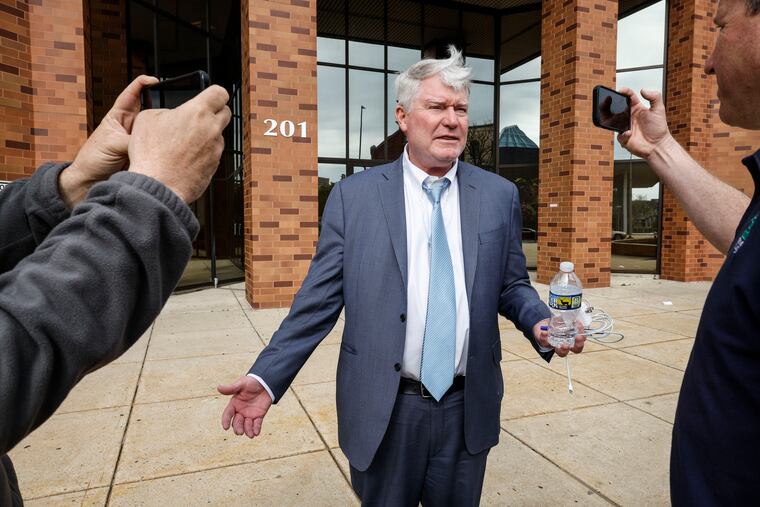
Pardons amiss
Historically, the process of gaining a presidential pardon started with a formal application to the U.S. Department of Justice, which was then reviewed and presented to the president for consideration. And those who sought pardons typically had to wait until a president’s final year in office to receive one.
Apparently, that process has been thrown out the window by the current administration, which started rolling out pardons the first day it took office and hasn’t stopped since.
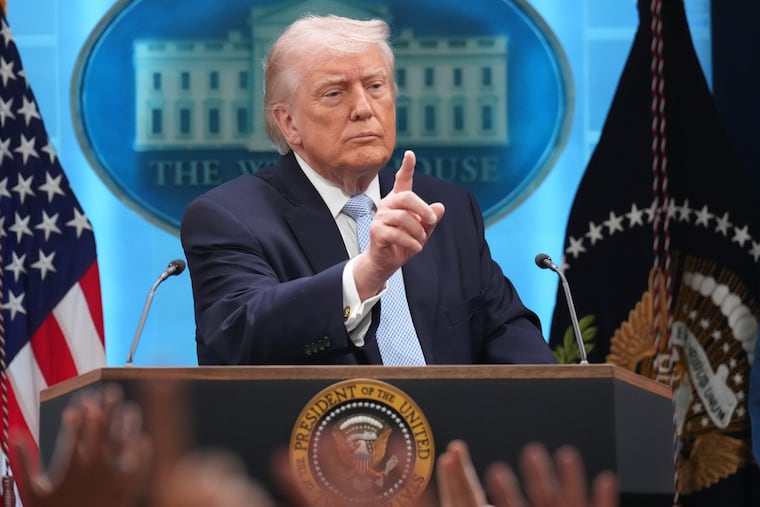
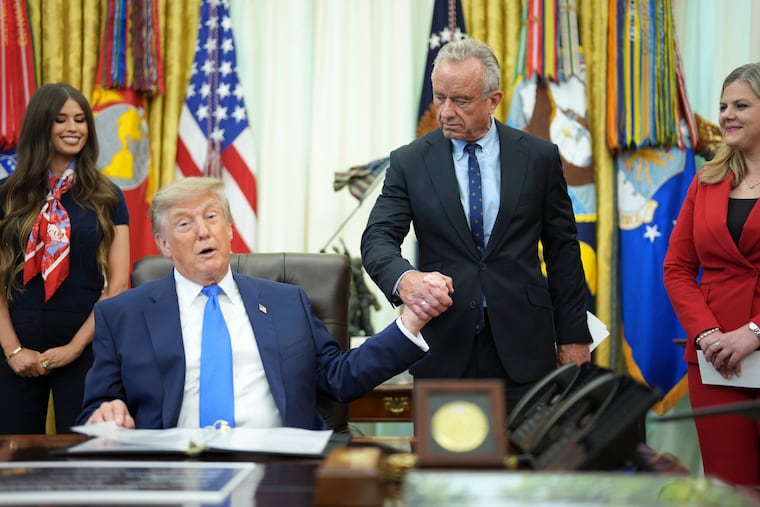
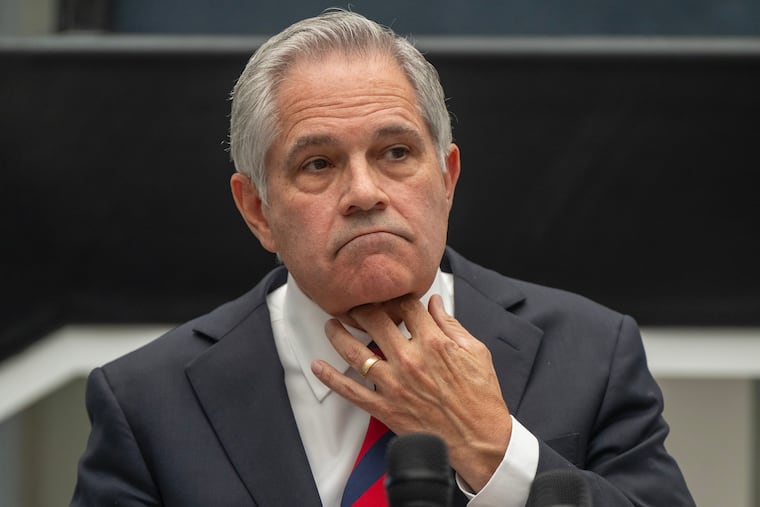
Your recent article on Donald Trump’s decision to commute John “Johnny Doc” Dougherty’s six-year prison sentence is another example of a system gone wrong.
The Justice Department — back when it was an agency that actually administered justice — thoroughly investigated Dougherty, presented its case in court, and won a conviction against him. Even after being found guilty by a jury of his peers — and admitting his guilt during sentencing — Dougherty tried just about everything he could to avoid going to jail and repaying his debt to society.
Well, Dougherty found a sympathetic ear in the Trump administration and got the president to commute his sentence. For months now, Congress has been investigating whether “pay-to-play” has had a role in any of Trump’s pardon decisions, and I hope someone looks closely at this case, too.
In any event, the presidential pardon process needs to be reformed, because there is no doubt it is being misused and abused.
Susan Thompson, Media
. . .
Donald Trump commuted John “Johnny Doc” Dougherty’s sentence because he’s apparently the type of leader the president can truly respect: Dougherty was found guilty of bribing an elected official and embezzling a large sum of money from the labor union he led, Local 98 of the International Brotherhood of Electrical Workers (IBEW).
Rather than a “magnificent gesture of compassion,” as Dougherty’s lawyers called it, Trump’s action was a slap in the face to the union Dougherty defrauded and which he will now not have to repay. Dougherty’s background as a political power broker likely entered into the commutation decision at least as much as the medical condition Dougherty says his wife has. Other federal inmates likely have ill family members, too, but they have to remain behind bars because they can’t afford a lawyer or don’t have political connections.
When commuting the sentence, Trump could have left intact the $1.6 million Dougherty was ordered to pay as restitution. But he chose not to, likely as a form of respect from Mar-a-Lago Don to a Philly don.
Trump treats commutations and pardons like party favors for the rich and powerful, the only Americans with whom he feels a kinship other than the seditionists who did his bidding on Jan. 6, 2021.
Stewart Speck, Ardmore
Choose peace
As I watch the news each day, I find myself asking a painful question: When did human life become so easily sacrificed in the name of power, politics, territory, or revenge?
From Gaza and Ukraine to Sudan, Yemen, and other places suffering from conflict, innocent people continue to pay the highest price for decisions made by those far removed from the battlefield. Families lose parents. Children lose their homes and schools. Communities are destroyed, and millions are forced to flee in search of safety.
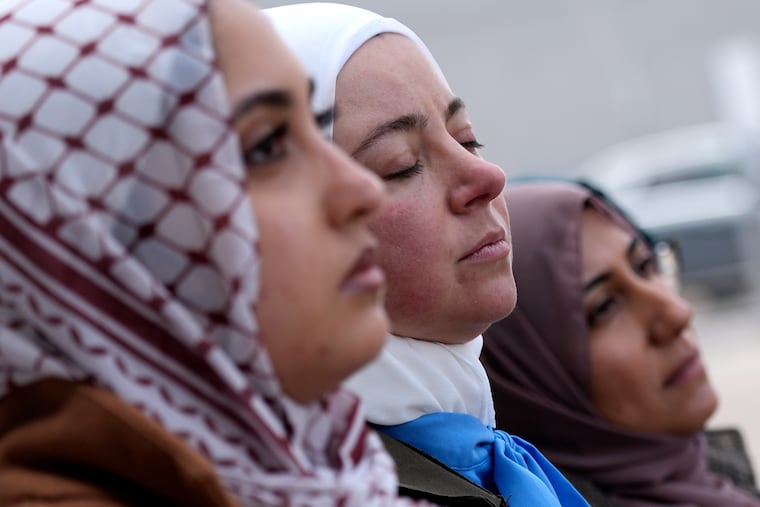
As an Ahmadi Muslim living in Philadelphia, I believe deeply that the sanctity of human life must come before political allegiance. My faith teaches me to reject hatred and to pray and work for peace. But peace cannot simply mean the absence of headlines about war. It must mean children can sleep safely, families can remain together, people can practice their faith without fear, and every human being is treated with dignity.
We must also be careful not to become selective in our compassion. A Palestinian child matters. A Ukrainian child matters. A Sudanese child matters. An Israeli child matters. A Yemeni child matters. Every innocent life matters. We do not have to agree on politics to agree that innocent people should not be killed. We do not have to share the same religion to recognize another person’s humanity.
Philadelphia has a proud history of religious freedom and diversity. From here, we should raise our voices — not for one people against another, but for justice, mercy, and peace for all people. Our politicians, our religious leaders, and our communities should demand diplomacy before destruction, humanitarian assistance before indifference, and accountability when civilians are harmed. The international community must not allow suffering to become something we simply scroll past on our phones.
We cannot bring back those who have already died. But we can refuse to accept more bloodshed as inevitable. As Americans and as human beings, we should demand better.
Madeel Abdullah, Garnet Valley
Collective immunity
As you point out in your article delineating the differences between the mandates for the COVID-19 vaccine during the pandemic and the guidelines for the measles vaccine being discussed now, the situations are very different.
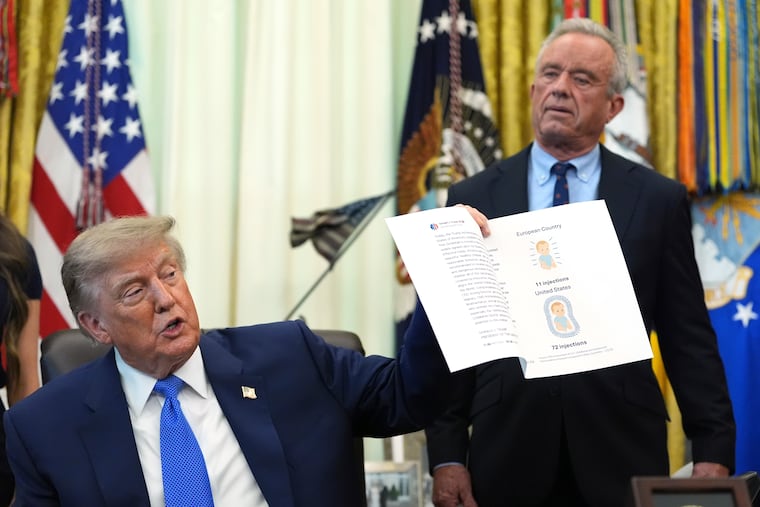
As a pediatrician for 40 years, and as someone old enough to remember the miserable 10 days I spent being sick with the measles, let me add that if some people are unable or unwilling to look past the anti-scientific jargon being pushed on the internet and by Robert F. Kennedy Jr. and others, then — for the sake of all the infants who are too young to be vaccinated and all of the children who can’t be vaccinated because of medical conditions — mandates need to be put in place to protect us all through a vaccine that has a 50-plus year safety record.
Public health means just that — protecting you, me, our loved ones, and all people.
Barbara Gold, Philadelphia
Cultural crisis
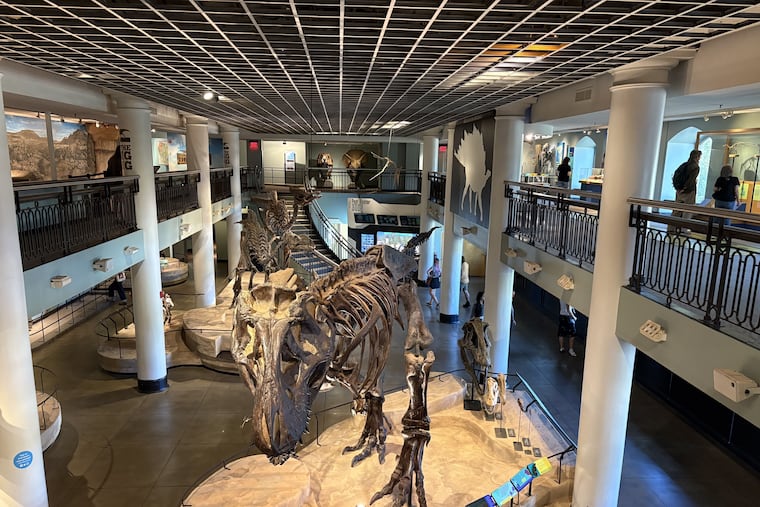
Philadelphia is forgetting itself, and the signs are plain. In 2018, the Philadelphia History Museum closed; now, the Academy of Natural Sciences is closing its museum. Our city is losing its great public spaces where history, culture, and science can be experienced. Soon, both collections will be in a location that is inconvenient to access.
Are we to become a city that claims tradition and yet has no soul? Who is to blame? Ourselves. We decided to sit in, stay home, and opt for something flashier than dinosaur bones, butterfly gardens, and petrified insects.
We need to prioritize our collective traditions and culture, our museums and artistic heritage, and the way we do professional sports, before it is too late. If we continue on this trajectory, we will lose our character and identity and become an amorphous blob adjacent to I-95, passing from New York City to Washington, D.C.
How about, instead of desperately rallying to save a museum by appealing to billionaires and corporate bailouts, we rise and support them? Donate to them. Join them. Wake up, Philadelphia.
Christopher Czyzewski, Philadelphia
Museum memories
My first job in Philadelphia to help pay for art school was working at the Academy of Natural Sciences. It turned out to be one of the great privileges of my life. As the lowest worker on the totem pole, I laid out its magazine, Frontiers. In the process, I had the privilege of meeting the scientists who were traipsing the world, studying the water, the land, the vegetation, and the animals that make planet Earth such a beautiful, complex place. They brought back artifacts and plant material that the museum’s energetic staff used to teach visiting Philly school kids who don’t get to see much green and hardly ever get to touch a dinosaur bone. In addition, their colleagues in the museum and in the astonishing, treasure-packed library worked hard to let the rest of us know how precious and miraculous our life on Earth is.
With the Academy’s abrupt closing, Philadelphians and our children will be less educated about and inspired by our natural world. It breaks my heart.
P.S. If they’re trying to unload things, I’ll gladly take the stuffed emu that used to stand tall next to my drawing board at the Academy.
Signe Wilkinson, cartoonist, Philadelphia
The writer, a winner of the Pulitzer Prize, spent 35 years as an editorial cartoonist at The Inquirer and the Daily News.
Join the conversation: Send letters to letters@inquirer.com. Limit length to 150 words and include home address and day and evening phone number. Letters run in The Inquirer six days a week on the editorial pages and online.