Letters to the Editor | Aug. 24, 2026
Inquirer readers on Medicaid cuts and the importance of dialogue and civil disagreement.
Real fear
Wondering if a situation I not long ago experienced in a Walmart would change Luis F. Carrasco’s mind about both sides having extreme ways we disagree. I saw a gentleman wearing the famous red MAGA hat. I said he looked like he supported Donald Trump. He looked at me and said, “You want to make something of it,” while pulling up his shirt — to show off the gun he was carrying. The fear Mr. Carrasco is talking about isn’t just a concern about being yelled at. It’s the same fear felt by liberals like me, judges, people in Congress, and others when we hear our president tell his supporters that violence is not just OK, but recommended.
Joe Obelcz, Hatfield
Preventive healthcare
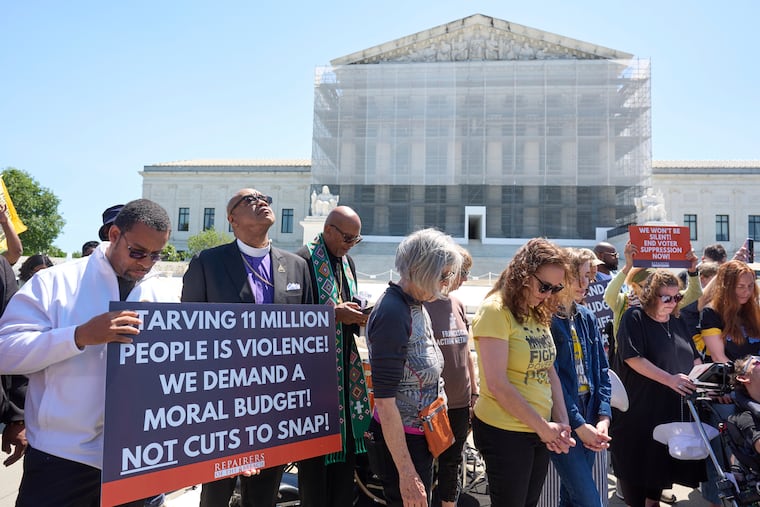
Earlier this summer, a Spotlight PA article detailed how advocates and lawmakers were trying to figure out how to keep the state’s children insured as the Trump administration’s Medicaid cuts loom. As children prepare to head back to school, I remain struck by how that article highlights an important reality: The most valuable healthcare is often the illness that never occurs because it was prevented.
A pediatric well-child visit is far more than a physical exam. It is where developmental delays, postpartum depression, food insecurity, mental health concerns, and life-threatening illnesses may first be recognized. It is also where trusting relationships are built, relationships that help families feel comfortable discussing concerns, accepting recommended vaccinations, and seeking care before small problems become crises.
Difficult budget decisions are inevitable, but how we make them matters. Protecting children’s access to pediatric primary care through Medicaid and Children’s Health Insurance Program is an investment in healthier families, lower healthcare costs, and stronger communities. Every child deserves the opportunity to grow up healthy, and that starts with ensuring they can see their pediatrician.
Eliza Sitter, Philadelphia
Unsung hero
It’s recently been reported that the U.S. Navy is thinking about removing Doris Miller’s name from its newest aircraft carrier. Miller was a cook aboard the USS West Virginia during Japan’s attack on Pearl Harbor on Dec. 7, 1941. He also happened to be Black. On that day, Miller, in the face of enemy bombing, displayed extreme heroism by saving the life of the ship’s injured captain and manning an anti-aircraft gun that brought down at least one Japanese plane, if not more. He was later awarded the Navy Cross, the first Black American to receive it. Two years later, he made the ultimate sacrifice for his country when his carrier was torpedoed by a Japanese submarine and he went down with it.
The “shocking” part of this story is that the U.S. Navy is seriously considering replacing Miller’s name with that of … wait for it … Donald J. Trump. And what heroism did Trump exhibit to warrant such an honor? Sure, he avoided military service during the Vietnam War because of “bone spurs.” But who knows, if not for such “bone spurs,” Trump may very well have saved more than one captain and brought down thousands of enemy planes, ending that war like he claims to have ended so many other wars during his second term in office. That counts for a lot among his cabinet members. And he certainly has been courageous, playing golf despite his “bone spurs” (by one tally, he’s spent about 22% of his second term golfing).
Of course, none of this is shocking. Trump cares only about three things, and not one of them involves bettering the lives of the average American: enriching himself and his family at every opportunity, seeking retribution against his perceived enemies, and slapping his name on anything and everything he can. None of that would be possible if not for the compliance of this Congress and this Supreme Court. It’s time to put a stop to this nonsense and elect officials who are serious about the real issues facing our country — and who have solutions that put the American people first.
Jeffrey Meyer, Chicago, Ill.
…
The possible renaming of the USS Doris Miller as the USS Donald J. Trump reflects the reality of the president’s second term. During his first term, Trump made an attempt to connect with African American voters despite his own pre-presidential comments and actions. In his second term, Confederate names on Army forts are in, woke is out — as are assistance to college students of color, Project Head Start, and other government programs aimed at giving marginalized people an opportunity to advance in our society. The disrespect shown to America’s first Black hero of World War II follows in the wake of Pete Hegseth’s purging our military of qualified Black and female generals and admirals. Trump 45 was challenging to endure, Trump 47 is moving our country closer to self-centered one-person rule.
Paul L. Newman, Merion Station
Blame game 2.0
In the coming years, we may witness the return of one of America’s oldest and most reliable excuses — only updated for the digital age. For generations, students fell back on the classic line, “My dog ate my homework,” a phrase that became shorthand for avoiding responsibility with a smile. Today, we’re on the verge of adopting its modern successor: “The AI messed it up.”
Already, artificial intelligence is being quietly positioned as a cultural scapegoat. A poorly worded email? Blame the AI assistant. An awkward social media post? Must have been the algorithm. A missed deadline? The chatbot must have misunderstood. The technology is new, but the impulse is ancient: when something goes wrong, point to anything except ourselves.
The irony is that AI doesn’t remove human responsibility — it increases it. These tools are powerful, but they are not autonomous moral agents. They don’t decide our tone, our judgment, or our priorities. Yet we seem eager to hand them not only our tasks, but our accountability.
If we’re not careful, “The AI did it” will become the next cultural reflex, allowing us to sidestep ownership of our words and actions. It may not be long before society looks back and realizes that the dog never ate the homework — and the AI didn’t write the email. We did.
Steve Abramovitz, Cherry Hill
Toeing the line
Your recent editorial on how American troops are being strained for nothing during the Iran war, referred to Trump ducking service during the Vietnam War “with the reported assistance of a sympathetic Queens podiatrist.” The doctor in question had good reason to be sympathetic: his landlord was Fred Trump, Donald’s father.
As The New York Times reported in 2018, the podiatrist, Dr. Larry Braunstein, died in 2007. But his daughters say their father often told the story of coming to the aid of a young Mr. Trump during the Vietnam War as a favor to his father. They said his role in Mr. Trump’s military exemption had long been the subject of discussions among relatives and friends. “It was family lore,” Elysa Braunstein told The Times. “It was something we would always discuss.”
In keeping with his lifelong passion for telling the truth, Trump later claimed that it was a high draft lottery number that kept him from being called up — but he got the bone spurs deferment in 1968: the lottery wasn’t instituted until a year later.
Isaac Segal, Cherry Hill
Muscular politics
Secretary of Defense Pete Hegseth says that his mandatory screening program for testosterone deficiency for the troops is “necessary to allow them to operate at their absolute best.” This is an inaccurate, inappropriate and irresponsible action from incompetent Trump cabinet officials, including the Health and Human Services Secretary Robert F. Kennedy Jr. As a practicing physician, I was alarmed by Hegseth’s plan, which goes against current guidelines issued by the Endocrine Society, American Urological Association, American College of Physicians and the Food and Drug Administration, all uniformly recommending against population-level screening, and advocating only for symptom-driven case detection at any age, in association with other medical illnesses including type 2 diabetes, chronic kidney disease, obesity, and chronic opioid and corticosteroid use. Testosterone replacement therapy, even if clinically warranted, has well documented serious side effects including fractures, pulmonary embolism (lung blood clots), and a potential increase for atrial fibrillation, a heart rhythm abnormality that is associated with blood clots including stroke. Unfortunately, our military continues to be led astray by an unqualified, self-serving weekend television host whose ego and ill-advised decision-making place our troops at increased risk of long-term health problems.
Jay Klazmer, Cherry Hill
Join the conversation: Send letters to letters@inquirer.com. Limit length to 150 words and include home address and day and evening phone number. Letters run in The Inquirer six days a week on the editorial pages and online.