His business turns your food scraps into compost
Bennett Compost has kept more than 3 million pounds of food waste out of city landfills.
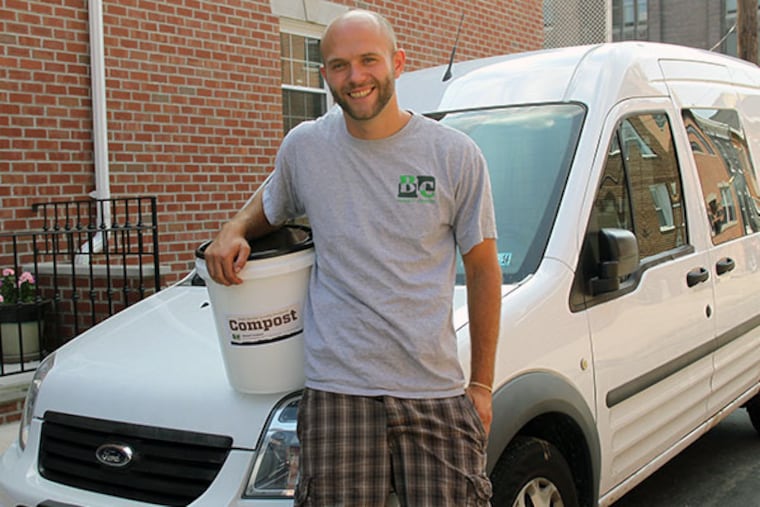
TIM BENNETT, 31, is founder and president of Bennett Compost, which he runs from his Point Breeze home. The Temple grad started the business part time with $100 in 2009, collecting organic material and food scraps, mostly from residents and some businesses in the city. The waste that he collects is turned into compost for Philly's urban growers.
Q: How did you come up with the idea for the business?
A: I knew a little bit about composting, but didn't really have a good place to do it. I started talking to people and they wanted to compost, and it grew from there.
Q: How's the biz model work?
A: Residents pay a monthly fee of $15 and we give them a 5-gallon container. They collect their food waste in it and put it outside the home weekly. We come by at night, empty the containers and put them back on the curb.
Q: Where do you put scraps?
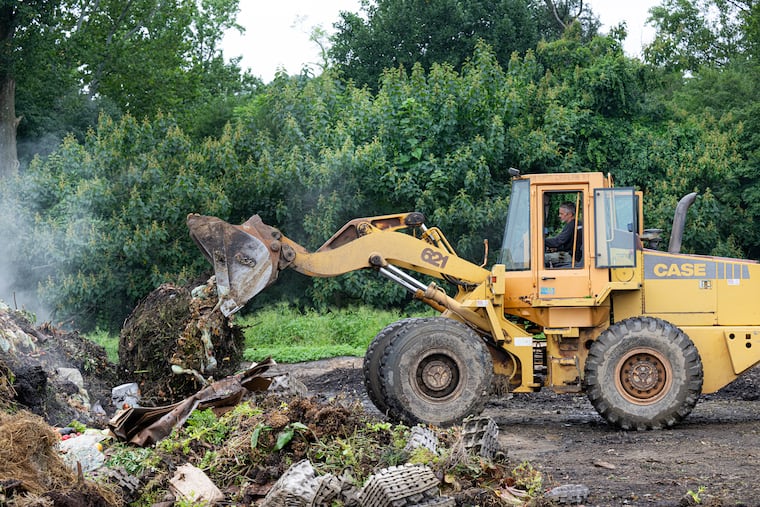
A: We have two small vans with tubs in the back. We dump scraps in there and take it to the farms.
Q: To make it into compost?
A: We partner with three farms - in South Philly, West Philly and Roxborough. They get some of it in exchange for letting us do it.
Q: What's your service area?
A: Most of the city, except the Far Northeast and Southwest Philly.
Q: What's the pickup schedule?
A: We do pickups four nights a week in different sections of the city and then deliver compost to the farms the following day.
Q: So what's the social impact?
A: What we pick up isn't put in a landfill where it would produce methane, a greenhouse gas. When we compost it, it gets oxygenated and doesn't become methane. All told, we've kept about 3 million pounds of food waste out of city landfills.
Q: How many customers?
A: We have about 10 to 12 commercial customers. Coffee shops, places like that. They pay $75 to $200 a month based upon how much we pick up. Most customers are residential. We pick up from about 850 city households.
Q: Sounds like one challenge is to grow the customer base.
A: We set up tables at farmers markets and other events and sign up people for a free, one-month trial. If they like it, then they pay. If they don't, we just ask them to return the container. A lot of it is word of mouth. We advertise in publications focused on sustainability. We partner with co-ops to offer our program to their members.
Q: How big a business is this?
A: We had 450 residential customers at the beginning of the year, and we've almost doubled that. We now have two full-time employees and three part time. We do about $15,000 in revenue per month.
Q: Where do you see the business headed in the near term?
A: Our main goal in the next year is to get more customers in areas where we already pick up.
Online: ph.ly/YourBusiness