For 'genius' winners, grants mean fame, money - and pressure
Jacob Soll was walking on the University of Pennsylvania campus on a rainy September day in 2011, thinking his career might as well be over.
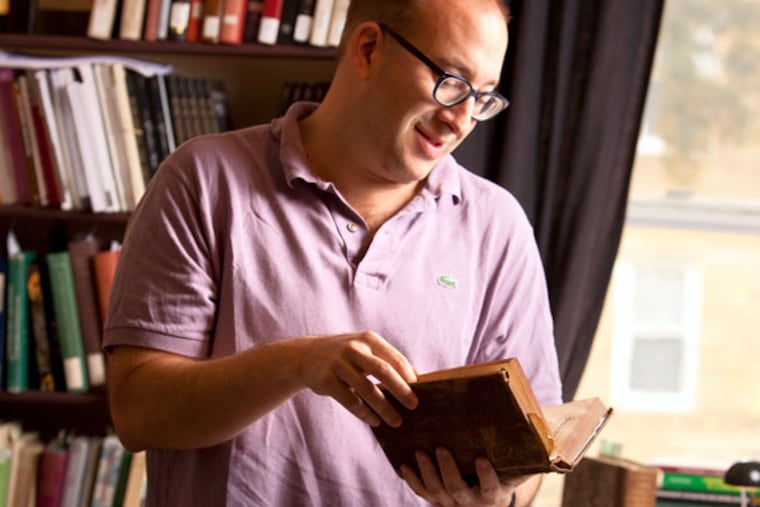
Jacob Soll was walking on the University of Pennsylvania campus on a rainy September day in 2011, thinking his career might as well be over.
The Boston-bred son of a single mother, Soll held a doctorate in history from Cambridge University and was a tenured professor at Rutgers-Camden.
But he thought that his groundbreaking research on early modern Europe was not having an impact. He earned far less than his peers, and lived with his wife and two young daughters in a West Philadelphia home whose roof was literally caving in.
"I felt completely hopeless," he said. "It was a full-on, rock-bottom moment."
Then his phone rang. Nothing has been the same since.
On the line was the John D. and Catherine T. MacArthur Foundation, handing him a six-figure sum, fame, and the stamp of "genius"- all with no strings attached.
When the foundation announced on Tuesday the 2015 winners of its annual fellowships, dubbed the "genius grants," 24 people across a variety of fields entered the world Soll has been living in for the last four years.
But the award comes with far more than money.
"I feel it every day, the pressure to live up to it," he said.
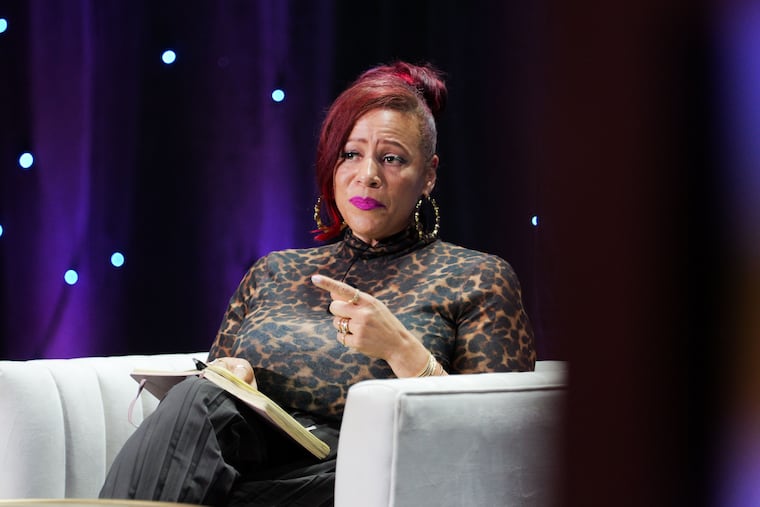
The 2015 winners included the writer Ta-Nehisi Coates, the puppetry artist Basil Twist, and the stem-cell biologist Lorenz Studer. The award comes with $625,000 to be paid out over five years.
"We are basically saying, we want them to continue to be creative and continue to inspire the rest of us," said Cecilia Conrad, who as managing director leads the grant program.
In interviews this week, Soll and four other past winners from the Philadelphia region recommended that the new kids savor the moment, find creative ways to expand their work, and use the platform to do good.
"It shines a light on your work in a way few other fellowships do," said John Rich, a Drexel University professor of public health and 2006 winner. "The award itself is far more than the financial resources. It is the opportunity to have a greater voice."
Rich, who studies the effects of violence and trauma, said the award helped him finish his 2009 book on the topic Wrong Place, Wrong Time: Trauma and Violence in the Lives of Young Black Men.
Winners say you never forget the phone call.
Danielle Bassett, an engineering professor at the University of Pennsylvania, said she woke up Tuesday morning remembering what it felt like when she got the call in 2014 for her work on brain connectivity and networks.
While her research continues, Bassett said, the grant has allowed her to pursue otherwise impossible educational efforts to bring that research out into the world to students.
"It's funding a significant amount of educational outreach activities that our lab is involved in," she said. On Wednesday, she visited Center City's Samuel B. Huey School with colleagues for just such outreach.
For D. Holmes Morton, who won in 2006 in part for cofounding the Clinic for Special Children in Lancaster County to treat and research diseases common among the Amish and Mennonite population, one of the award's biggest benefits was wider attention for the clinic, which now sees patients from 34 states and 14 countries.
"It's a little different when you're the age I was," said Morton, who was 55 when he won. "It's not the windfall it is when you're a 21-year-old starving artist."
He used the money to launch a number of projects, some of which led to the opening of new and similar clinics elsewhere. Other projects, like the attempt to save a music academy in Lancaster, failed.
"I really tried to do creative things with the money," he said. "Coming as late as it did in my career, it allowed me to do creative things."
Beyond the pressure and joy, winners shared a passion to use the money in best possible way - not on a Vegas weekend getaway.
"These are, for the most part, people who are very intense about their work, and I think the money allowed a lot of us to do work we wouldn't have been able to do otherwise," said David Rudovsky, a Philadelphia civil rights lawyer who won in 1986. "With the honor and reward comes some responsibility."
Then there is the professional impact.
Soll, who left Rutgers for the University of Southern California in 2012, said the award changed his life.
"What was kind of shocking to me was how much more seriously people took me," he said. "Suddenly, my voice has this credibility."
The grant helped him finish his 2014 book, The Reckoning, which won praise. Now he lectures around the world. He has also been called on by public officials to discuss policy issues like the Greek debt crisis, and writes occasionally for the New York Times.
For Soll, the way the grant has helped lift sometimes-obscure thinkers, researchers, and artists is what makes it so special: "It's something uniquely American."
mnussbaum@philly.com 610-313-8114 @MatthewNussbaum