Do your homework before choosing for-profit career college
"Make the call that will change your life and get you on the right track toward a rewarding future."
Sales pitches like that are helping to draw record numbers of students to for-profit schools that offer job training in everything from welding to massage therapy to medical billing. Buoyed by the recession, these money-making career colleges are filling a niche with skill-specific training, flexible schedules and online degrees.
But behind the multibillion-dollar business and promises of better-paying jobs is a minefield for students, critics say. With costs that can exceed
"The students who sign up don't realize many times what they're getting into," said
The burden of much of that debt falls not only on students but the nation's taxpayers. Many students finance these educations with federally backed student loans and are struggling to pay them back.
Recently released
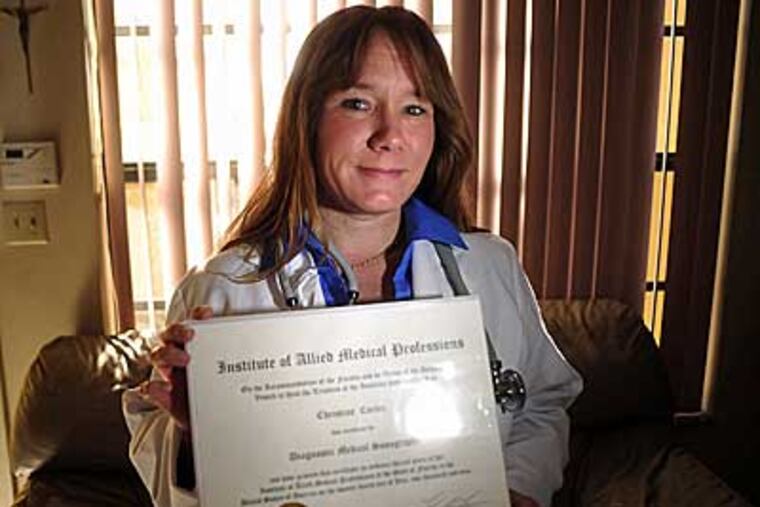
"I feel like I've wasted all this time and money," said Cortez, who has been unemployed since graduating almost a year ago.
She is one of 14 former students who filed a lawsuit against the school in January for selling them "a bill of goods." Institute director
RECESSION BOLSTERS ENROLLMENT
The debate over the legitimacy and value of non-traditional for-profit schools and colleges is growing as the industry has soared in popularity. The recession has seen enrollment mushroom with students eager to change careers, go back to school or increase their earning potential.
In
Keiser surveys its graduates six months after they get jobs and says that 90 percent are satisfied with their education.
"There are some great schools and there's some bad schools," said Chancellor
Several other schools declined the
For-profit schools do not attract typical college students entering right after high school. Their base: lower-income, older students who may be working or have children.
But to critics, that lifeline may be more a handicap to some students at career colleges. They say the main motive at some schools is making a profit and that they mislead students with unrealistic promises through aggressive marketing.
'CALL RIGHT NOW'
During a recent episode of "Maury" on daytime talk television, half the commercials were for career colleges.
"I'm a medical assistant. I make more money than I ever imagined," said a woman advertising Everest. "Get up and pick up the phone and make a better future for yourself."
With the toll-free number on the screen, a man's voice added: "If she can do it, you can do it. Pick up the phone and call right now and start on the road to a rewarding career and a better life."
Everest officials did not respond to requests for an interview. The parent company, Corinthian, is one of the largest in the industry and is projecting
Everest's Web site doesn't list cost information, but an admissions representative told the
BAD CREDIT, NO PROBLEM
Career colleges make it easy for students to enroll with little or no money up front. Financial aid representatives help students line up loans. Even candidates with a bad credit history are not discouraged.
Among the frequently asked questions on the website for
"People are desperate right now to improve their skills and marketability because jobs are so scarce," said
Among graduating seniors in 2008, 96 percent of students at for-profit schools had loans compared with 72 percent or less of students at traditional universities, according to an analysis by the Project on Student Debt. They also came away owing the most: an average of
That same student makeup also explains federal loan default rates, according to the association. While higher than other types of colleges overall, the rates are similar when compared to individual schools serving low-income students, Cohen said.
"If we as a society want to give lower-income people and working adults access to higher education, there is clearly more of a risk," said
The greatest risk, though, is not for the schools, since they receive their money up front, but to the students taking out the loans and ultimately, to taxpayers. Unpaid loans follow former students through life, can ruin their credit and lead to serious consequences, including the federal government garnishing their wages and withholding their tax refunds. Even declaring personal bankruptcy is not an option to shed student loan debt, except in rare cases.
"You want to be very careful as a consumer taking on a huge amount of debt based on the assumption that you're going to have a great job that will make it manageable to pay off," Asher said.
MIXED REVIEWS
Career colleges place about 70 percent of their students in jobs, Miller said, though there is no research on whether graduates are financially better off than before they enrolled.
In
"There are some very fine, in my opinion, for-profit institutions in our local community," such as Keiser, said
Those schools meet the same accreditation standards as public and nonprofit colleges. But others are accredited by less reputable organizations created "for the purposes of being able to qualify (schools) for federal financial aid," Armstrong said.
Career-college students routinely apply to the private, nonprofit
"I don't think there's a month that goes by that we don't hear some kind of really tragic story of somebody who spent a lot of money at one of these institutions and then tried to transfer into either our institution or a state university, and the credits don't transfer in," said Nova Chancellor
Some recruiters say the degrees can still be valuable in the marketplace.
But
"Would we rule out sending someone on an interview because they had gone to one of these schools? No," Wallace said. "The employer may say, 'No thanks,' but we won't make that judgment."
Employer
"Some of the schools to me, just from experience, are diploma mills," Rosenberg said. "They're into the dollars more than the education."
He said he considers a degree from a for-profit school a "weeding-out factor."
"If all things are equal with a candidate, I will go with somebody that graduated from a traditional college," Rosenberg said.
"Upgrading your skills is never a bad thing, but people need to look for legitimate schools with quality training," Jackson said. "You just have to weigh any debt you might incur against the return you might get."