At this Main Line college, it’s OK to fail. There’s even an institute for it.
The idea was born about three years ago on Mount Roberts in Alaska, when a Bryn Mawr College professor and several colleagues were on a hiking trip.
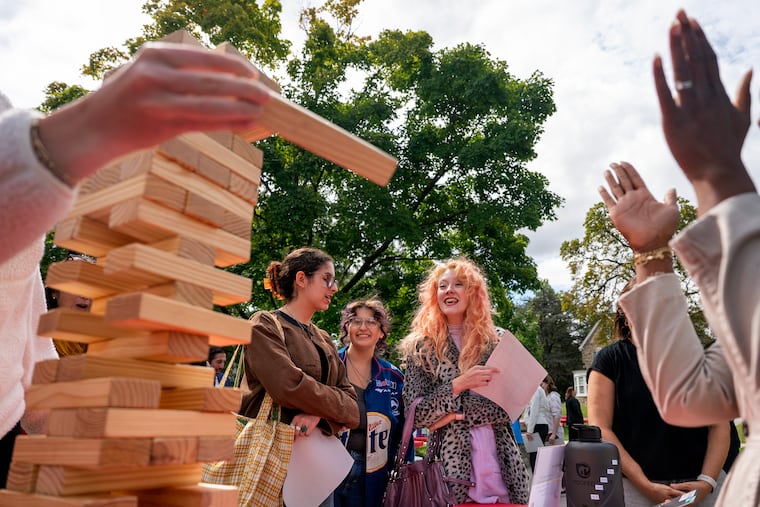
At Bryn Mawr College, professors, staff, and students recently gathered to try challenges, such as puzzles and painting, some of which they most surely would fail.
And that was just fine. Fitting, in fact, for a fall festival with failure as the focus.
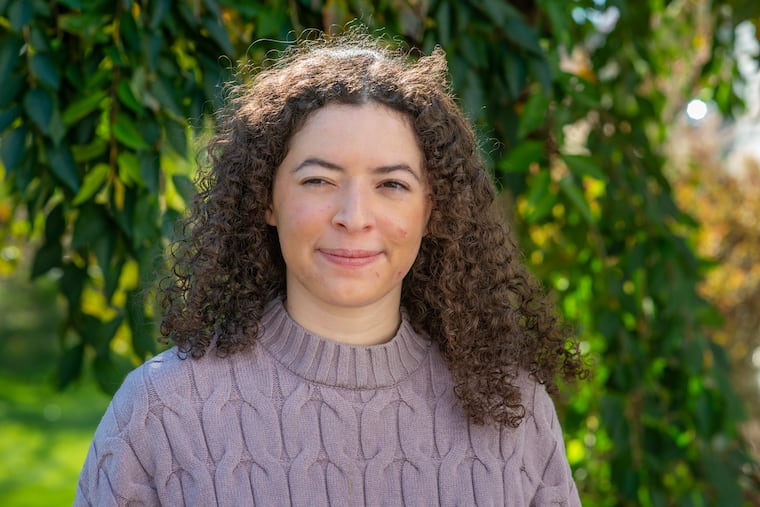
“It’s not failure fest if you don’t fail,” freshman Fable Gunther, 18, said as she and her friends tried Jenga, cornhole, and other tasks during the event held outside Bryn Mawr’s wellness center in late September.
In a world where students increasingly are striving for perfection, educators at Bryn Mawr who have created an “Institute on Failure” are teaching students that failure is part of life and that a fear of it should not discourage them from trying new things.
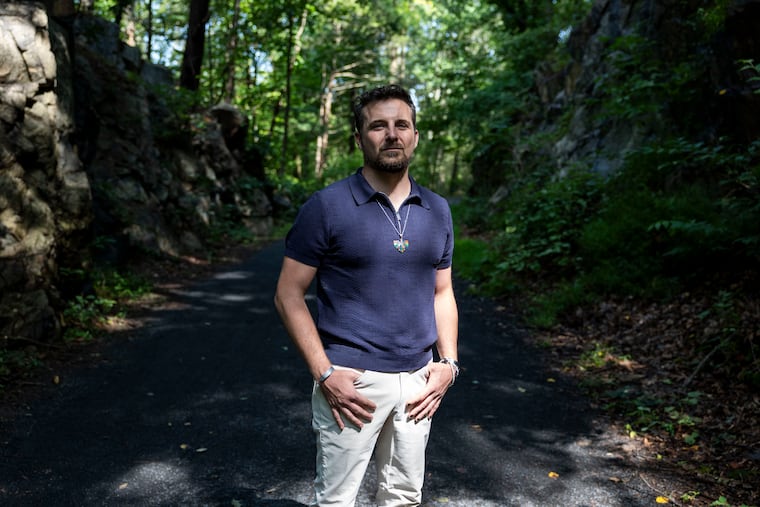
“We are trying to change the culture around failure, to destigmatize and normalize failure,” said José Vergara, an associate professor of Russian. “When we get too concerned with perfection, that can inhibit growth and prevent us from achieving something new and exciting that we might not otherwise reach.”
What they are not striving for, Vergara said, are stories where failure leads to success, though that is a fine outcome.
“What we want is to sort of sit with and deal with that failure,” he said, “to think about what it felt like and potentially … share and discuss how that failure does inform a person’s work or art.”
Students entering Bryn Mawr — a selective women’s college that enrolls about 1,300 undergraduates — often come from high-performing academic backgrounds with a string of achievements, and some struggle with not hitting those same marks when they enter Bryn Mawr, said Baru Roberson-Hornsby, who helps guide the experience of juniors as an associate dean.
“Often our students will not reach out when they are failing,” he said, and that is why activities such as the failure festival are important.
The idea of focusing on failure is not new. Duke University has a “learning to fail” course. At Temple University in 2019, then-professor Doug Webber, now a senior economist in the Consumer and Community Research Section of the Federal Reserve Board, touted his rejections and stalled projects on a “failure CV.”
» READ MORE: Temple professor touts his failures; they were stops on the way to success
But Vergara said he and his colleagues wanted something ongoing and deeper that would cross the campus.
The idea was born about three years ago, on Mount Roberts in Alaska, when Vergara and several colleagues were on a hiking trip. They were making their way on narrow trails with little room for error and started talking about students’ fear of failure and how that can inhibit experimenting and taking risks, he said.
» READ MORE: Choosing a major can be hard. Here’s how colleges help students figure out what they want to do.
About a year ago, a handful of faculty decided to launch an institute, and it was one of several projects that received $9,860 in funding from the college to pilot as part of a new initiative launched by president Wendy Cadge.
Since then, the college has held several “monologue” events in which faculty and staff share their failures and how they have shaped or impacted their lives. Michelle Francl, an emeritus chemistry professor, discussed failing a physics exam and how it has affected her response to students who struggle. Claire Scanlon, head soccer coach, shared how she was cut from the Irish national team before an international match.
“She talked about how it’s always on her mind as she’s making decisions about who plays and who doesn’t and how many minutes they get,” Vergara said.
On the institute’s website is a collection of failure stories submitted by employees and students.
Akirah Fenimore, assistant dean for the senior experience, wrote about falling asleep in a math class that met after lunch and ultimately failing it. Student success coordinator Caroline Northcutt shared her inability to climb an indoor rock wall but vowed to keep trying. Cadge, the president, posted a rejection letter she received for the Fulbright Scholar program, just six months before she became Bryn Mawr’s president.
While it is not on the website, Vergara said he had his own failure trek when he was a visiting professor at Swarthmore College, which is surrounded by streets named after other prestigious colleges, including Harvard and Yale. Each day, he would pass the signs of colleges that had rejected him for full-time work.
“It felt like a kind of cosmic cruelty,” he said.
At the festival, Gunther, who is from Berwick, watched as her friend Ruth Pournelle, 18, a freshman from Washington, painted a unicorn.
“I can see it,” Gunther said encouragingly.
Then they tried cornhole. They couldn’t sink a bag. Building a house of cards on a windy day proved particularly tricky.
The students said they liked trying, but even more so the idea behind it.
“Education is so focused on ‘always do your best,’” Pournelle said. “It’s important to make mistakes on your way to your best.”
Vergara and his colleagues hope to grow the institute over time.
“Right now we’re in the process of hiring a couple of what we’re calling failure interns,” Vergara said.
He and colleague Selby Hearth, an associate professor of geology, plan to coteach a class on failure in the spring.
“I’ll bring a geologic perspective,” Hearth said. “He’ll bring the perspective of Russian literature. Both of these perspectives have something interesting to say about failure, systems failure, … physical failure, rifts and dam breaks, and collapse of whole economic systems.”
Students at the festival collected stamps as they finished each station. They turned their cards in for a prize that proved even failure can be sweet.
“At the end of the day, you can get a Popsicle if you fail,” Pournelle said.