Being gay and standing with God
On a hot summer day in July, Gene Robbins, the first openly gay man ordained an Episcopal bishop, recounted a story from Acts about John's healing a lame beggar.
On a hot summer day in July, Gene Robbins, the first openly gay man ordained an Episcopal bishop, recounted a story from Acts about John's healing a lame beggar.
"Gay people," said Robinson, "are used to begging for scraps - until someone lifts us up and tells us God loves us beyond our wildest imagining."
Sunlight poured in through huge rainbow banners. The pews were packed at historic Christ Church in Old City, which was holding a special interfaith service as part of a weekend-long celebration honoring the 50th anniversary of the 1964 gay rights demonstration at Independence Hall. The interfaith congregation listened as gay clergy read passages from the Bible, Torah, and Quran.
Robinson's sermon illuminated the soul-searching path to finding peace and reconciliation with the church, when dissension and invisibility sometimes prevail.
In recent weeks, the dearth of programing on LGBT concerns during the World Meeting of Families has supporters decrying the church's missed opportunity. Following marriage equality, religious organizations and other protesters strongly showed their dissent. "Philly Jesus" even took to social media, quoting from Romans to blast "vile affections." And then there was Waldron Mercy Academy in Merion, which fired gay religious studies director Margie Winters because her marriage was contrary to church teachings, according to the school.
Relationships with churches can sometimes be more complicated than with people. As Robinson said during his sermon, coming out as Christian can be harder than coming out.
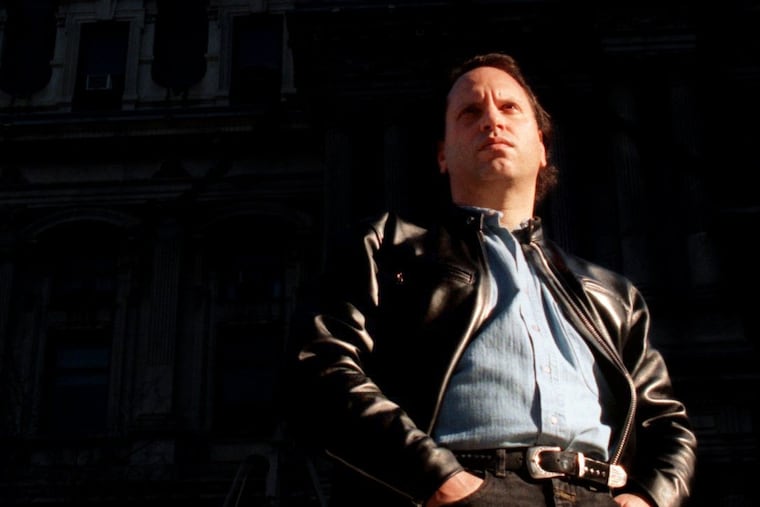
David Norse was ordained at Broad Street Ministry in January 2014 as Philadelphia's first openly gay male minister in a Presbyterian church. He is a visible leader in the Philadelphia community, from speaking at TedX Philadelphia about what emerges when seemingly paradoxical identities converge to winning story slams with his coming-out story.
When Norse was coming out, he was also considering his call to be a minister.
"So at the same time of figuring this out - how can I be this person who I know myself to be religious, but love the person I will someday fall in love with? That took some time."
Norse became a religious-studies major at Lewis & Clark College, a secular and liberal school in Portland, Ore.
"When I was in seminary and my friends and I talked about being gay and being Christian, it sometimes felt like being a unicorn," said Norse. "That apparently they exist, but I'm not sure where. And that challenge of finding people who have figured out the integration of the different parts of who they are can be really challenging.
"There is a desire to have friends who . . . you can have those conversations with. Because so many people have been hurt by the church for so long who are LGBT that there's that fear that if we talk about this, it's going to be very painful."
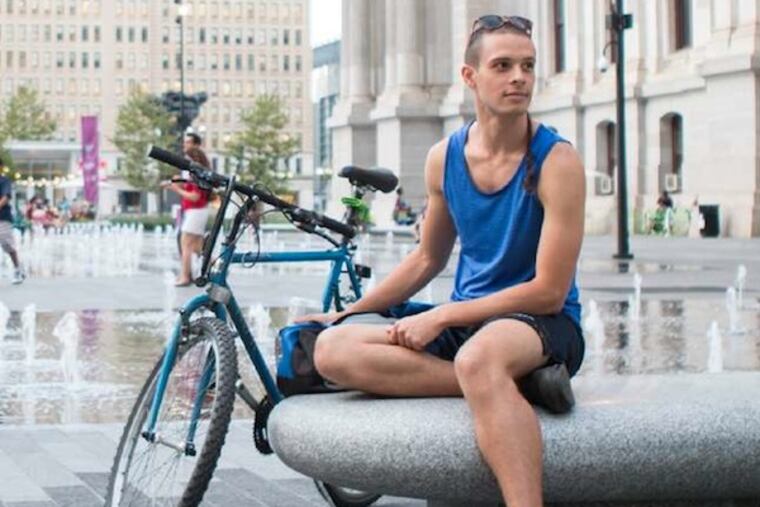
Nathaniel Devarie, 25, an artist who works part time at Shop Rite in South Philadelphia, was reborn into his Christian faith when he was 10.
"Being Christian was a big part of our household," said Devarie, who is just starting to come out. "What I found in the Christian world is that there is a fence. There are two sides of the fence. There is the one group that believes homosexuality is wrong. And there is the one side that believes it is right. Or OK."
Devarie was raised on the side that says it is wrong.
"For many years, all through college, I was like, 'I'm just going to honor God and not be gay.' I struggled, pretending I wasn't. . . . It was really hard."
When he goes to church, Devarie practices as part of the Evangelical Free, a biblically based group. Apprehension and confusion are evident. "I haven't been to church in a while because I have been struggling with it. Because they keep teaching and telling me that I don't really quite fit into their mold."
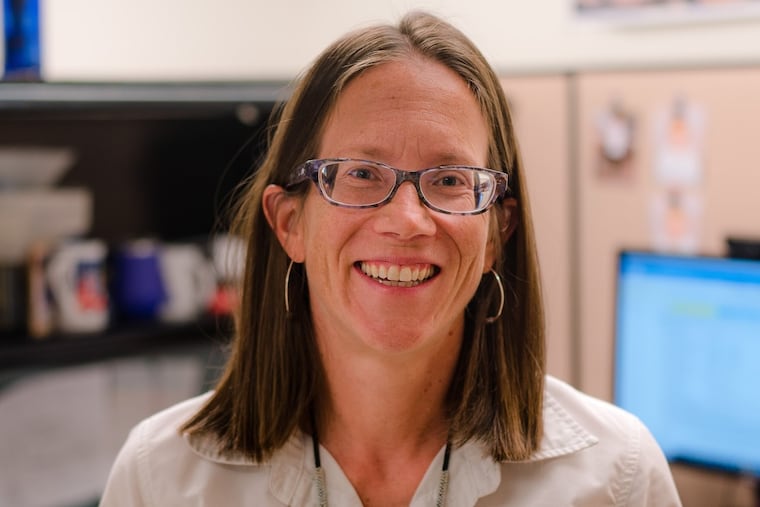
Lauren Puzen, 31, an adviser to afterschool programs on creating healthy environments through nutrition and exercise, is an out and practicing Catholic. She is excited and preparing for the papal visit.
Puzen begins to cry as she discusses what she would say to Pope Francis if she had the opportunity. "If I were to meet him, I would say, 'Thank you. Thanks for living in solidarity. Thanks for setting people's hearts on fire.' "
But, like Devarie, she also has struggled to find peace in her faith.
"For me, it took a while to look around and find a Catholic church that would be accepting of me," she said. "There were different messages of inclusion. That made it difficult for me to obtain my religious identity as well as my sexual orientation.
"I really had to stay closeted in my younger years. In most recent years, when coming to Philadelphia as a young adult, I would church-hop. I would test out and go and sit in the pews of many different Roman Catholic churches in the City of Philadelphia.
"There were many churches where I was instantly uncomfortable. There can be a vibe about the community and even the Mass, and you can quickly tell whether you are accepted or not. It can either be because of words given during the homily or during the church's prayer of intention that really give you a clue if they are open to people of varying sexual orientations."
Puzen is writing a book about LGBT experiences in the Catholic Church with her friend and fellow Catholic Seth Jacobsen, who also is gay.
Puzen hopes the book helps others see what is past the headlines. "I think it is hard because most of the headlines around the Roman Catholic Church and sexual orientation are not accepting. But what we have found is that there are community and religious leaders who are accepting. Unfortunately, they have to frequently keep their voices low and dim, and their voices don't get praised. Frequently, their voices get punished if they speak out on issues like this.
"The thing that I find really hopeful," Puzen said, "are so many Roman Catholics [from her community] are really taking a stand and speaking the church teachings that they know of love and acceptance."
Devarie has hope, too. "What I'm finding is that it is about you and God first of all. It's not about what anybody else thinks or does. You have to find what works for you."