In Traffic Court case, judge says evidence of ticket-fixing was strong
For some, a question mark has hung over the split verdict a jury delivered four months ago in the federal ticket-fixing case against five former Philadelphia Traffic Court judges.
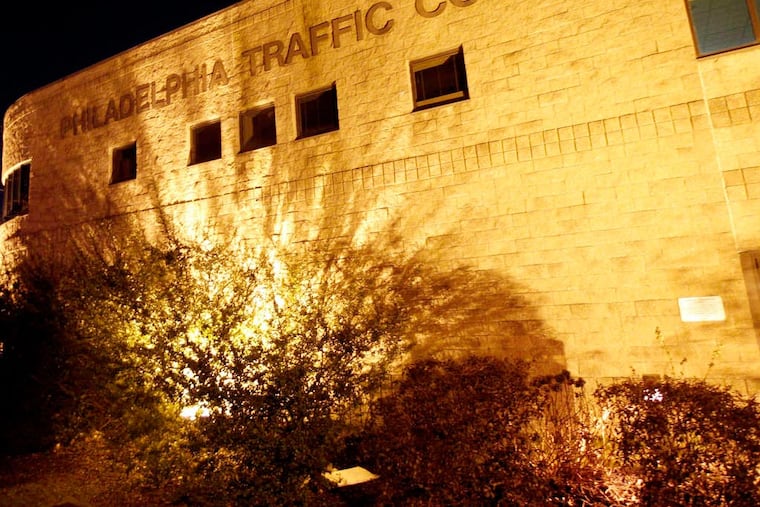
For some, a question mark has hung over the split verdict a jury delivered four months ago in the federal ticket-fixing case against five former Philadelphia Traffic Court judges.
But in an opinion released Friday, the judge who presided over the case left no question as to what he believed prosecutors had proved in court.
"The evidence at trial demonstrated very clearly that defendants were influenced by 'extrajudicial communications' when reaching their decisions on select tickets," U.S. District Judge Lawrence F. Stengel wrote. "In short, they and their colleagues were fixing tickets."
Stengel's opinion was in response to several motions for new trials filed by the four judges the jury convicted in July of perjury or lying to the FBI, despite acquitting them on the more substantive counts of conspiracy and mail and wire fraud. All four are set for sentencing next month.
The fifth judge, Michael Sullivan, never spoke to FBI agents or testified before a grand jury, and did not face perjury charges.
During the two-month trial, prosecutors painted Traffic Court as a bastion of cronyism, where requests for "consideration" from friends, family members, and political allies passed among judges' chambers routinely led to dismissals of traffic citations.
But lawyers for Judges Michael Lowry, Robert Mulgrew, Willie Singletary, and Thomasine Tynes said the verdict left them puzzled. How could their clients be guilty of lying about a criminal scheme that jurors ultimately concluded the judges had not participated in, they asked.
In his opinion Friday, Stengel saw no reason for confusion.
"This argument assumes that the jury acquitted . . . because the jury did not believe that [they] engaged in the consideration process," Stengel wrote. "To the contrary, the jury might have decided that the government's proof . . . was credible, but that [they] lacked the requisite intent to deprive the city and commonwealth of money or property."
He described many of the former Traffic Court judges' arguments as "desperate" and based on "bald and unsupported claims."
Responding to a motion from Lowry, who had argued that he did not understand what prosecutors were asking when he told a grand jury he "treated everybody in that courtroom the same," Stengel balked.
"The terms [prosecutors] used were simple, direct, and capable of being understood by anyone with a basic working knowledge of the English language," he wrote. "The plain meaning of these terms would have been evident to anyone with a high school education."
Many of the jurors, in interviews with The Inquirer in August, echoed Stengel's thinking. Their verdict, they said, came down to how the case had been charged.
Because federal investigators found no proof of bribes changing hands among many of the judges, prosecutors could not build a case around honest-services fraud - the federal charge most often used in public corruption cases. Instead, they pursued the unusual theory that because the fines attached to dismissed tickets went unpaid, the judges had committed mail and wire fraud in an intentional effort to deprive the city and state of money.
"The charges didn't quite fit," juror Kathryn Lund, 47, of Delaware County, said in an interview. "The idea that they were willfully defrauding the government didn't seem to be their intent."
But, she added, "clearly, they skirted the law, and clearly, they tried to cover up what was going on."
215-925-2649