A West Philly youth nonprofit is exploding with popularity, but won’t turn anyone away
Level Up Philly, which provides free meals, a computer lab and space for dance battles for youth, has doubled its attendance in the past year.
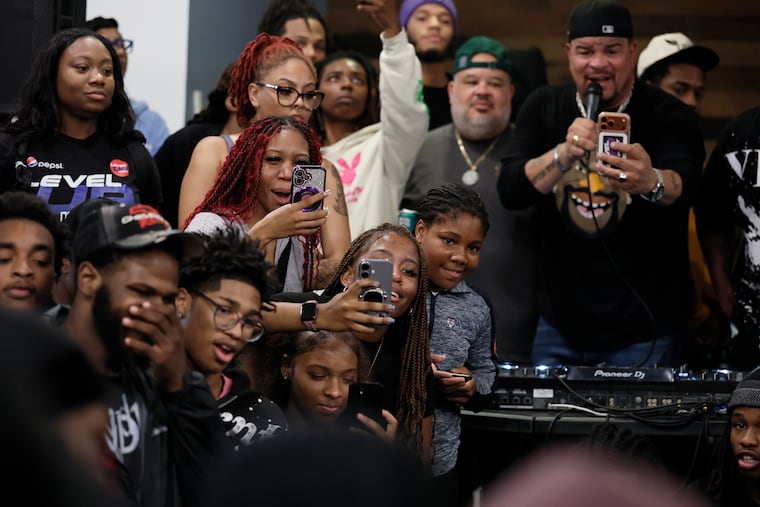
Popularity is dangerous for any beloved institution, since nothing hurts like the acknowledgment that your favorite music artist or tiny restaurant just isn’t the same since hitting it big. But young people say that is not happening to the West Philadelphia nonprofit Level Up as it undergoes its own star turn.
Level Up has more than doubled its attendance in the last year, according to founder and executive director Aaron Campbell. Level Up welcomes teenagers and young adults from nearly every neighborhood for high-quality meals, dance battles, a computer lab, a music studio, and more, for free. The organization is focused on anti-violence and serves as another home for many of its visitors.
It used to receive about 1,400 of them per week at the building at 47th and Chestnut Streets. But early last year, weekly attendance jumped to about 3,000, or 1,000 visitors each of the three days Level Up is open, with kids representing over 150 schools, including some in the suburbs. An affiliated program will begin soon in New York City’s Harlem neighborhood, using the same model and Level Up branding.
Campbell, 52, said he does not know exactly why or how the popularity of the organization he started in 2019 suddenly exploded, but it meant he needed to adapt quickly.
“That was the most stressful year of my life,” he said. Level Up’s annual budget leaped from $750,000 to about $2.5 million to accommodate more security and food preparation. Fundraising became another full-time job for Campbell as he courted donors across the country to add to city and state grants, all while leading weekly church services as pastor of Antioch Christian Fellowship in the same 12,000-square-foot building.
Campbell said Philly kids “get nothing they deserve.” The city’s 27.1% poverty rate among people under 18 is the highest of any age bracket, while schools are closing and safe, free third spaces are harder to come by.
He spent sleepless nights worrying about the future of the organization, but said he did not consider capping Level Up’s attendance.
“Have you ever grown up hungry? I would never turn away a hungry child,” he said.
Level Up and its roughly 30 staff members have made it through that period of uncertainty, but Campbell said funding remains a continuous challenge.
The familiar and new faces of the kids who call him “Unc” keep him going. It is impossible to talk to Campbell on an afternoon at Level Up for more than a minute without a young person coming over to dap him up, or show him a promising report card, which Level Up rewards with cash.
One teenage girl joked with Campbell that she is the real boss around the place, even though it was only her second time visiting, while an older boy showed off new clothes he bought for his forthcoming birthday.
Away from the controlled chaos of Level Up’s kitchen, arcade, and dance spaces, Campbell pointed to a teenage girl working diligently on homework in the building’s serene tutoring and study room, headphones on and writing with focus.
“When I see that, everything is fine with the world,” Campbell said.
‘We celebrate mustaches here’
How does an afterschool program keep a thousand teenage visitors a day in check? Officers from the Philadelphia Police Department recently came to observe how Level Up handles the large group of kids to learn the organization’s secrets.
But there aren’t any. Since Level Up’s beginnings as a monthly gathering between a handful of students, Campbell has built a culture of trust and accountability.
Part of the culture is welcoming and respecting other young people of different interests and backgrounds. Level Up’s array of young visitors include those who are neurodivergent, gang-affiliated, popular, and shy.
The boys who work up a sweat practicing dance moves share the same building as Ian Garner, 15, who developed an original board game — soon going on sale — where players learn about and solve world hunger.
The growing popularity means most newcomers are aware of the organization’s expectations. Level Up’s Instagram videos of its dance battles routinely go viral. But Campbell said he and his staff get to know new faces individually, and learn their triggers and fears, as well as their hopes and dreams.
Two of those newcomers include Kimora Gabriel, 16, from Nicetown, and her daughter, born in August. Gabriel started attending Level Up about a year ago, and Campbell was one of the first people she showed her ultrasound to when she was both scared and excited to become a mother, she said. Gabriel is in foster care and is co-parenting with the baby’s father.
“It’s draining, but I’m working through it,” Gabriel said.
Level Up made sure she was getting nourishing meals through her pregnancy, and Campbell arranged Uber rides home for her. Since her daughter was born, Level Up has been helping Gabriel with diapers, too.
Level Up’s growth has required its staff and volunteers to undertake a greater workload, perhaps none more so than Valdez Johnson, head of security. Johnson and his staff are responsible for searching each visitor for weapons upon entering the building. But he said his job still feels like he’s at Disney World, where watching the kids grow and mature over the years is one of the joys of the work.
“We celebrate mustaches here,” he said.
Romaine Branham, a volunteer, started working on food preparation with Level Up years ago after Campbell asked his Antioch congregation for help. As the organization started to grow, she said, she was unsure how Level Up would handle or afford being open more than once a week, let alone manage the influx of new visitors over the last year.
But it has. Level Up moved food prep off-site when its kitchen proved too small, so the organization could still offer fresh meals like fish tacos that “will change your life,” as Campbell called out while serving some teens. Some kids don’t eat well at home and will take plates back for their parents, Branham said.
“They can come here and be kids. Out in those streets, it’s hard to be a kid,” she said.
Seeking change
For some, Level Up’s growth is a painful reminder of what they have come to escape. It makes Robert Watford, 21, think about his friends who should have been here to see the exciting changes with him. Watford’s eyes welled with tears as he nodded to a portrait of his close friend, Talik Bridges, resting over a doorway to Level Up’s music studio. Bridges, 18, was shot and killed on Christmas Eve 2024 while walking to catch a bus in Olney.
Every Level Up death is difficult for Campbell, but Bridges’ was especially heartbreaking. Campbell has three adult children of his own, but still calls Bridges his “baby boy.” He pointed to a figure of Bridges tattooed on his forearm, which memorializes seven Level Up kids who have been killed, the ones who called him Dad or stayed at his house.
James Smith, 18, said he had been hanging around the wrong people when he joined the new wave of Level Up visitors a couple of years ago. He was lacking confidence and didn’t know where he fit in.
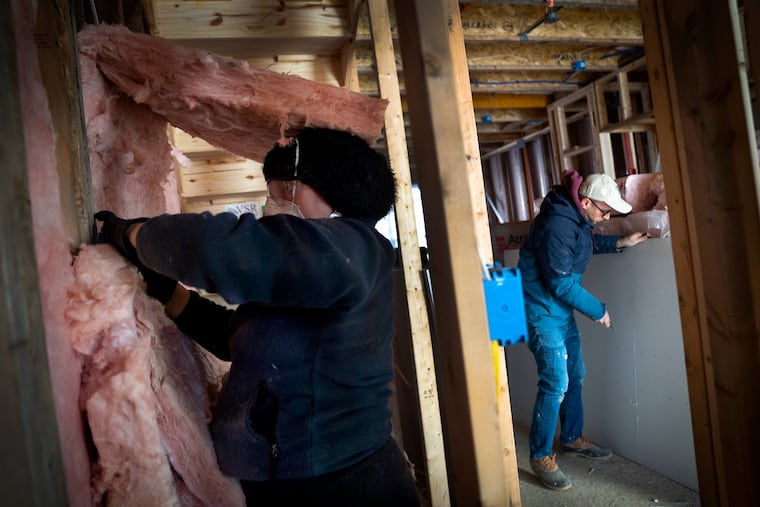
When Campbell met the West Philly teenager, Smith told him his dream was to become a carpenter. Campbell got to work, and helped him get into a youth trades program this year with Catholic Charities of Philadelphia, where Smith will receive paid afterschool training, certifications, and a set of tools by the time he graduates from high school this spring.
Smith has gotten into dancing at Level Up, too, and now has the confidence that was once lacking. It feels like life is worth living now, he said.
“If it wasn’t for here, I don’t know where I’d be,” he said.