Zoo ready for cubs of a different stripe
After watching days of marathon and death-defying mating in February, the Philadelphia Zoo is preparing for the pitter patter of tiny . . . paws.
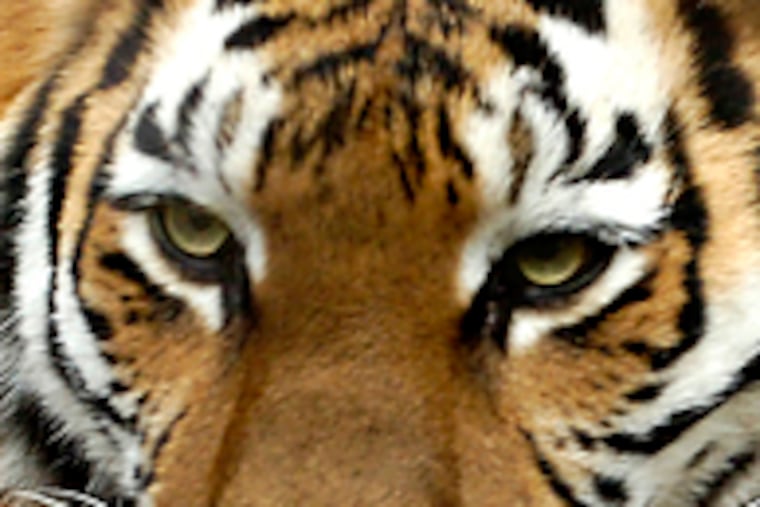
After watching days of marathon and death-defying mating in February, the Philadelphia Zoo is preparing for the pitter patter of tiny . . . paws.
Kira, the female Amur tiger, is pregnant. She could deliver two to four cubs by May 21.
"We're just waiting now," said Kira's keeper, Tara Brody, who had been watching for signs of pregnancy since Kira and Dmitri last mated Feb. 8.
The sex was risky. The inexperienced Dmitri could have become frustrated and lashed out with lightning speed and stiletto claws, killing her in minutes.
Thankfully, that didn't happen, and the staff began to watch Kira closely. If she went into heat again, it would mean she wasn't pregnant.
But she didn't, a hopeful sign.
And then she was more or less like an expectant human mother: She was sleepy and took longer to get going in the morning. Her appetite increased. The staff upped her daily beef intake from between three and six pounds to as much as eight.
Yet Kira could be the envy of every maternity ward around: She'll be done in a little over three months - 102 days after conception - and will never show.
She has grown heavier, from 255 pounds in February to 275 this month. But it's nothing you'd notice.
Because tigers are solitary in the wild, and the females must both protect and feed themselves, "they can't afford to get that big," Brody said.
Jim Ronemus, assistant curator of carnivores, said the evolutionary trade-off is to have the baby early and care for it intensively, or have it later, after it has developed more inside the mother.
In a social animal like the wildebeest, the herd provides the protection a pregnant female would need. So wildebeests gestate for about eight or nine months, and the newborn walks within 15 minutes.
For the tiger, a solitary predator, carrying weight for a long time affects her hunting ability.
"She's pregnant, but she also has to be able to get to the grocery store," Brody said. "She can't get too big."
Plus, the fetus could be injured during a hunt. So the tiger has cubs early, but they are born blind and with their ears tucked in.
The zoo has a small cubbing den, built to resemble a tight, dark space that a tiger might choose in the wild. But in her two previous pregnancies at the zoo, Kira's never used it.
Her keepers figure she'll give birth indoors, or maybe even in the outdoor exhibit, where she's recently been spending nights.
They don't expect to witness the birth. They never have.
"They don't want to be doing it while anything else is around. That's dangerous for them," Ronemus said. "You can stand there and watch for four hours, and nothing happens. You step out for three minutes and come back and babies are there."
And none too soon.
The genetic diversity of North America's captive tiger population depends on selective mating among its 144 members and, of course, successful births.
Last year, there were only three.
The species "is a little short on cubs just now," Ronemus said. "This litter would be a good boost."
After the birth, the staff will give Kira privacy, but also watch closely to ensure the cubs look healthy and are nursing.
The cubs won't be on exhibit for about three months.
The zoo has installed cameras and at some point will have a feed to a screen in the big cat exhibit, maybe even to the Web, where Kira now has a video on YouTube.
Meanwhile, what of Dmitri, the proud papa?
The two animals have been kept apart since they mated. In the wild, each would go its separate way.
But, said Brody, for whatever reason, Dmitri's interest has not dulled. When he's outside, he wanders over to Kira's indoor exhibit, leans forward, and bangs on her metal door.
View video, a slide show and background about Kira at http://go.philly.com/earthEndText