America’s first Black woman governor is named Keisha. Keisha!
Keisha Lance Bottoms’ win was for every girl who was told that her name was too ethnic to open the right doors and for every woman who felt she had to remove her box braids before an interview.
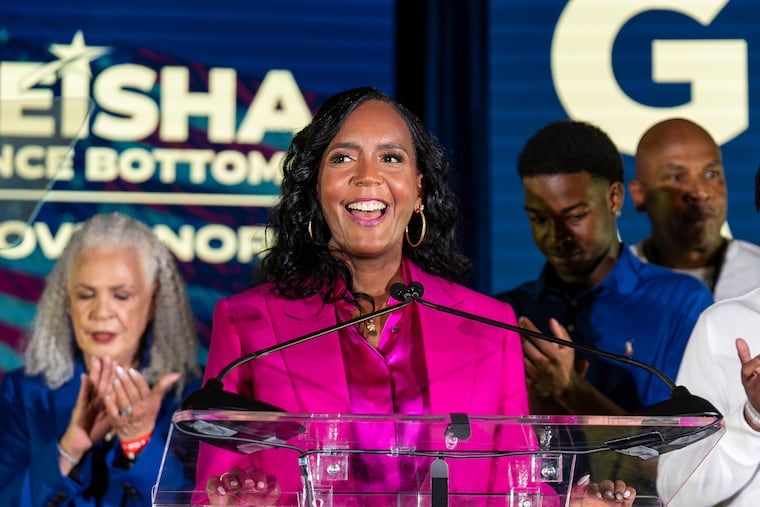

I woke up after the midterm elections feeling a little like I did the morning after President Barack Obama won his first term in office.
America has finally elected its first Black female governor and her name is Keisha. That’s Keisha as in Keisha Lance Bottoms from the state of Georgia.
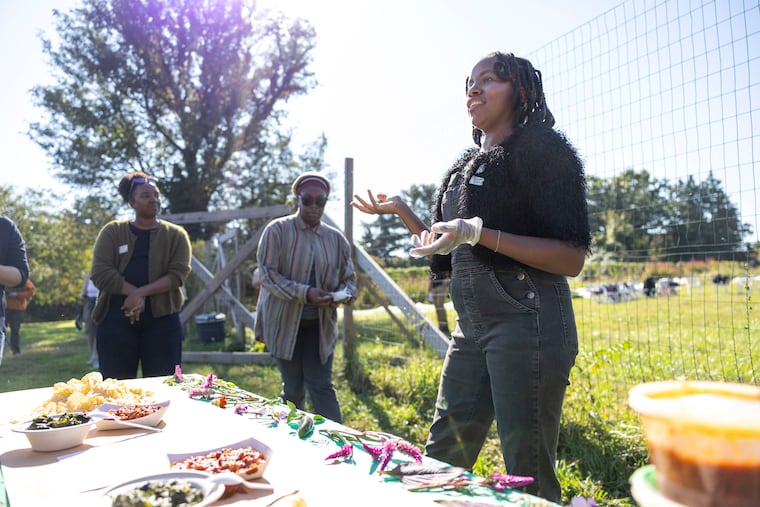
The last time I’d actually laid eyes on her before Election Night, Bottoms was being interviewed in her kitchen earlier this year by ABC News anchor Lindsey Davis. The former mayor of Atlanta was discussing her gubernatorial campaign and family history while demonstrating how she makes her family’s sweet potato pie recipe.
As she talked, I watched as she added ingredients. Black folks don’t play when it comes to our sweet potato pies. They have roots in West Africa and a special place on tables in Black southern households. If you see an orange pie on our table at Thanksgiving, you can almost bet that it’s sweet potato instead of pumpkin.
And Black folks can be downright picky about how to make it. During her TV interview, Bottoms looked a bit too manicured and well dressed — or bougie — to be cracking eggs.
I was giving her a bit of a side-eye before I realized that she prepared her pie the same way that my grandmothers and great grandmothers made theirs. It made me smile. She is one of us.
Our shared history as Black women makes her election night victory even sweeter.
It’s the morale boost that so many of our sisters needed and it’s right on time.
African American women really have been going through it under President Donald Trump. His cuts to the federal workforce have disproportionality impacted Black female workers, as have his efforts to roll back diversity, equity and inclusion which helped them advance.
It’s estimated that as many as 100,000 Black female federal workers have lost their so-called “good government jobs.” That’s huge, especially considering that many are the breadwinners of their families.
Trump also has targeted prominent Black women in positions of power including Lisa Cook, the first Black woman to serve on the Federal Reserve Board of Governors, New Jersey U.S. Rep. LaMonica McIver, and New York Attorney General Letitia James, among others.
This — on top of Vice President Kamala Harris’ heart-breaking loss in the presidential race two years ago — has been a lot to endure. On Tuesday night, MSNOW political commentator Symone Sanders Townsend summed that election up best when she said, “After the 2024 election, to Black women all over this country it felt like a repudiation of us.”
As one of the 92% of Black women who ran to the polls to vote for Harris, I agreed with Townsend that her loss felt like a sign that “America just does not want us.”
Townsend referenced seeing Bottoms out on the campaign trail with her hair in box braids (which date back to ancient Africa) and being uncertain how that might impact the former mayor’s candidacy. Bottoms’ willingness to not shy away from her racial identity paid off.
“She won by going out there and being herself and talking about the issue, connecting with the people and for the 92% out there that was feeling like —ugh — maybe the country just doesn’t want us,” Townsend said. “Georgia wanted Keisha.”
Townsend choked up as she spoke. Watching from home, I teared up a bit too. A friend of mine called and told me she also felt emotional.
Bottoms’ win was for every girl who was told that her name was too ethnic to open the right doors.
Bottoms’ win was for every woman who felt she had no choice but to remove her braids before an important job interview.
Bottoms’ win was for every woman who dared to try and break through a glass ceiling.
And the fact that Bottoms’ historic victory took place in the heart of the Confederacy, is the dollop of whipped cream on top of our slice of sweet potato pie. It didn’t come easy.
The Republican nominee for governor in Georgia, billionaire Rick Jackson, poured more than $200 million of his own fortune into his campaign. But it turned out that this was one election that even all that money couldn’t buy.
Years from now, school children in the Peach State will learn about how Bottoms’ beloved late father had to enter through the literal back doors of some of Georgia’s oldest institutions during segregation. Years later, she walked through those same doors first as mayor of Atlanta, and soon as the state’s first Black governor.
During her victory speech, Bottoms talked about visiting the tiny town of Crawfordville, Ga., which has ties to both Andrew Stephens, a founder of the Confederacy, and five generations of her ancestors.
“I visited the grave of Betsy Peek, my great-great-grandmother, who was born in 1845, 20 years before emancipation,” she told the crowd. “In a cemetery filled with unmarked graves, I found hers.”
“I don’t know what dreams Betsy Peek had for her children or her grandchildren or the generations that she would never meet,” Bottoms continued, “but I know I am standing on shoulders made of steel.”
She is — and for so many Black women, her rise called to mind the words of another pioneering politician who gave his own speech on a brisk Election Night in Chicago 18 years ago: Yes, we can.
About our columnists
In contrast to news reporters, who operate within an independent, nonpartisan framework, columnists are charged with including their perspectives, opinions, and viewpoints when presenting their reporting. Inquirer columnists include Jenice Armstrong, Will Bunch, Luis F. Carrasco, Paul Davies, Daniel Pearson, Trudy Rubin, and Sabrina Vourvoulias.