Ending the Uber wars
Is the technology-powered transportation network UberX a dangerous "illegal hack taxi" service, as Philadelphia Parking Authority chieftain Vince Fenerty quaintly insisted in a recent Inquirer op-ed? Or is it a forward-looking taxi alternative that, as a spokesman insists, merely provides "the safe and reliable rides that Pennsylvanians need and deserve"?
Is the technology-powered transportation network UberX a dangerous "illegal hack taxi" service, as Philadelphia Parking Authority chieftain Vince Fenerty quaintly insisted in a recent Inquirer op-ed? Or is it a forward-looking taxi alternative that, as a spokesman insists, merely provides "the safe and reliable rides that Pennsylvanians need and deserve"?
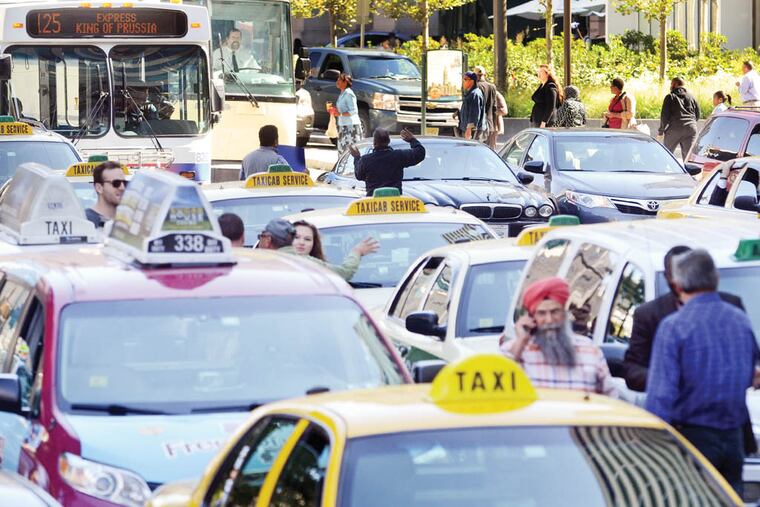
According to a paradoxical Public Utility Commission ruling last week, it's both. The commission gave Uber, the San Francisco-based company whose low-cost ride-sharing network is called UberX, a two-year license to provide its presumably safe and reliable rides throughout most of the commonwealth. In the state's largest city, however, the Parking Authority - the only local agency strange enough to have spawned its own reality show, Parking Wars - is free to continue its Uber wars, fining UberX drivers, impounding their cars, and fulminating over illegal hacks and the like.
Since the PUC has refused to decide what UberX is, it may be instructive to consider what it's not. It is not, for instance, comparable to the building collapse that killed six people in Philadelphia last year. Nor is it "exactly the same" as ISIS, the extremist group that has beheaded five Westerners while conquering a swath of the Middle East. And yet both of these comparisons have actually been made by Alex Friedman, the president of the Pennsylvania Taxi Association and owner of two Philadelphia taxi companies, All City and Checker Cab.
It's no accident that such overheated rhetoric comes from a member of the cab cartel. The chief goal of the opposition to Uber - and the only explanation for treating Philadelphia differently from the rest of the state - is to protect the city's Parking Authority-enforced taxi oligopoly. And as PUC Chairman Robert Powelson said, "If the monopoly taxi industry were doing such a good job, we wouldn't be having this conversation."
Uber enjoys a reservoir of public support because it generally works - and because traditional taxis often don't. That being said, the company has risked that goodwill and given its critics ammunition by flouting and even misleading regulators, having entered markets without permission and, in one case, contrary to its own representations. Uber should respect the rules in place even as it attempts to change them.
Ultimately, though, this isn't entirely about Uber. Along with Lyft and Sidecar, the company is part of a broader disruption of an old business model that often fails to meet consumers' needs as effectively and efficiently. It isn't any more likely or appropriate for the government to protect cab companies from Uber than for it to save CDs from Spotify or newspapers from Google.
Philadelphia isn't alone in grappling with this issue, which has confronted cities across and beyond the country. But it is among the most hostile to transportation alternatives of any kind. The R Street Institute, a free-market think tank, ranked the 50 largest U.S. cities for friendliness to cab competitors and found Philadelphia to be among the five most hostile.
State and city officials must find a way to accommodate and regulate ride-sharing, cancel the Parking Authority's Uber wars, and make peace with progress.