Capital cleanup
With pornographic e-mails circulating among prosecutors and judges, lawmakers accused of taking cash in a sting that wasn't even pursued by the state's top law enforcement officer, and featherweight ethics rules that are rarely enforced, Pennsylvania richly deserves its place, by one measure, among the nation's five most corrupt states.
With pornographic e-mails circulating among prosecutors and judges, lawmakers accused of taking cash in a sting that wasn't even pursued by the state's top law enforcement officer, and featherweight ethics rules that are rarely enforced, Pennsylvania richly deserves its place, by one measure, among the nation's five most corrupt states.
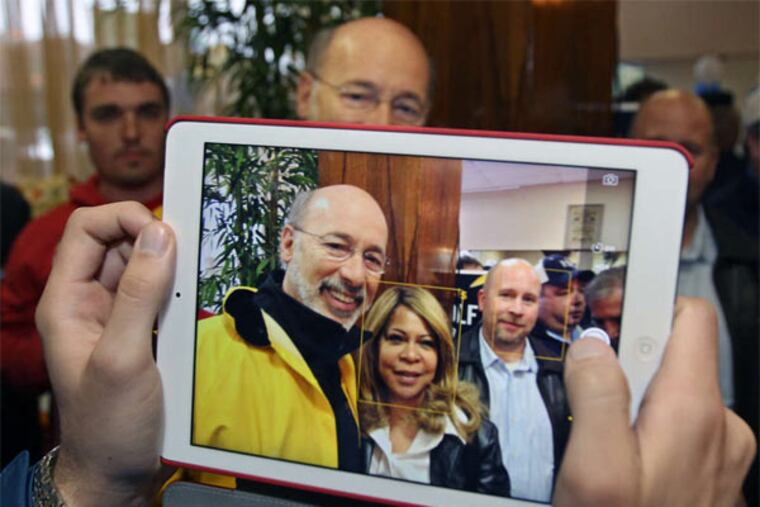
In that context, the gift ban Gov.-elect Tom Wolf has imposed on his transition team, which he promises to carry over into his administration, hits the right note. But it probably won't be heard by the tone-deaf legislature, which has ventured only minimalist gift restrictions and done even less to strengthen other ethical standards. It hasn't expelled a corrupt member, for example, since 1975.
Last spring, after the Inquirer reported that Attorney General Kathleen Kane short-circuited an investigation that caught a judge taking a $2,000 bracelet and four lawmakers taking $16,750 in cash from an informant, lawmakers satisfied themselves with a feeble rule banning cash payments to members. The state Senate passed a bill criminalizing payments of cash, money orders, gift cards, and other currency. The measure had some punch, prescribing fines and jail terms, but it died in the House State Government Committee in April. The House is said to be considering a more comprehensive gift ban, but there's no sign of it so far.
Meanwhile, the weaker rule against cash, which has been touted as a bipartisan reform, expires at the end of the session. If it isn't renewed when the legislature returns to Harrisburg in January, lawmakers will be free to take money once again.
Previously, lawmakers were required only to report cash payments. But State Reps. Ron Waters, Vanessa Brown, Michelle Brownlee, and Louise Bishop, all Philadelphia Democrats, didn't even do that much after allegedly taking cash from the wire-wearing informant.
Although Kane put the investigation of the lawmakers to bed, District Attorney Seth Williams woke it up. He has already secured a guilty plea from former Traffic Court Judge Thomasine Tynes, the jewelry enthusiast, and promised more.
Taxpayers won't be forced to cover the representatives' legal bills thanks to a rare and welcome decision by House Democrats, who left open the possibility that other legislators' lawyers could be covered in the future. They should abandon this disgraceful and self-serving practice altogether. Over the last decade, taxpayers have footed at least $15 million in legal expenses for 30 corrupt legislators and aides from both parties.
Government officials who take inducements from special interests are placing them above their constituents and should be held accountable. If the legislature is serious about banning gifts, it will introduce a strong bill in the earliest hours of the new session and pass it soon afterward. It will take that and plenty more to clean up this state's tawdry reputation.